

Fire prevention plan checklist for waste sites
The Environment Agency expects a waste site's fire prevention plan to show procedures that detect a fire early and raise the alarm both during working hours and when the site is closed, using a proportionate system such as smoke and heat detection, temperature probes, CCTV visual flame detection or spark and infrared detection, backed by certification evidence. This free checklist walks through every part of the EA guidance so you can check your plan, save your progress and email yourself a copy.
Not endorsed by the Environment Agency. This is a summary to help you check your plan, based on the EA guidance Fire prevention plans: environmental permits (GOV.UK, updated 11 January 2021). Always read the full guidance and agree your plan with the EA.
Check your plan, section by section
Tap an item when your plan covers it. Section numbers refer to the EA guidance.
01Does the guidance apply to you?
EA guidance section 2, 3 · 0/4
02The three objectives
EA guidance section 1 · 0/3
03Site plans and maps
EA guidance section 6.2 · 0/6
04Manage common causes of fire
EA guidance section 7 · 0/8
Where AI detection fitsCCTV is named as a security measure. The same cameras can run intrusion detection out of hours and watch tipping areas for visible smoke from hot loads.
05Prevent self-combustion
EA guidance section 8 · 0/4
06Waste piles and separation
EA guidance section 9, 11 · 0/3
07Quarantine area
EA guidance section 12 · 0/3
Where AI detection fitsCameras can watch the quarantine area for smoke, flame and people, day and night.
Environment Agency fire prevention plan detection requirements
08Detecting fires
EA guidance section 13 · 0/5
Where AI detection fitsThe EA lists CCTV visual flame detection among the automated options. Woodcock AI watches existing cameras for visible smoke and flame and raises the alarm by push, email or SMS around the clock. Alerts to a monitoring centre (ARC) and phone-call alerts are available as optional add-ons. Check with the EA what certification evidence it needs for your site.
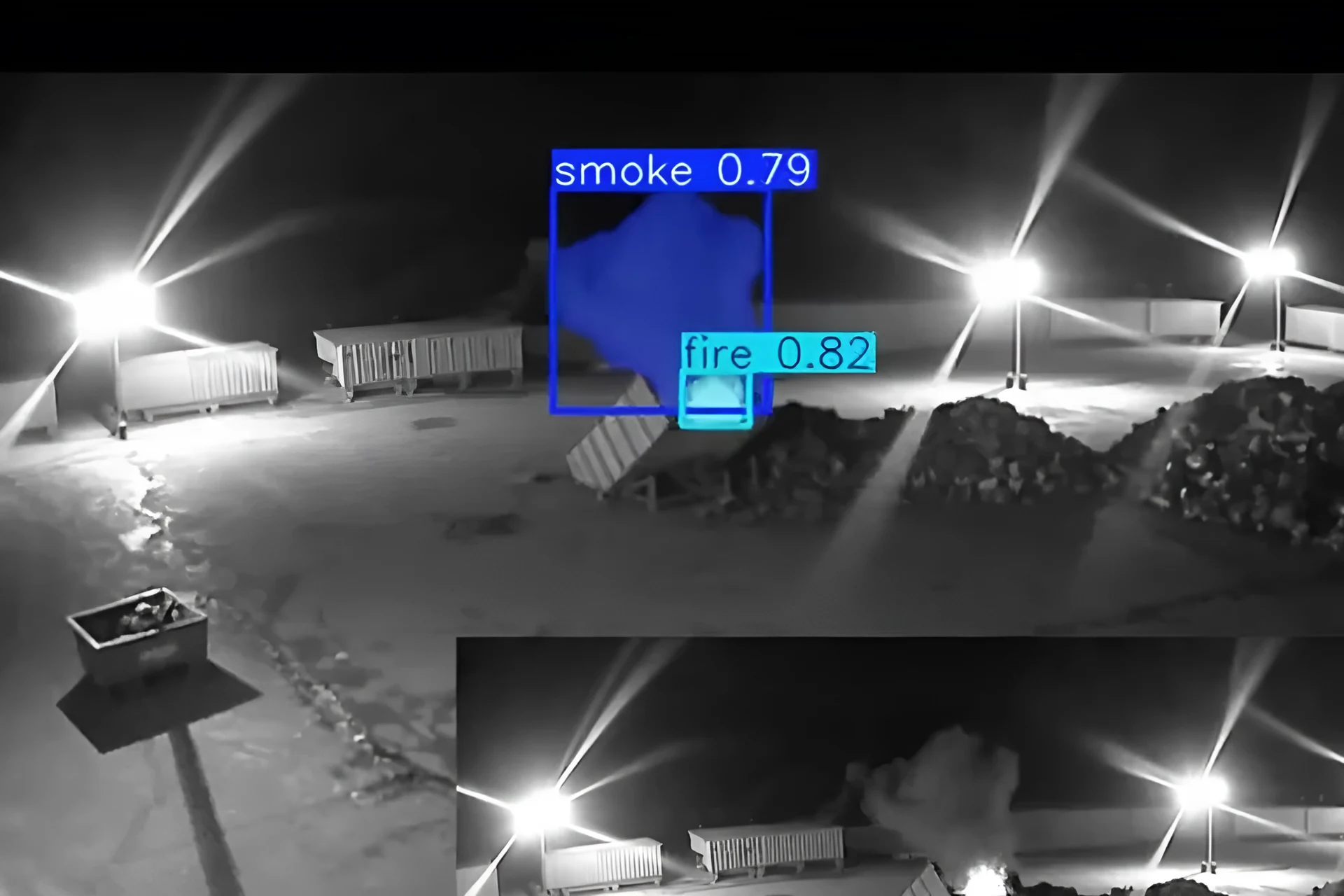 Real footage
09Suppressing fires and firefighting
EA guidance section 14, 15 · 0/3
10Water supplies and fire water
EA guidance section 16, 17 · 0/3
Where AI detection fitsThe guidance says you may be able to reduce the water supply requirements if you can demonstrate that "a pile will not become fully involved in a fire due to early detection and action".
11During and after an incident
EA guidance section 18 · 0/2
12Training, exercises and review
EA guidance section 5 · 0/4
Where AI detection fitsSaved detection events and clips can feed your near-miss reviews and exercises.
Early detection, in and out of hours
The EA guidance expects your plan to show how a fire is detected in its early stages and how the alarm is raised, both during working hours and when the site is closed. It names CCTV visual flame detection among the automated options.
Camera-based detection watches the views your CCTV already covers, such as stockpiles, the tipping hall and the yard, and sends an alert with the clip. It complements, and does not replace, certified fire detection and alarm systems.
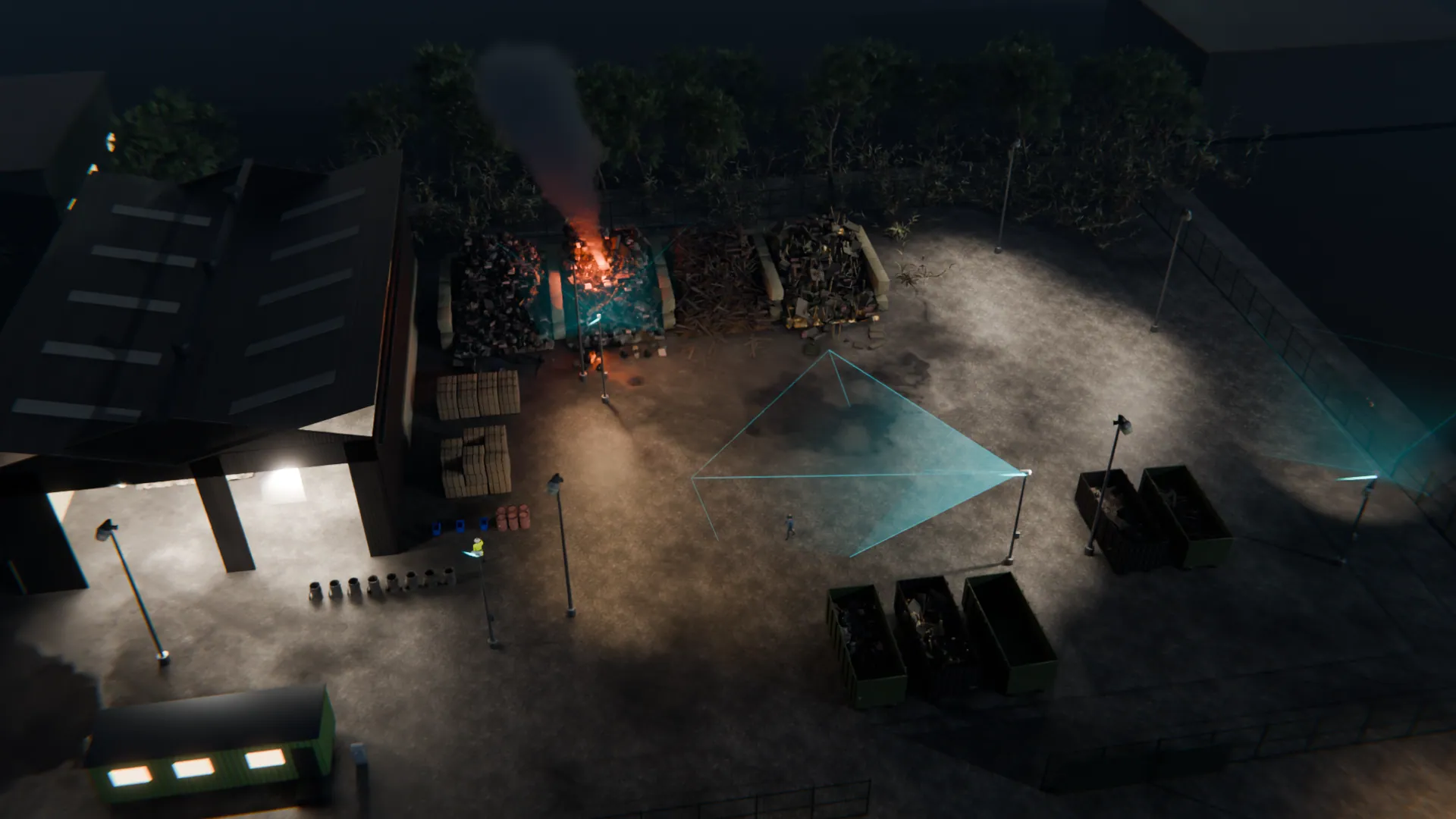 Illustrative
- Stockpile baysSeparation and pile sizes are covered in the EA guidance. A camera over the bays can watch for the first smoke.
- Camera field of viewExisting CCTV covering the yard can run smoke and flame detection without new cameras, where the view is clear.
- Buildings and the tipping hallIndoor areas can be covered by the cameras already inside them, alongside your fire alarm.
- Quarantine and skipsYour plan needs a quarantine area. Cameras can watch it out of hours, when nobody is on site.
Email me my checklist
We'll email you a copy of your ticked and outstanding items, so you can share it with your team or bring it to your next plan review. Prefer not to share your email? Use Download summary or Print instead.
- Your progress: 0 of 48 items
- Optional: ask us to check how your cameras could support detection
Fire prevention plan questions
Answers based on the Environment Agency's guidance. For anything specific to your permit, ask the EA.
Who needs a fire prevention plan?
What fire detection does the Environment Agency expect?
Can CCTV-based AI detection support a fire prevention plan?
How often should a fire prevention plan be reviewed?
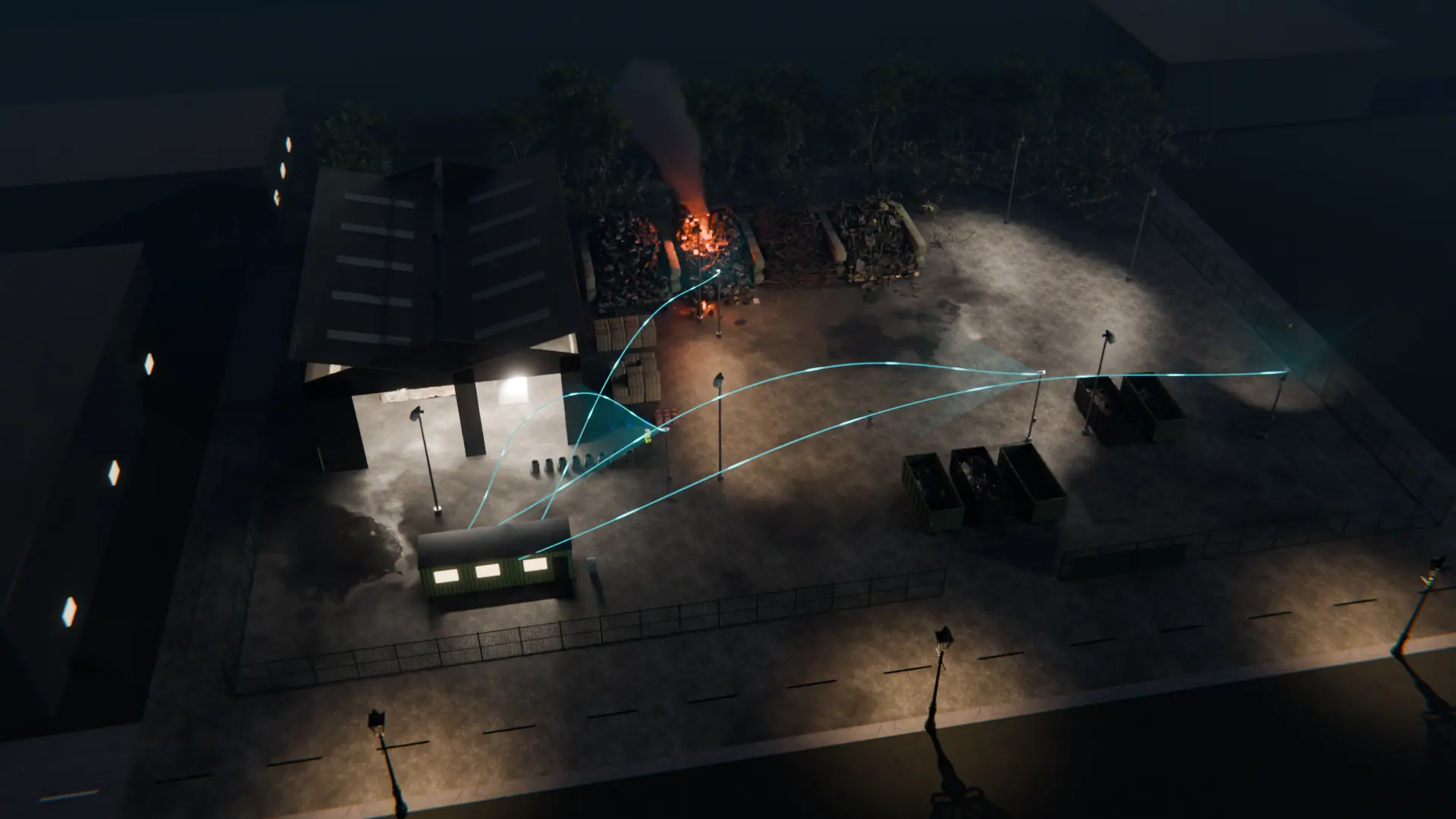
Close the detection gap in your plan
A free site assessment checks how your existing cameras could support early smoke and flame detection, in and out of hours.
Illustrative 3D renderDetection for waste sites
Source: Environment Agency, Fire prevention plans: environmental permits, GOV.UK, contains public sector information licensed under the Open Government Licence v3.0. Woodcock AI complements, and does not replace, certified fire detection and alarm systems.
Keep exploring
More from Woodcock AI on this topic.