

Hot works fire risk: permits, fire watch and after hours
Short answer: hot work is any job that makes flame, sparks or heat, such as welding, cutting, grinding or torch-on roofing.[1] The main controls are a permit for the specific job, clearing combustibles, extinguishers to hand and a fire watch that carries on after the work stops, because smouldering material can ignite long after.[1][5]
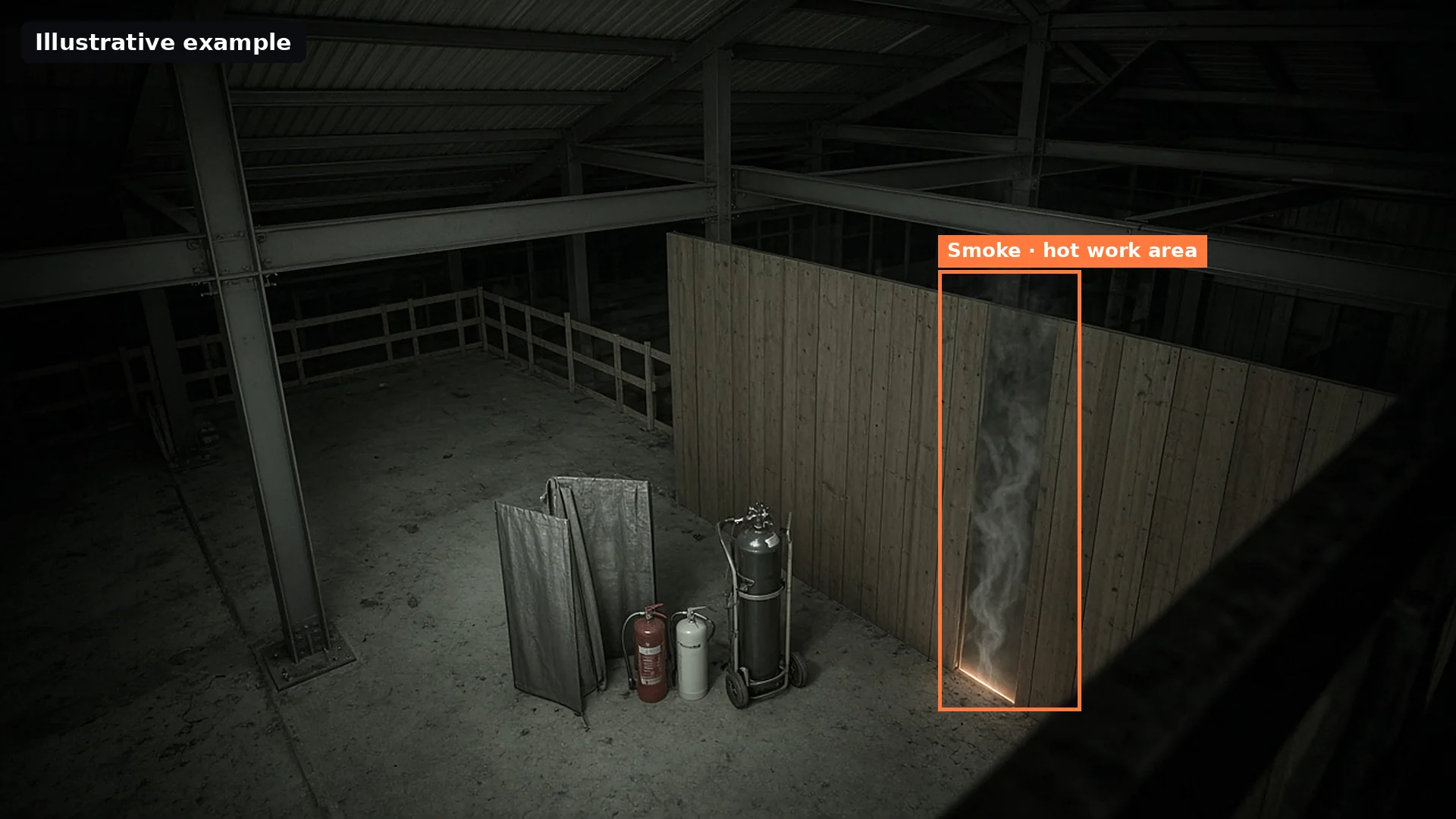 Illustrative example · After the shift
What is hot work, and why is it a fire risk?
HSE defines hot work as any process that generates flame, sparks or heat. Common types include oxy-fuel heating, cutting and welding, grinding and cutting metal, torch-applied roofing, heat guns and soldering irons.[1]
The danger is not only at the torch. Sparks and heat travel into voids, through gaps in walls and floors, and onto material below. HSE notes that some combustible materials can smoulder for a significant period after work has finished before they ignite.[1] HSE also estimates there are hundreds of fires on construction sites each year.[1] Hot work happens on construction and refurbishment sites, in factories and workshops, and during maintenance on industrial sites.
Seven precautions for hot work
Drawn from HSE guidance and the FPA's Joint Code of Practice. Always follow your own risk assessment, your principal contractor's rules and your insurer's conditions.
Issue a permit for the specific job
Where hot work cannot be avoided, a hot work permit controls it. The Joint Code says permits must cover specific, identified activities and locations, be signed off at the end of each work period, and never be blanket permits over several days.[4] HSE explains how permit to work systems control high-risk jobs.[3]
Clear and protect combustibles
Remove loose combustible material from in and around the work area, from breaches in walls, floors and ceilings, from beneath the work and from the other side of any wall or partition. Protect anything that cannot be moved with non-combustible board.[1]
Watch during the work and through breaks
Keep a careful watch for fire while the work is going on, and keep the fire watch going when people take breaks, including areas on the other side of walls, floors and ceilings that cannot be seen from the work.[1]
Keep a fire watch after the work ends
HSE guidance calls for a continuous fire watch for at least an hour after hot work ends, then at least one more check two hours after the end.[1] The FPA says further checks should then be made at intervals of no more than 20 minutes, in some cases for three hours or more based on risk assessment.[5]
Finish early, then close the permit
HSE guidance says hot work should be completed two hours before the end of the working day, because some materials smoulder for a long time before they ignite. Close the permit after a visual inspection of the area.[1]
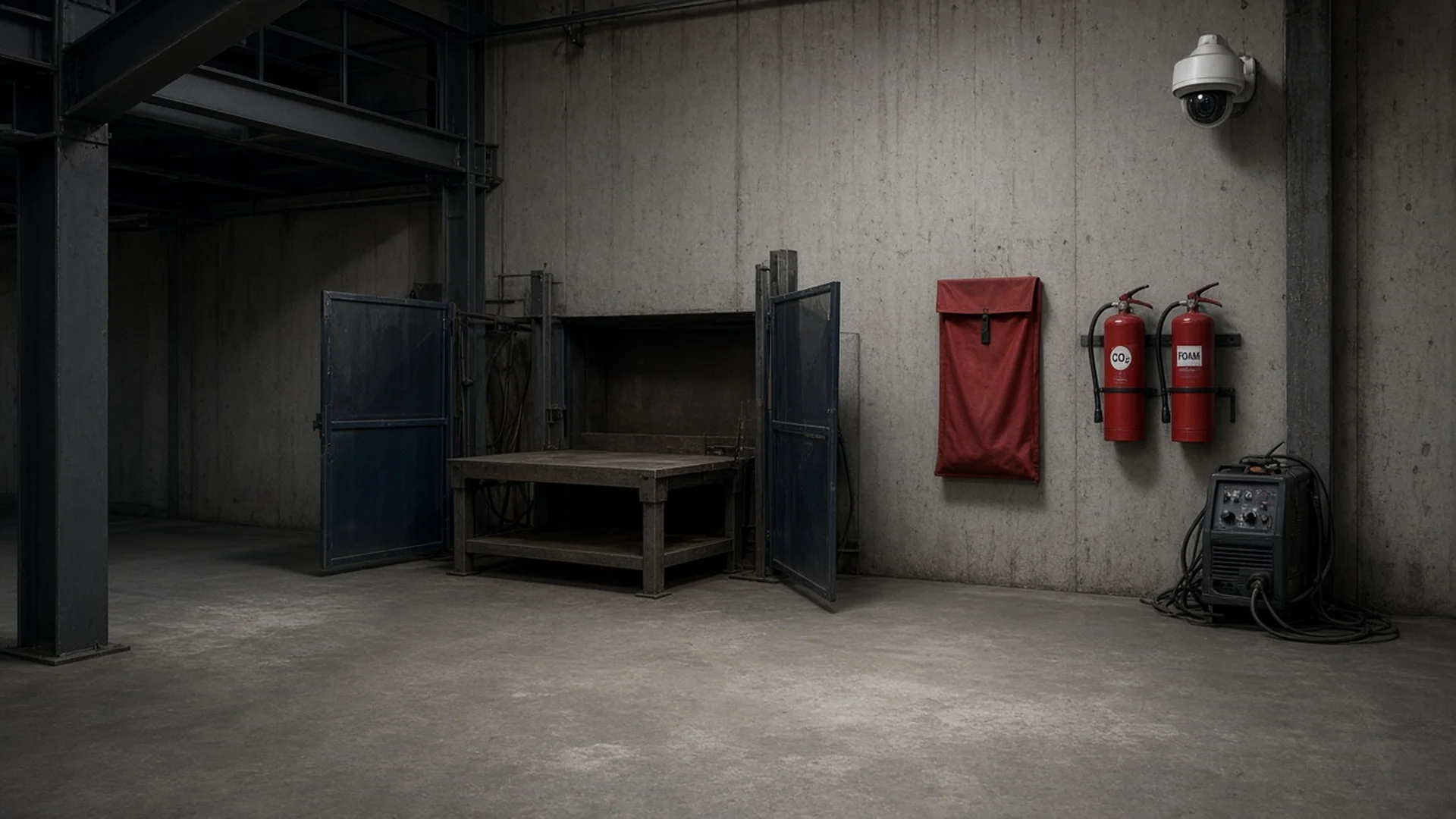
What a hot work area should look like when the job ends
Equipment off and moved to a safe place, combustibles cleared, a fire blanket and suitable extinguishers to hand, and the area still checked during the fire watch. HSE guidance sets the fire watch at least an hour after work ends, and the FPA adds further checks at intervals of no more than 20 minutes.[1][5]Where existing CCTV fits in
The permit, the fire watch and extinguishers come first. Once the fire watch has ended and the site empties, the cameras already on site may still be able to see hot work areas, skips and material stores.
Where a camera has a clear view, Woodcock AI can watch it for smoke and flame and send an alert with the clip to the people you choose, by app push notification, email or SMS. Alerts to a monitoring centre (ARC) and phone-call alerts are available as optional add-ons. It works on existing cameras, and what each camera can see, and which detections are supported, is confirmed in a free site assessment. It complements, and does not replace, the fire watch, the permit or certified fire detection and alarm systems. See how it works in the guide to video smoke detection on existing CCTV.
Want your cameras watching after the site empties?
A free site assessment checks which of your existing cameras can see your hot work areas, skips and stores, and which detections are supported on each.
 Illustrative
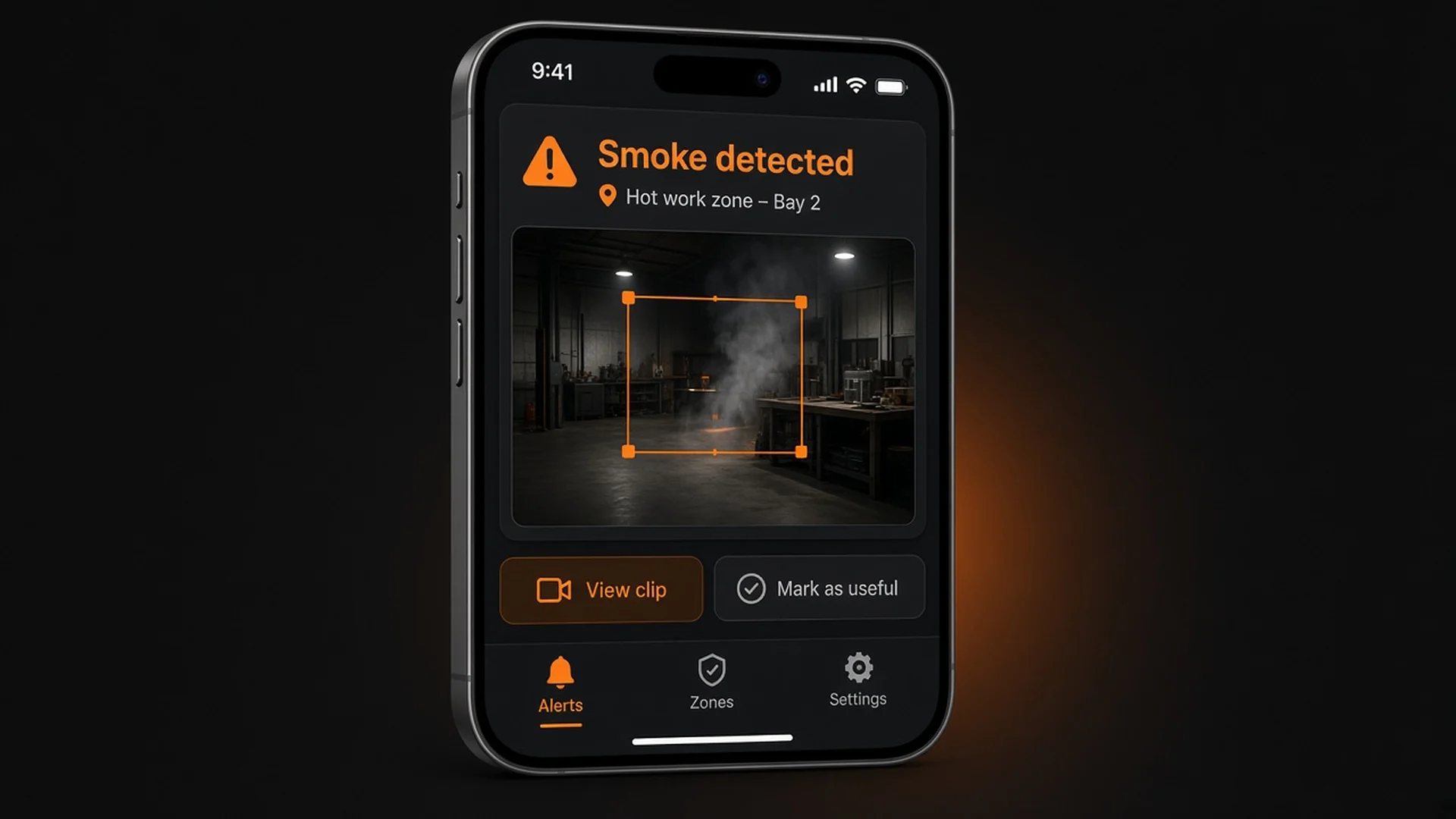
A smoke alert for a hot work zone
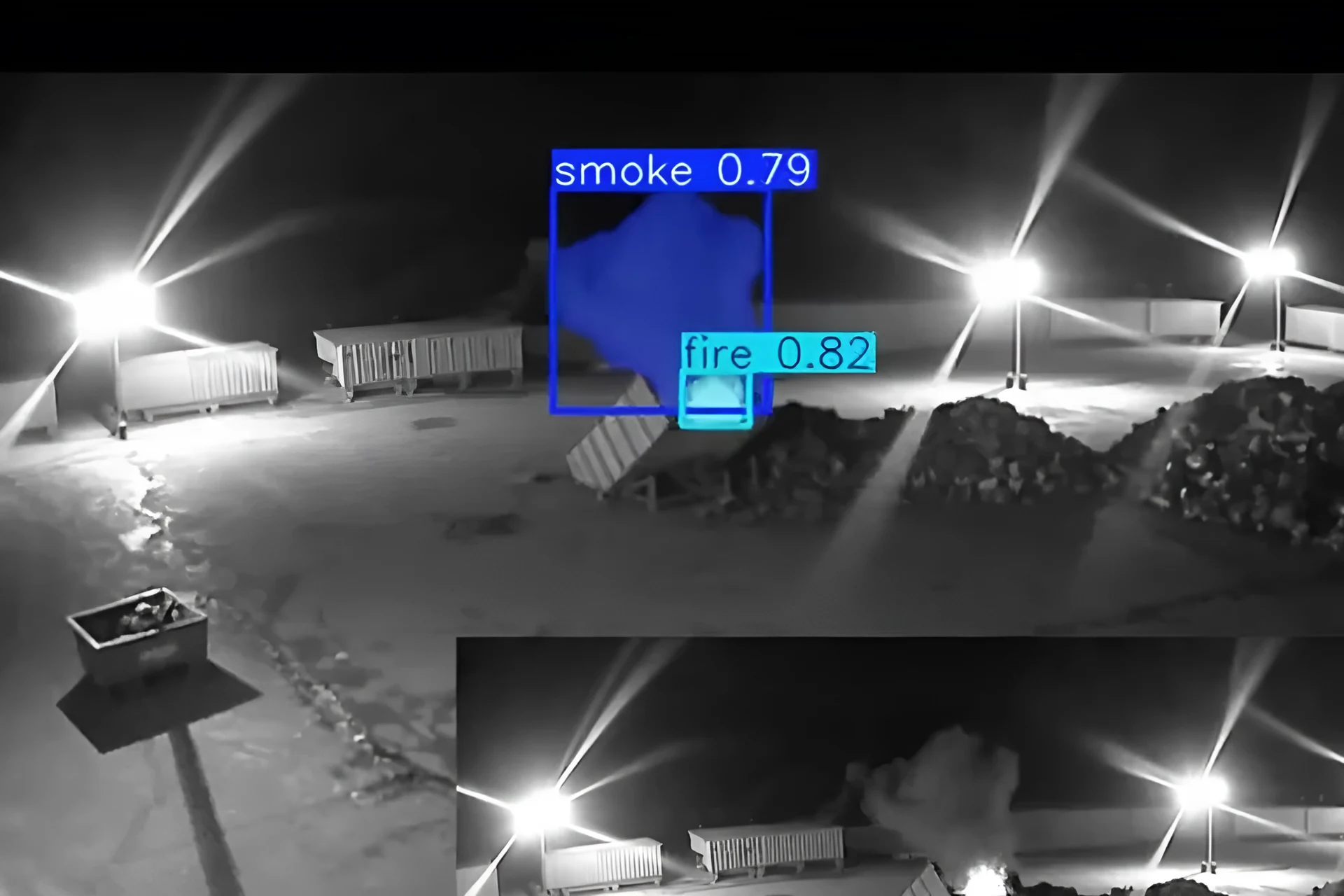
When a camera covering a hot work area sees smoke after hours, the alert names the zone and comes with the clip, so whoever receives it can see what triggered it and decide what to do. The feedback button helps the AI learn each camera.What a smoke alert looks like
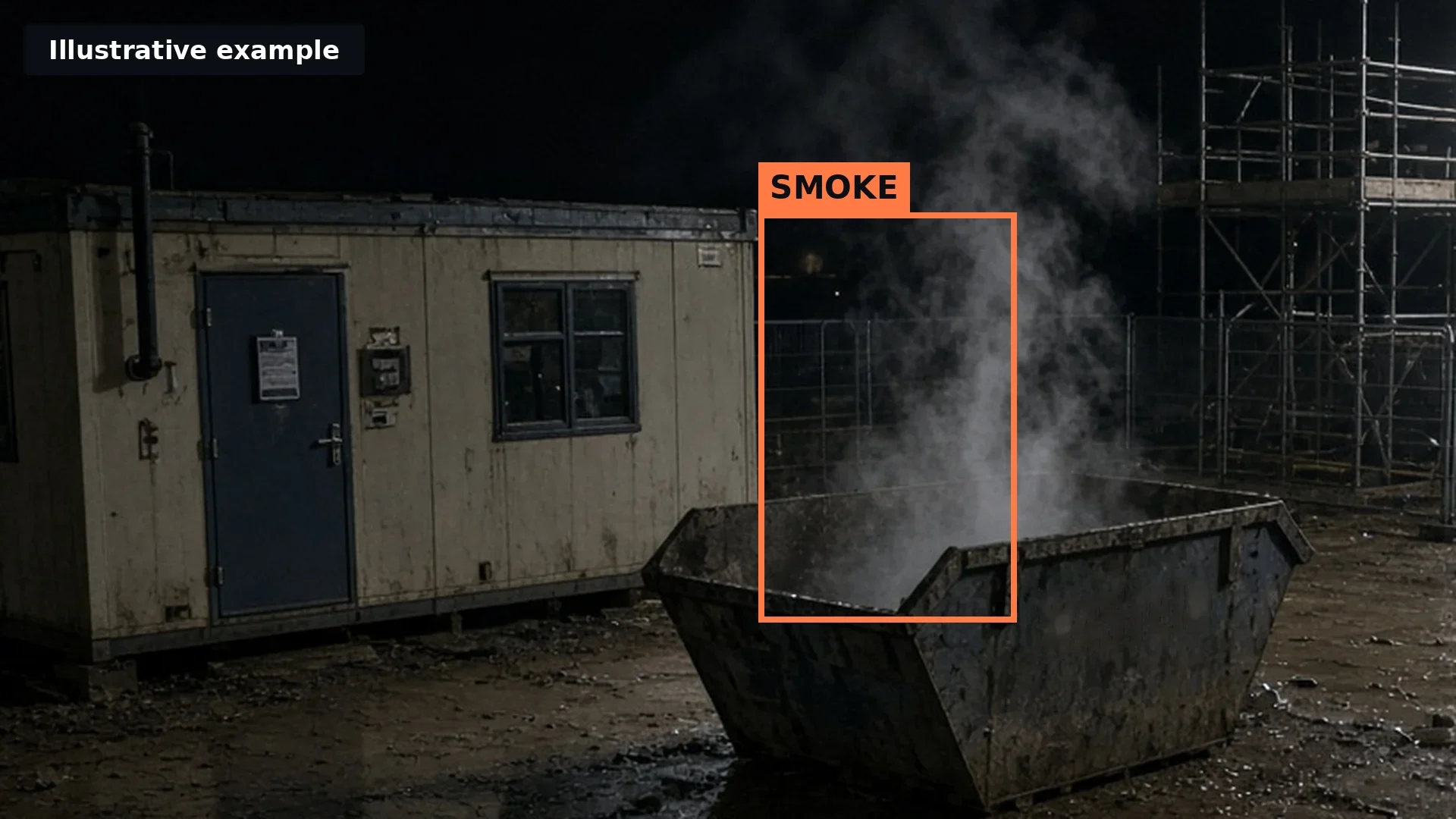
This is a real night-time infrared frame from an existing camera, with smoke picked out. It is from a yard, not a hot work job, but it shows the kind of view an alert is built from.
 Real footage
Hot work checklist
Tick off each item for the job in hand. Progress is saved in this browser only. This checklist summarises the guidance above; it is not a permit.
0 of 10 done
Running a waste or recycling site? See the fire prevention plan checklist.
What counts as hot work?
HSE defines hot work as any process that generates flame, sparks or heat. Common examples include welding, oxy-fuel cutting and heating, grinding and cutting metal, torch-applied roofing, heat guns and soldering irons.[1]
Why do hot work fires often start after the work has finished?
Sparks and heat can reach hidden voids, the far side of walls or material below, and some materials smoulder for a long time before they ignite. That is why HSE and the FPA call for a fire watch after the work ends, and why HSE says to finish hot work two hours before the end of the working day.[1][5]
How long should a fire watch last after hot work?
Is a hot work permit a legal requirement?
Hot work permits are a control set out in industry guidance. The Joint Code of Practice says all hot work must be under a permit once fitting out has started and in all buildings being refurbished.[4] Your insurer or principal contractor may set their own rules, so check with them.
Can CCTV replace the fire watch?
No. A fire watch, a permit and extinguishers are the controls guidance sets out. AI detection on existing CCTV can add another layer of visual warning after the site has emptied, where a camera can see the area. It does not replace any of them.
Can existing CCTV cameras spot smoke after hot work?
Where a camera has a clear view of the area, Woodcock AI can watch it for smoke and flame and send an alert with the clip. What each camera can see, and which detections are supported, is confirmed in the free site assessment.
Who gets the alert?
The people the site chooses, by app push notification, email or SMS, each with the clip. Alerts to a monitoring centre (ARC) and phone-call alerts are available as optional add-ons.
Does video smoke detection replace a fire alarm?
No. It complements, and does not replace, certified fire detection and alarm systems.
Sources
This guide is general information, not professional fire safety advice. Check the current editions of these documents.
- HSE, HSG168 Fire safety in construction (third edition). Defines hot work, sets out precautions before, during and after, the fire watch and finishing hot work two hours before the end of the working day. Last checked 23 October 2026.
- HSE, Process fire risks (construction). Clearing combustibles, suitable extinguishers, a careful watch, and permits to work on larger projects. Last checked 23 October 2026.
- HSE, Permit to work systems. What a permit to work is and how it controls high-risk jobs. Last checked 23 October 2026.
- FPA and partners, Joint Code of Practice: Fire Prevention on Construction Sites (tenth edition). Section 16 on hot work: permits for specific activities and locations, no blanket permits, clearing combustibles, extinguishers and the fire watch. Last checked 23 October 2026.
- FPA, RC7 Recommendations for hot work. Fire watch for at least an hour after work, then further checks at intervals of no more than 20 minutes, in some cases for three hours or more based on risk assessment. Last checked 23 October 2026.
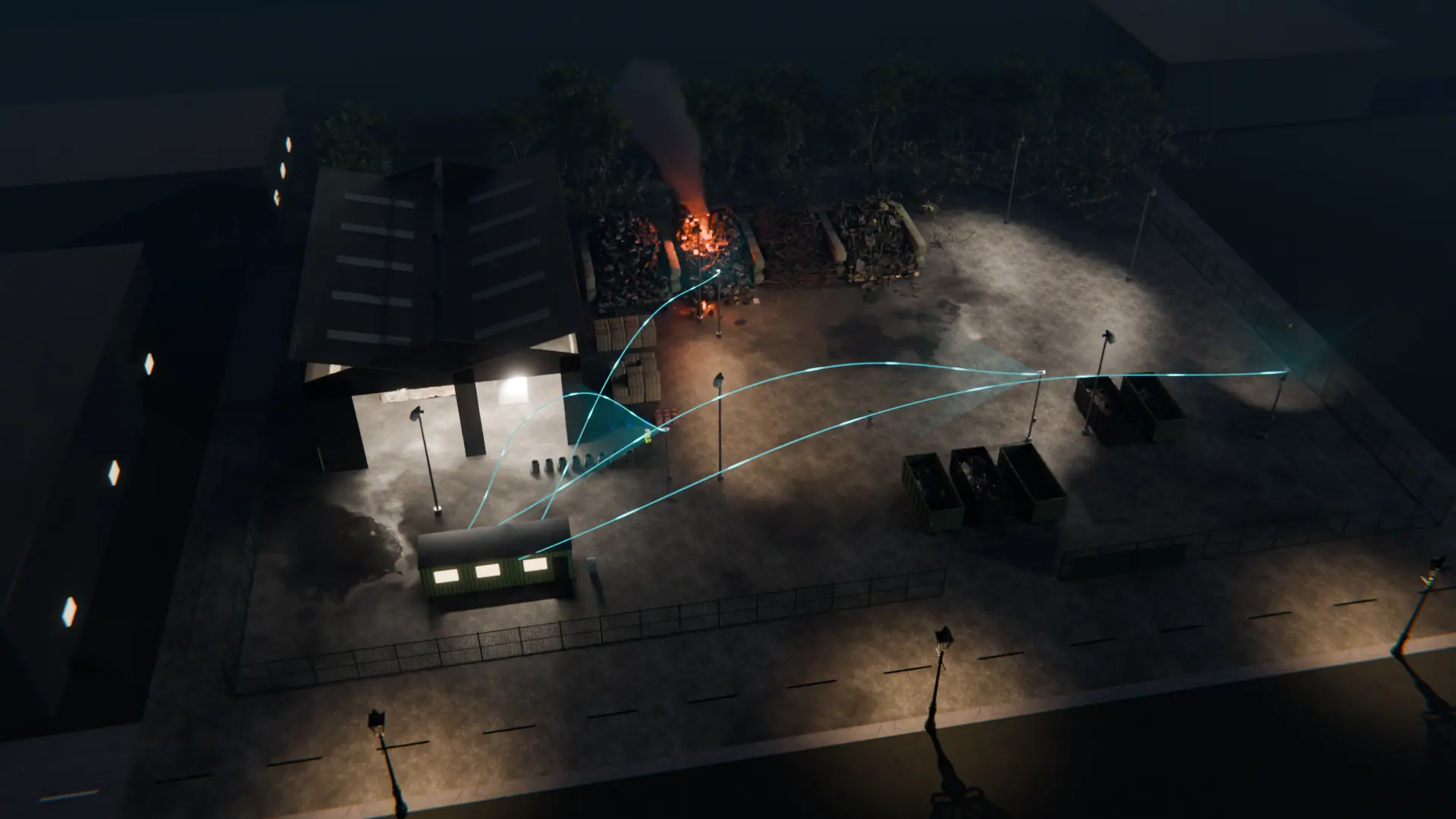
Let your cameras keep watching after the site empties
A free site assessment checks which existing cameras can see your hot work areas, skips and stores.
Illustrative 3D render