

AI CCTV for vehicle yards and dealerships
Woodcock AI adds intrusion, vehicle, smoke and fire detection to the CCTV your forecourt or compound already has. It watches stock rows, gates and EV charging bays out of hours and sends the clip to the people you choose, so theft, break-ins and vehicle fires are seen early.
Out-of-hours theft and intrusion
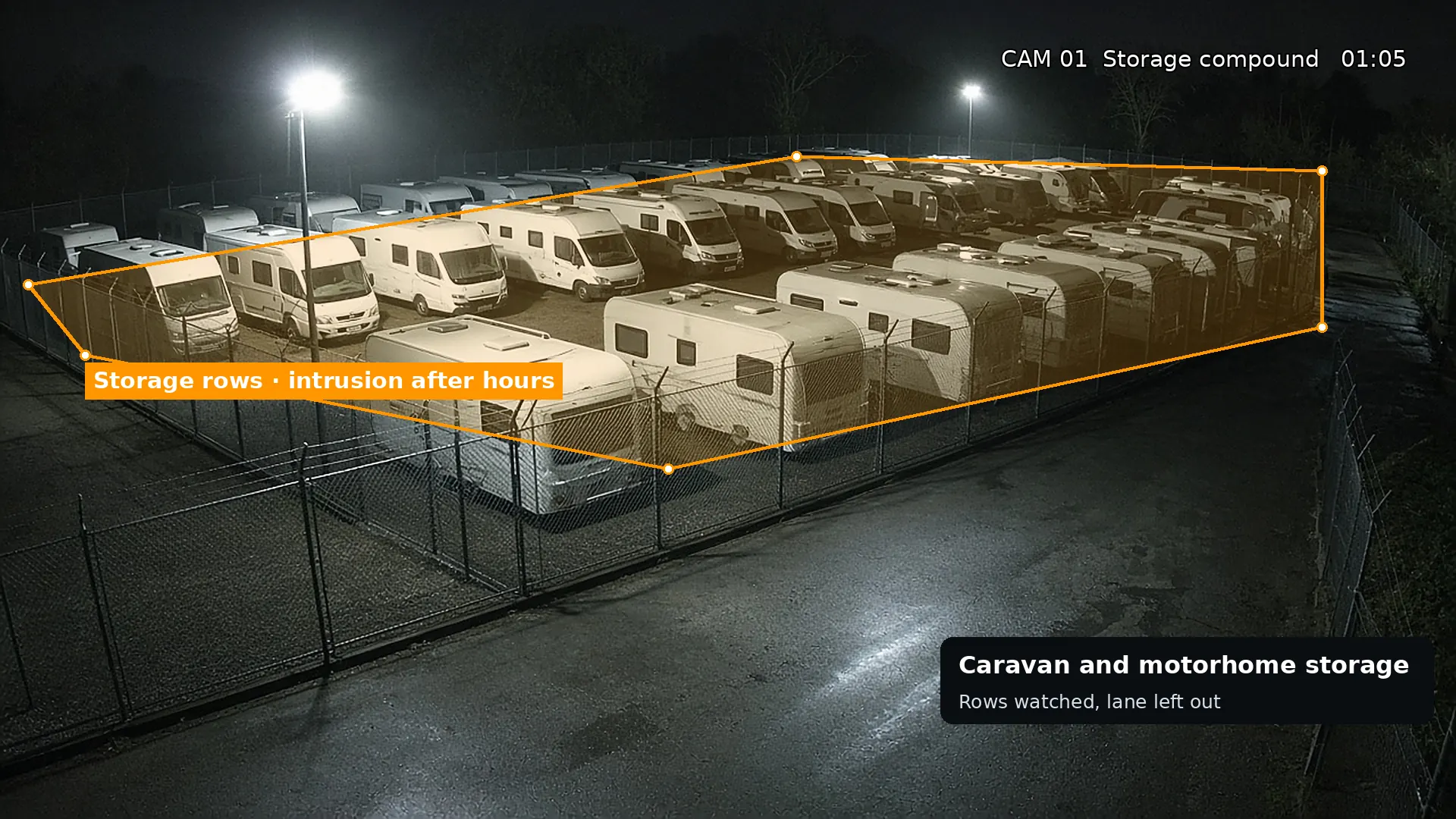
Dealerships, used-car lots and vehicle compounds keep high-value stock outside, usually with nobody on site overnight. That makes the gate, the fence line and the stock rows the places to watch.
Vehicle-related theft is tracked nationally: the ONS publishes a dataset on the nature of vehicle-related theft from the Crime Survey for England and Wales. Woodcock AI turns the cameras you already have into alerts. Draw an intrusion zone along the rows or a line across the gate, set the hours it is armed, and get the clip when someone enters. Plain motion alerts fire on headlights, rain and foxes; AI classification looks for people and vehicles instead.
 Multi-feed grid
Vehicles at the gate
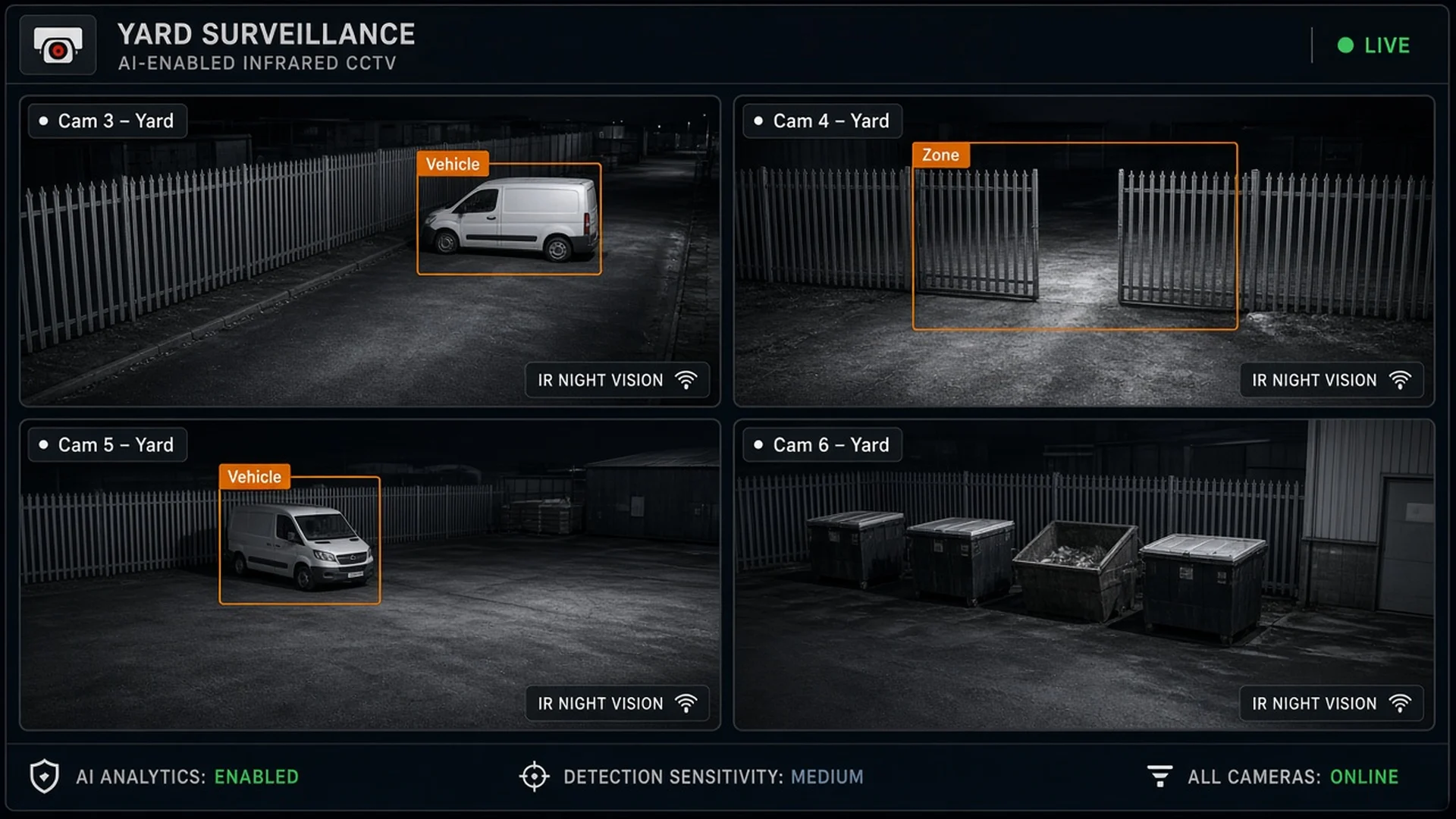
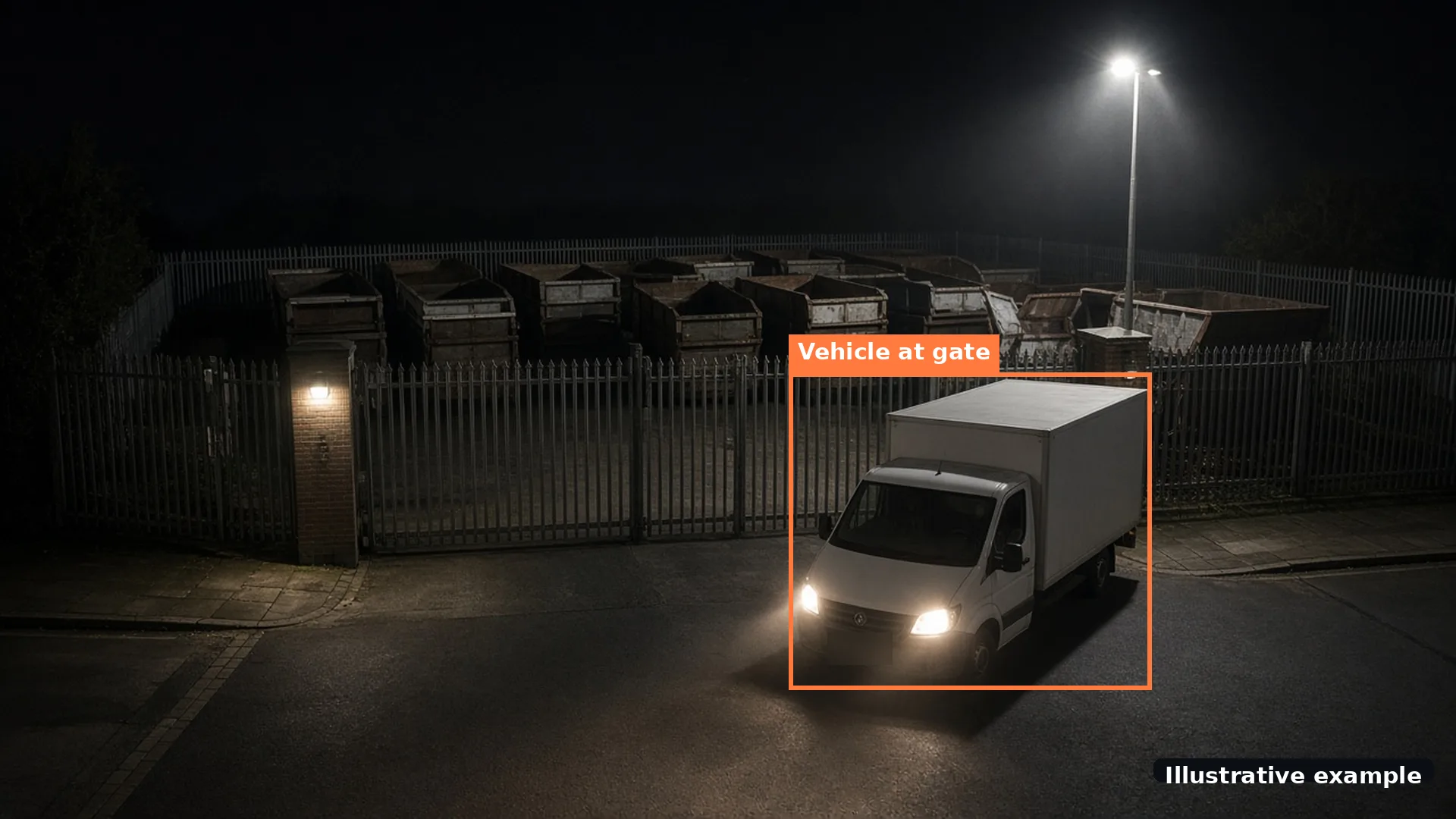
Vehicle detection, set up per camera view and confirmed at the site assessment, flags a vehicle stopping at the closed gate or driving into the yard out of hours, with the clip.
It is not number plate recognition. It tells you a vehicle is there when it should not be, so the right person can check the clip and decide what to do.
 Van after hours
Vehicle fires on parked rows
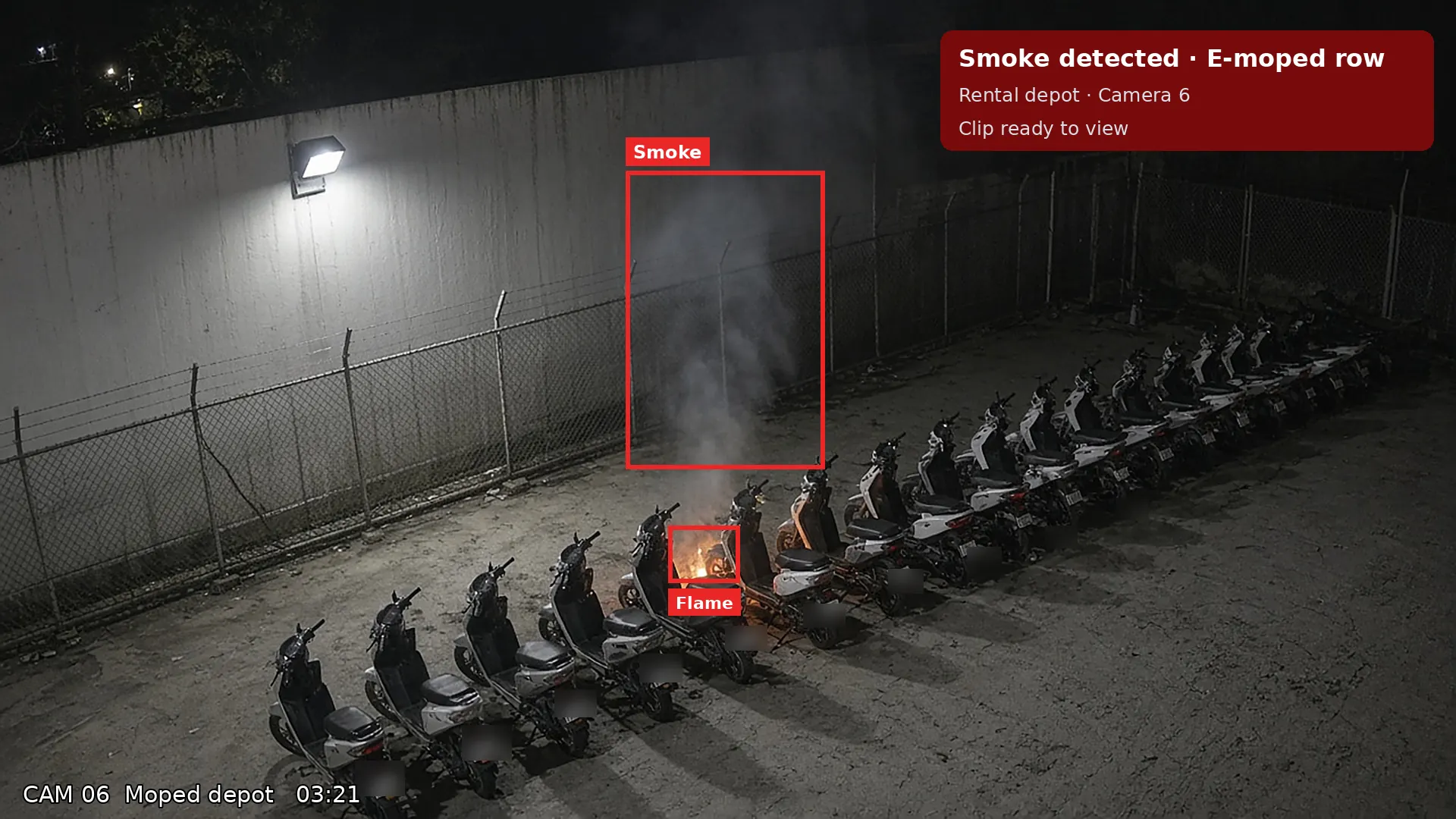
Parked vehicles sit close together, so a fire in one can spread along a row before anyone arrives, especially at night.
Woodcock AI watches existing cameras for visible smoke and flame and sends the clip, giving earlier sight of a fire on cameras that can see the rows. It complements, and does not replace, certified fire alarms. See the video smoke detection guide.
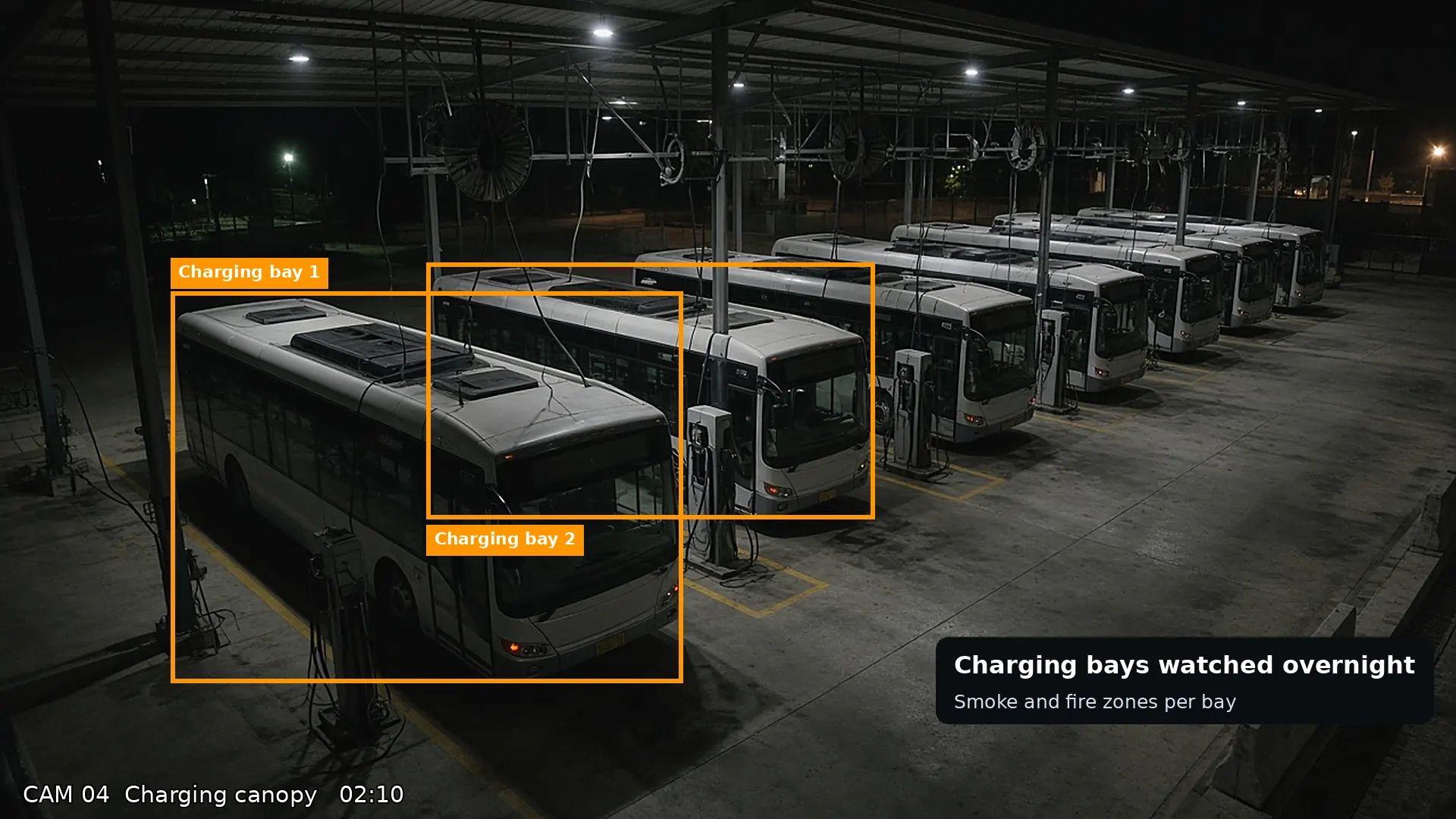
Electric vehicles and charging bays
Electric vehicle fires behave differently. The Department for Transport's interim fire safety guidance for EVs in covered car parks notes that a battery fire can reignite hours or days after the initial fire, through thermal runaway.
The FPA's RC59 recommendations for fire safety when charging electric vehicles say that where batteries are charged on commercial premises, the risk to the business is increased by charging overnight or at weekends, when very few or no staff are present. RC59 recommends keeping charging areas free of combustible material, being able to isolate the chargers from a safe place, and suitable automatic fire detection. The NFCC has also called for guidance to keep pace with EV charge point risks.
A camera with a clear view of the bays gives early visual warning of smoke out of hours. See thermal runaway in the glossary and our lithium-ion battery fires page.
Explore a vehicle yard, area by area
Choose an area to see the risk there and what a camera needs to see.
Forecourt and stock rows
The risk: High-value vehicles parked in the open, often with nobody on site overnight.
What the camera should see: Cameras along the rows with intrusion zones armed after closing, and clear sight of smoke on any parked vehicle.
Gate and perimeter
The risk: The way in and out for anyone moving a vehicle off site.
What the camera should see: A line across the gate and zones along the fence. Vehicle detection flags a vehicle stopping or entering out of hours.
EV charging bays
The risk: Charging can run overnight when few or no staff are present, which the FPA says increases the risk.
What the camera should see: A dedicated view of the bays, kept clear of combustible material, watched for smoke and flame.
Workshop and valeting
The risk: Workshops hold fuel, oils, batteries and hot work; valeting areas hold chemicals and electrical kit.
What the camera should see: Cover the workshop doors and any outside storage so smoke or a break-in is seen early.
How it works, with the clip in every alert
The AI is self-learning and fitted to each site. It learns what is normal for each camera, such as headlights, rain and floodlights, and every detection has a feedback button that goes into retraining for your site.
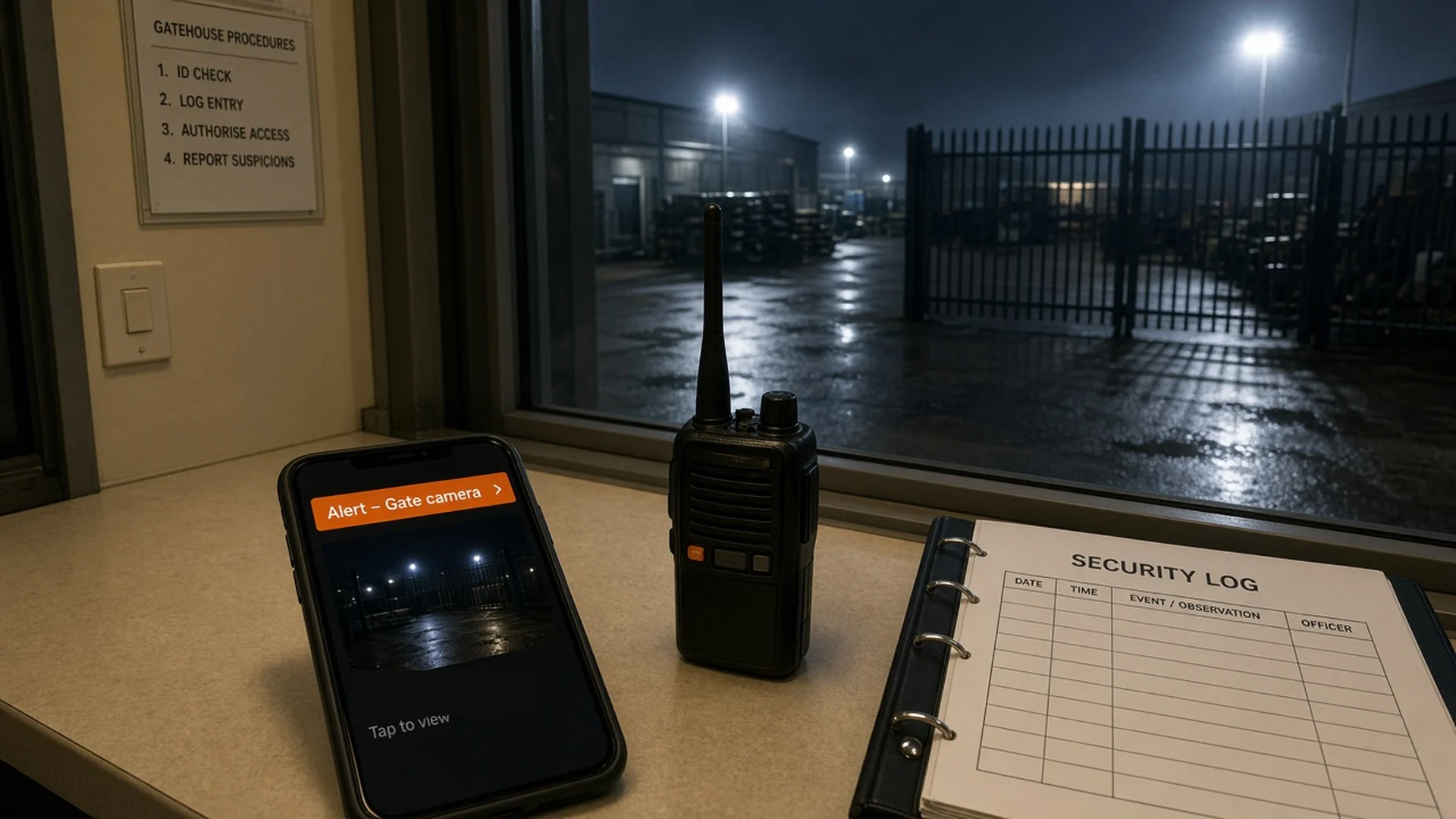
Alerts go by app push notification and email, each with the clip. Alerts to a monitoring centre (ARC) and phone-call alerts are available as optional add-ons. See how it works and how AI compares with security guards.
 Push notification
Is your yard covered? A quick check
Tick what is already true on your site. Your answers are saved in this browser only.
Anything unticked is worth raising in a free site assessment. For a wider lock-up routine, use the out-of-hours site security checklist.
Can AI CCTV help stop vehicle theft from a yard or forecourt?
It gives you an early warning. Intrusion detection runs in the zones and hours you set on gate, fence and forecourt cameras, and sends the clip to the people you choose when someone enters a closed yard, so they can act or call the police. It does not physically stop a theft.
Can it detect vehicles arriving out of hours?
Yes, with vehicle detection. A vehicle stopping at the closed gate or driving into the yard out of hours can raise an alert with the clip. Which cameras support it is confirmed at the free site assessment. It is not number plate recognition.
Can it spot a vehicle fire on a parked row?
It can spot visible smoke and flame on cameras that can see the row, day and night where the camera has infrared or lighting, and send the clip. It complements, and does not replace, a certified fire alarm.
Are electric vehicles a particular fire risk?
Government guidance on electric vehicles in covered car parks notes that battery fires can reignite hours or days after the first fire. The FPA's RC59 recommendations add that charging overnight or at weekends, when few or no staff are present, increases the risk for a business. Neither says EVs catch fire more often; they say the fires behave differently.
Should EV charging bays have their own camera?
It is sensible. RC59 recommends keeping charging areas clear of combustible material and having suitable automatic fire detection. A camera with a clear view of the bays gives early visual warning of smoke, especially overnight.
Will headlights, rain or foxes cause false alerts?
The AI is self-learning and fitted to each site. It learns what is normal for each camera, and every detection has a feedback button that goes into retraining. Read how to reduce CCTV false alarms.
Do I need new cameras?
Usually not. It works with most existing IP CCTV and recorders, and the free site assessment confirms which cameras and streams can be used before anything is set up.
Can alerts go to a monitoring centre?
Yes, as an option. Alerts to a monitoring centre (ARC) and phone-call alerts are available as optional add-ons. Standard alerts go to the people you choose by app and email.
What about privacy if cameras see the road?
CCTV that captures public areas must follow data protection law. The ICO guidance on CCTV explains what businesses need to do, such as signage and keeping footage only as long as needed.
Sources
- DfT: Covered car parks, fire safety guidance for electric vehicles (interim)
- FPA RISCAuthority RC59: Fire safety when charging electric vehicles
- NFCC position statement: Fire risks in energy technologies
- ONS: Nature of crime, vehicle-related theft (dataset)
- ICO: Guidance on CCTV and video surveillance
Last checked 23 October 2026.
Map your yard to the cameras you have
A free site assessment maps your stock rows, gate, fence line and EV charging bays to your existing cameras, and confirms what is supported before anything is set up.
3D renderKeep exploring
Related
Get a free assessment for your site
Lorries losing diesel overnight? See our fuel and diesel theft prevention guide.
Vans and cars damaged overnight? See our vandalism prevention guide.
Running a dealership or used car lot? Read our car dealership security guide for key control, layout and forecourt detection.
Tractor units, trailers and loads parked overnight? See our HGV yard security guide.
A compound full of caravans and motorhomes? See our caravan storage security guide.
Customer cars and keys in a repair garage rather than a compound? See our vehicle repair garage security guide.
Electric vehicles charging in the yard overnight: see our EV charging fire safety guide.