

Outdoor fire detection for yards and open sites
Last reviewed
Short answer: indoor smoke and heat detectors rely on a ceiling, so they do not work in open yards. Outdoor sites use line-of-sight methods instead: flame detectors and thermal cameras for defined high-risk spots, video smoke and fire detection on existing CCTV for wide yards and stockpiles, and people for hot work and short-term risks. Most sites need more than one, and the hours when the site is closed matter most.[2]
Why is outdoor fire detection different?
Indoors, a fire's smoke and heat rise and collect under the ceiling, right where the detector is. Outdoors, there is no ceiling, and the wind takes the smoke wherever it likes.
That one difference rules out most of the fire detection people know. A point smoke detector on a pole in the middle of a yard would rarely see enough smoke to trigger, and a heat detector would need the fire almost on top of it. So outdoor fire detection depends on seeing the fire from a distance: the flame, the heat, or the smoke plume rising above it.
Outdoor fires also tend to start in places that are hard to watch. A stockpile can smoulder inside for hours before smoke shows at the surface. Bales, timber and tyres stored in rows hide what is behind them. Vehicles and charging bays sit unattended overnight. And many fires on waste sites start after working hours, when nobody is there to notice.[2]
The scale of the problem is real. Fire and rescue services in England attended 256 industrial waste fires in the year ending December 2025, up from 183 in 2021.[4] Our waste fire facts guide brings the official figures together.
What are the options for outdoor fire detection?
Six approaches come up on most outdoor sites. Each one sees a fire in a different way, so each has places where it fits and places where it does not.
The table sets out what each one detects, where it is usually used and its main limits outdoors. It is a general guide: the right choice for a particular area depends on your fire risk assessment, the material stored and what your insurer expects.
| Option | What it detects | Best suited to | Limits outdoors |
|---|---|---|---|
| Point smoke and heat detectors | Smoke or heat collecting at a ceiling | Rooms, offices and enclosed stores | Outdoors there is no ceiling to trap smoke or heat, and wind carries it away, so they are not designed for open yards. |
| Optical beam detectors | Smoke crossing a beam between two points | Large indoor spaces such as warehouses | Built for enclosed spaces; outdoors, sunlight, rain, fog and moving structures can interfere with the beam. |
| Flame detectors (UV or IR) | Radiation given off by open flame in direct line of sight | High-hazard areas with a defined risk, such as fuel or battery stores | Need a clear line of sight to the flame, and a smouldering fire with no flame yet may not trigger them. |
| Thermal cameras | Surface temperature and hot spots, in daylight or darkness | Stockpiles and areas where an early heat rise matters | Usually new, dedicated hardware on masts; they see surface heat, not what is buried inside a pile. |
| Video smoke and fire detection on existing CCTV | Visible smoke plumes and flames in the camera picture | Yards, stockpiles, open storage and large open buildings already covered by CCTV | Depends on each camera's view, lighting and weather; it supplements certified fire detection rather than replacing it. |
| Fire watch and patrols | A person seeing or smelling a fire | Hot work, shutdowns and short-term high-risk periods | Only as good as the coverage and timing of the rounds, and costly to run every night. |
These options work best together. A dedicated detector on the battery store, video detection across the yard and a fire watch after hot work cover very different risks.
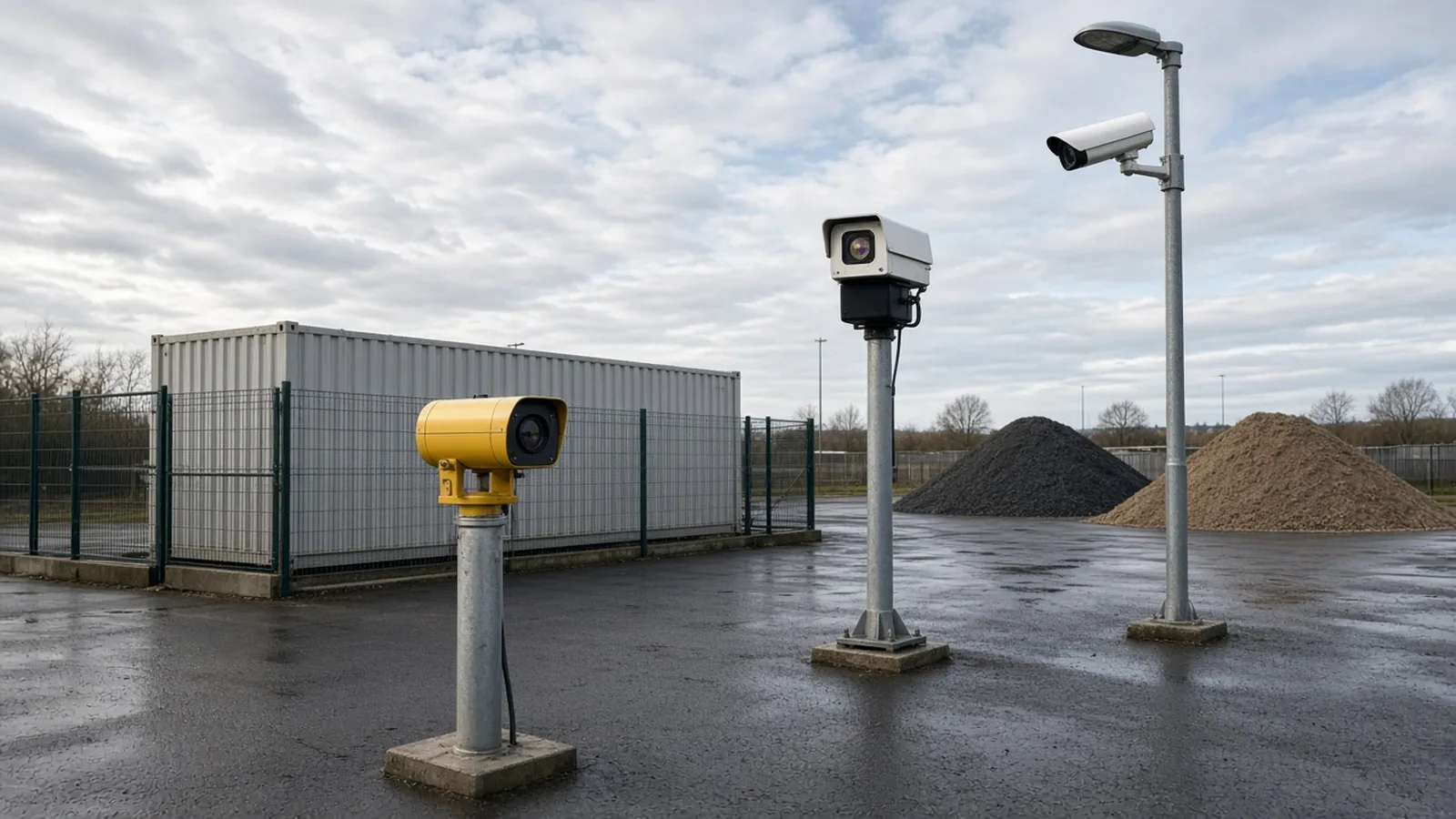 Illustrative
Which outdoor areas need fire detection?
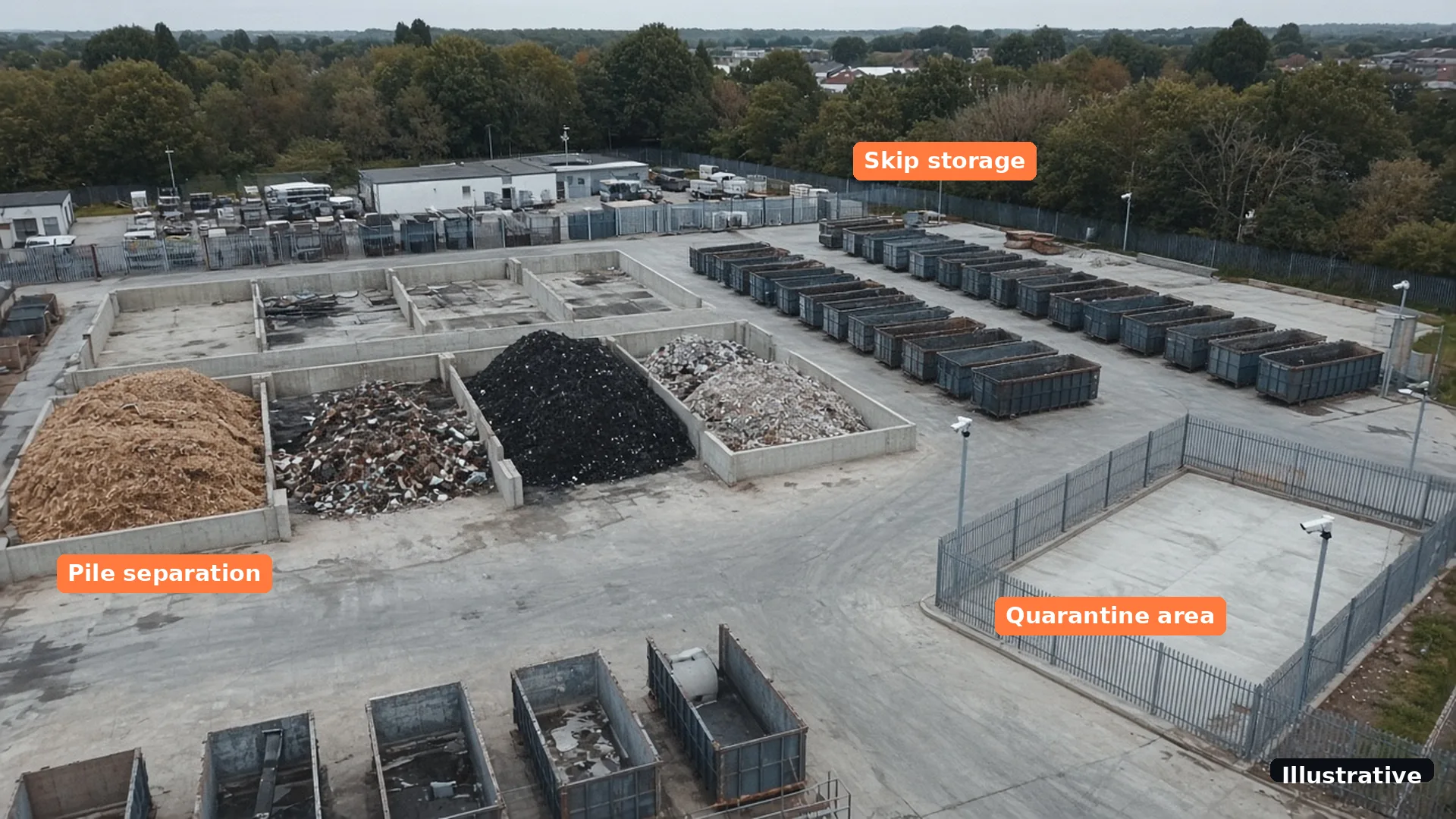
Start with anything combustible that sits outside, especially overnight. These six areas account for most outdoor fire risk on industrial, waste and logistics sites.
Stockpiles and waste bays
Smoke usually shows above a pile before flame does. Cameras that see the pile and the air above it give the earliest visual warning.
Open storage
Timber, pallets, bales, tyres and plastics stored outside. Wide views of the stacks and the gaps between them help spot a fire before it spreads across rows.
Battery and quarantine areas
A defined, high-risk spot where a dedicated flame or thermal detector often makes sense, with CCTV giving the wider picture and the clip.
Vehicle parks and compounds
Plant, vans and charging bays parked overnight. Video detection on existing cameras can cover them without new hardware on every bay.
Building perimeters and roofs
External walls, skips against buildings and rooftop plant, where a fire outside can spread inside before an indoor detector sees it.
Hot work areas
The fire watch after hot work is still required. Cameras keep watching the area after the watch ends and the site empties.
For waste sites, the Environment Agency's fire prevention plan sets out how stockpiles should be sized, separated and quarantined, as well as how fires should be detected. The fire prevention plan checklist goes through it section by section, and the lithium-ion battery fires guide covers one of the fastest-growing causes.
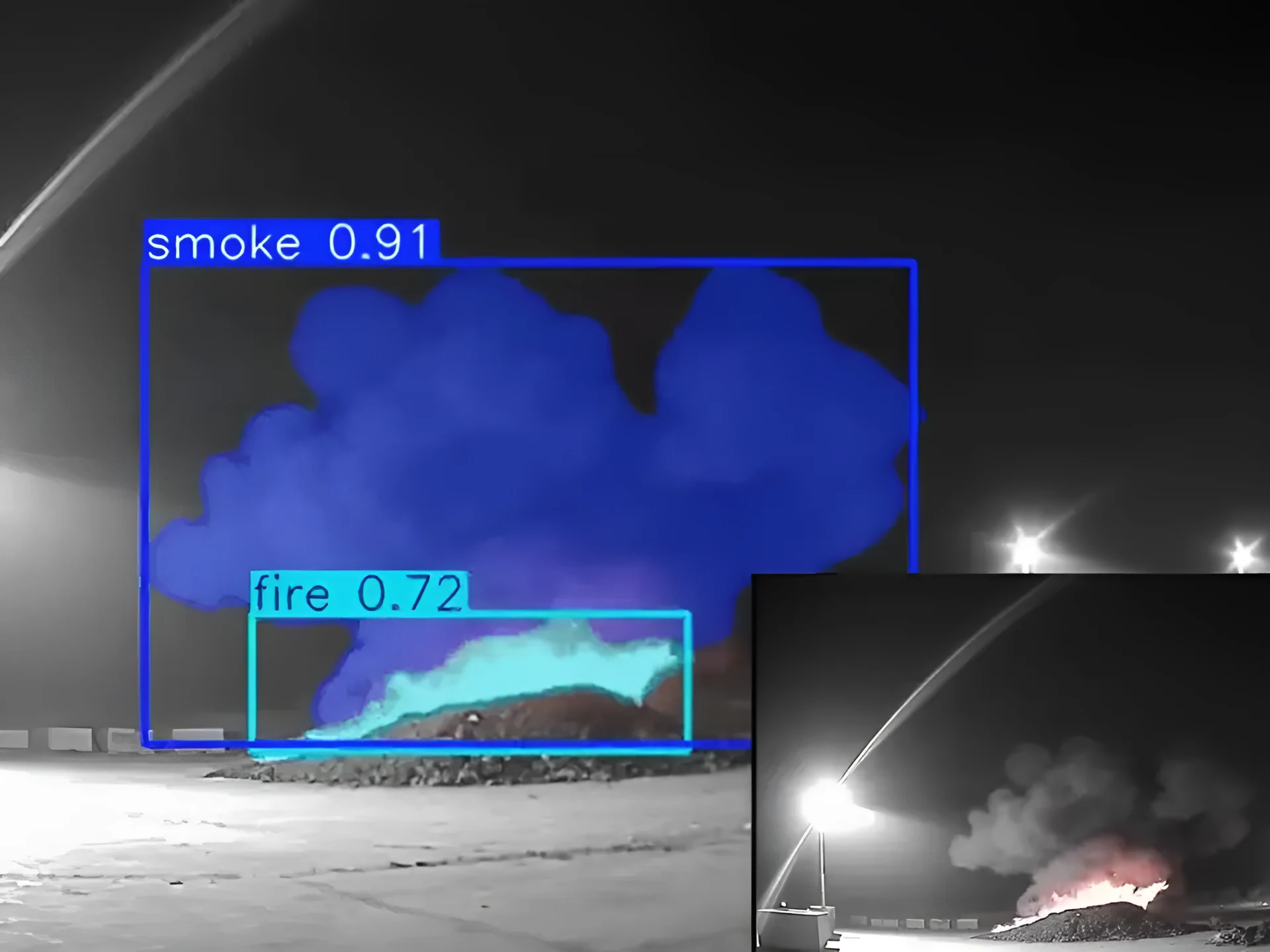
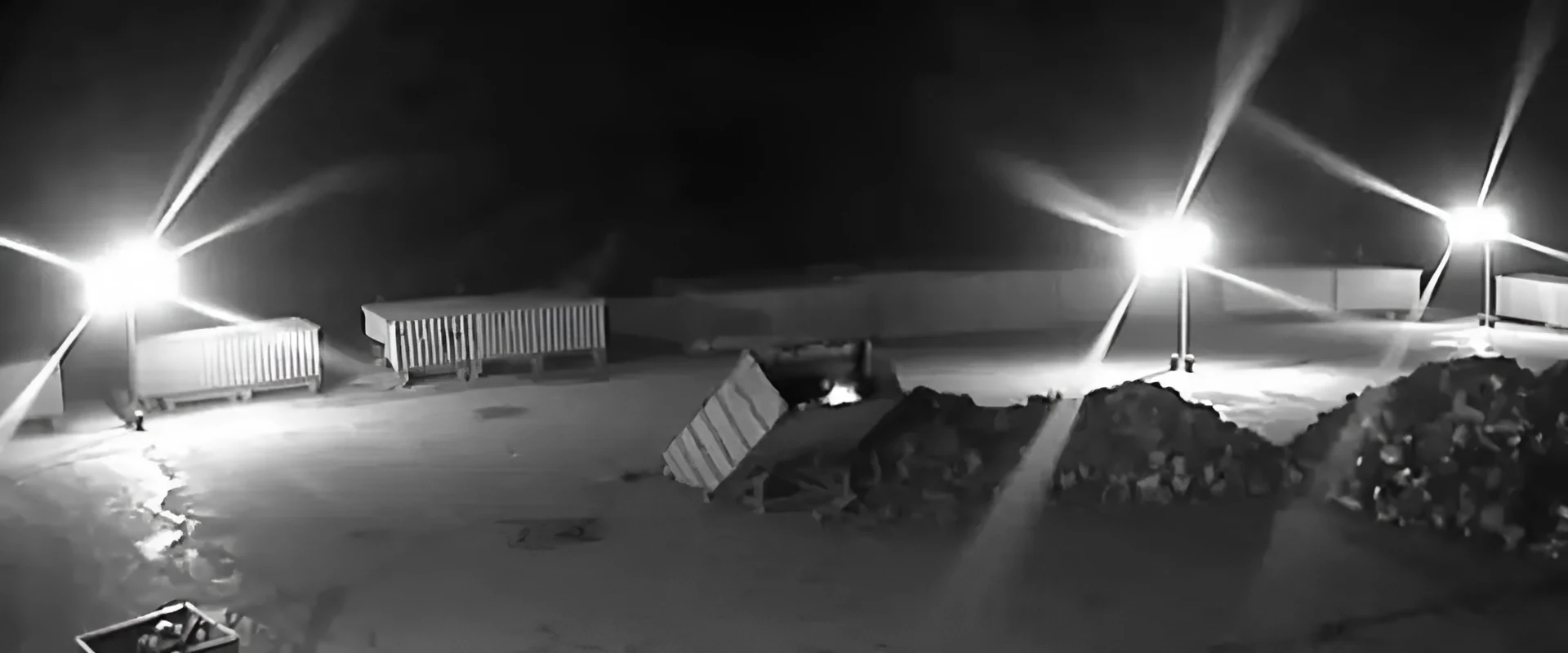
Smoke above the pile comes first
On an outdoor stockpile, smoke rising above the pile is often the first visible sign. A camera that sees the pile and the air above it can raise the alarm on the smoke, before flames take hold across the face.
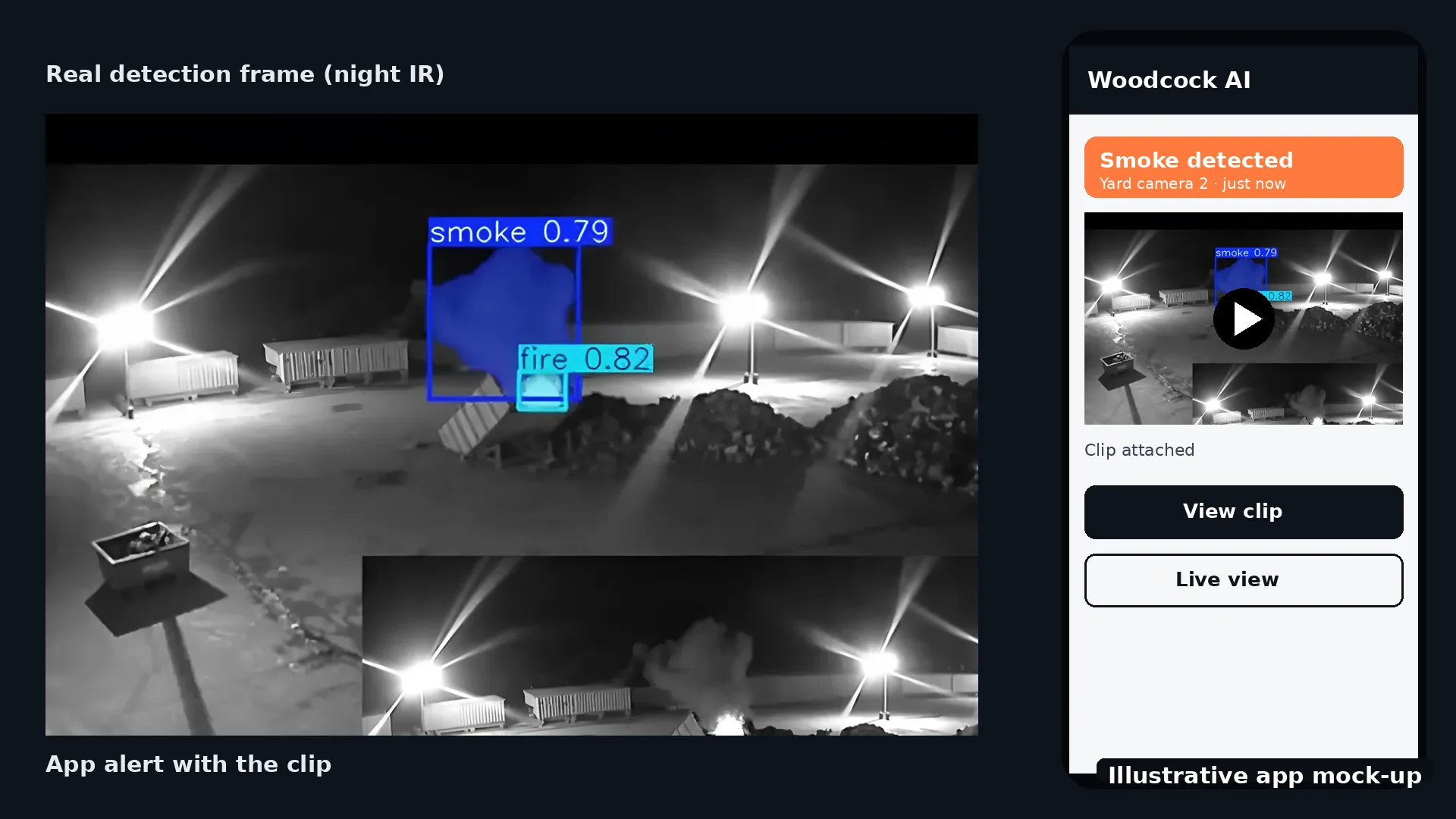
This frame is from a camera running Woodcock AI at night, on infrared, with the smoke and flame boxed and labelled.
How does video fire detection on existing CCTV work outdoors?
Software watches the picture from cameras you already have and looks for the shapes, movement and colour of smoke and flame. When it finds them in an area you care about, it sends an alert with the clip.
The big advantage outdoors is coverage. Most yards already have CCTV for security, often on tall poles with wide views of stockpiles, storage and vehicle parks. Adding detection to those cameras covers large open areas without fitting new detectors across the site. At night, infrared cameras give a usable picture, and smoke and flame can still be detected in it.
The limits are those of the camera. It can only detect what it can see, so blind spots behind stacks or buildings stay blind. Heavy fog, driving rain and dirty lenses reduce what the camera sees. And it detects visible smoke and flame, not heat buried inside a pile, which is where thermal cameras earn their place. Our guide to video smoke detection on existing CCTV explains the technology in more depth.
Woodcock AI lets you draw a polygon detection area round each stockpile or store, so the camera alerts only on the area you have a reason to watch, not the road beyond the fence or the floodlight on the wall.
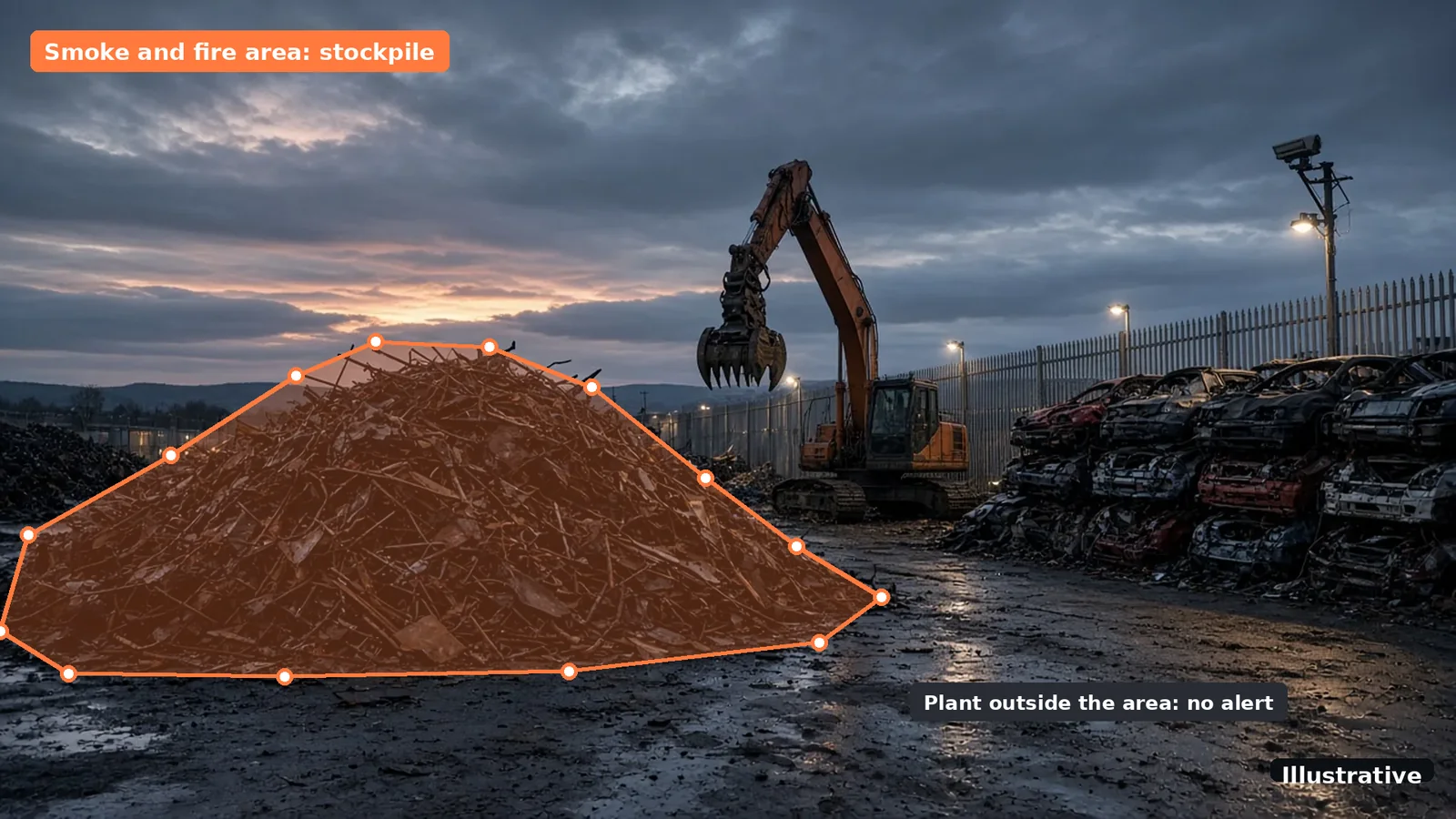 Illustrative
How should cameras be positioned for outdoor fire detection?
For fire, a camera needs to see the material and the air above it. Many security cameras are aimed at gates and fences instead, so it is worth checking each view with fire in mind.
Some general points apply to most yards. Look down on stockpiles from height, so the camera sees the top of the pile and the sky behind it, where smoke shows up first. Where you can, see a large pile from two directions, so one camera covers the side the other cannot. Avoid aiming straight into floodlights or the low sun, which wash out the picture. Check that infrared lighting reaches the far end of the area you want to cover at night. And make sure mounts are firm: a camera that shakes in the wind gives a poorer picture.
Record which camera covers which area. You will need that for your fire risk assessment, for a fire prevention plan if you have one, and for your insurer's survey. A free site assessment checks each existing camera's view for you.
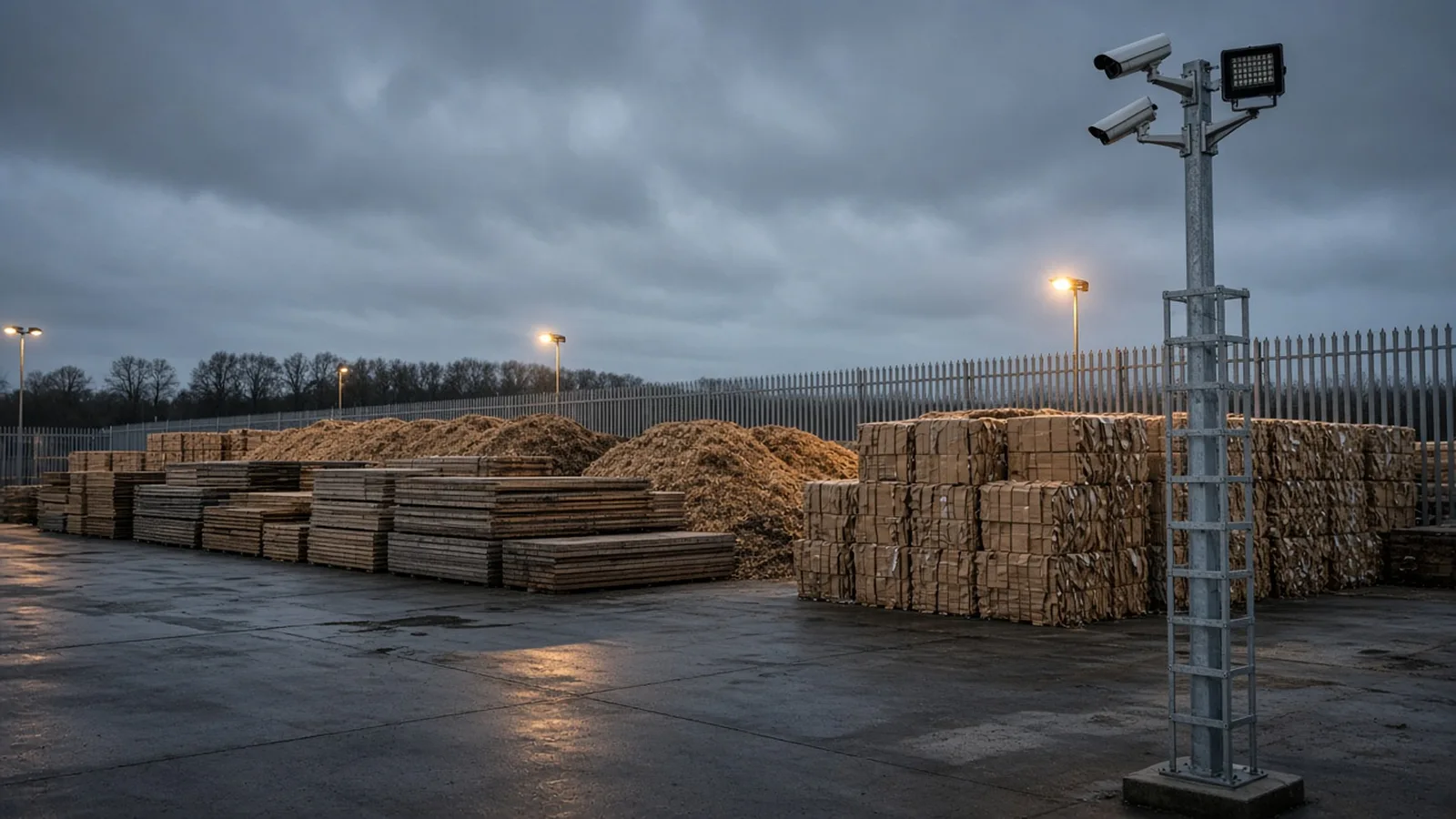 Illustrative
- Cameras at heightLooking down on the stacks shows the tops of the piles and the air above them, where smoke appears first.
- Floodlight beside, not in viewLighting next to the camera helps at night; a floodlight in the picture washes it out.
- Gaps between rowsWide views of the gaps help spot a fire before it jumps from one row to the next.
- Wood chip pilesPiles can heat up inside. Video sees smoke at the surface; thermal sees surface heat.
- Baled materialBales stacked high hide what is behind them, so a second view from another side helps.
 Illustrative
What about rain, fog, steam and false alarms?
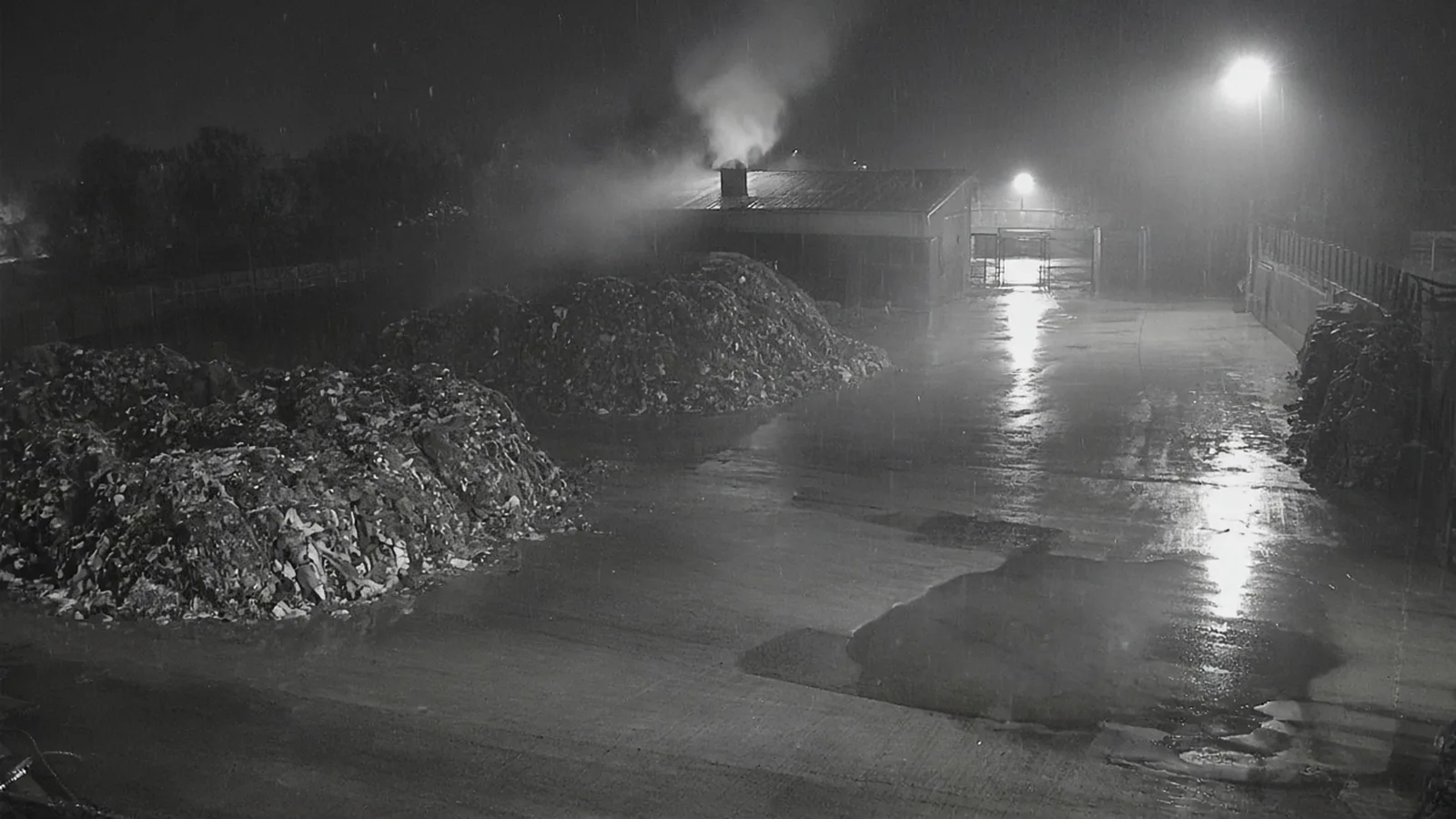
Outdoor cameras see things that look a little like smoke: mist, steam from vents, dust from loading, headlights in rain. A good outdoor system has to tell them apart, and get better at it on your site.
Three things keep false alarms down. First, only watch where you need to: a detection area drawn round the pile ignores a steaming vent on the next roof. Second, keep the basics right: clean lenses, no cobwebs, no lights shining into the camera. Third, use a system that learns. Woodcock AI learns each site's cameras, and every detection has a feedback button; marking an alert as wrong feeds into retraining, so the same kind of alert becomes less likely on that camera.
Weather also limits what any camera can see. In thick fog, no camera sees far, and that is a good reason not to rely on one method alone. The guide to reducing CCTV false alarms and how the self-learning AI works cover this in more detail.
 Illustrative
Who finds an outdoor fire when the site is closed?
During the day, someone usually notices smoke in the yard. At night and at weekends, the answer is often nobody, until a neighbour or a passing driver calls the fire service.
WISH notes that a significant number of waste site fires happen after working hours.[2] The Environment Agency's fire prevention plan asks how you will detect a fire both in working hours and when the site is closed.[1] Night patrols help, but a round every few hours leaves long gaps in between.
Out-of-hours detection is where cameras earn their keep, because they are already watching all night. With Woodcock AI you set schedules per camera, for example smoke and fire detection all day and intrusion detection only when the site is closed. Alerts go to the people you choose, with the clip, so they can see straight away whether it is a real fire.
 Real camera frame
An alert someone can act on
Each alert arrives with the clip, so whoever receives it at night can check in moments whether to call the fire service or a keyholder. Clips can be downloaded for your records and your insurer.
Support is available 24/7. Alerts to a monitoring centre (ARC) and phone-call alerts are available as optional paid add-ons.
What do the rules say about outdoor fire detection?
Fire safety law asks for fire detection where necessary, the Environment Agency asks permitted waste sites how they detect fires in and out of hours, and insurers may set their own standards on top.
Under the Regulatory Reform (Fire Safety) Order 2005, premises must, where necessary, be equipped with fire detectors and alarms to the extent that is appropriate, based on your fire risk assessment.[3] For permitted waste sites in England, the fire prevention plan guidance lists CCTV visual flame detection among automated detection systems, but it must be covered by third-party certification or a recognised standard, or you must show you can still meet the plan's three objectives.[1]
Insurers may set their own standards for fire detection, so talk to yours before you change what you rely on.[2] The insurer expectations guide and the CCTV compliance hub go into more detail.
See what your existing cameras could cover outdoors
A free site assessment checks which of your cameras can connect, what each one can see of your yards, stockpiles and storage, and which detections are supported on each, so you know where video detection fits alongside what you already have.
Where Woodcock AI fits in outdoor fire detection
Woodcock AI adds smoke, fire and intrusion detection to the CCTV cameras you already have. It supplements certified fire alarm and detection systems; it does not replace them.
- Polygon detection areas. Draw the exact shape to watch round each stockpile, bay or store, rather than a rough rectangle that takes in roads and lights. See polygon detection zones.
- Per-camera schedules. Smoke and fire all day, intrusion out of hours, set camera by camera.
- A self-learning AI. It learns each site's cameras, and the feedback button on every detection feeds into retraining.
- Plain-English questions. Ask your cameras what happened in everyday language, and download the clips you need.
- Alerts that reach someone. App alerts with the clip go to the people you choose, with support available 24/7. Alerts to a monitoring centre (ARC) and phone-call alerts are available as optional paid add-ons.
See the smoke and fire detection camera page for how it works on your cameras, or the waste and recycling and industrial pages for your sector.
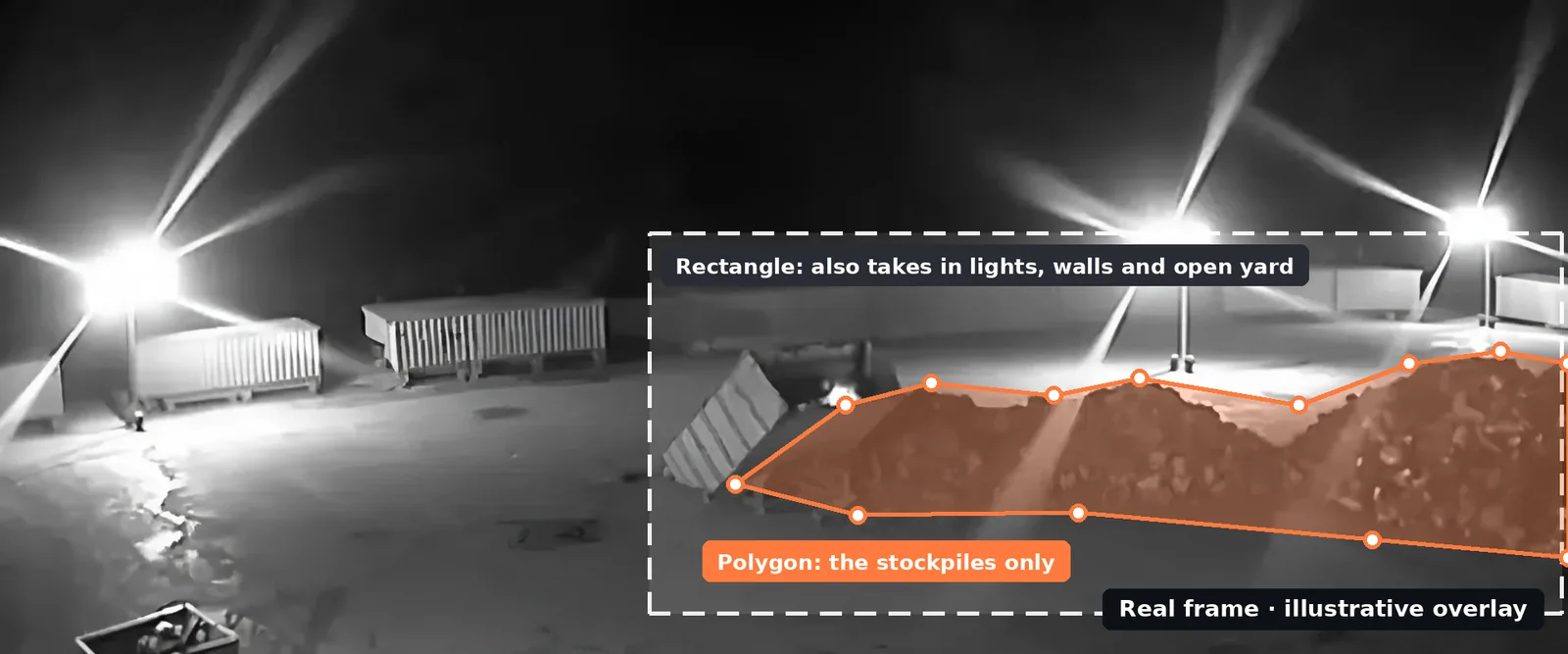 Illustrative overlay
How to plan outdoor fire detection for your site
Seven steps take you from a site plan to coverage you can explain to a fire officer, a regulator or an insurer.
Map what burns, and where
List every outdoor area with combustible material: stockpiles, bays, open storage, vehicles, battery stores and skips. Mark them on a site plan.
Mark what you already have
Add your existing CCTV cameras, floodlights, fire alarm devices and any flame or thermal detectors to the same plan, with what each one can see.
Find the gaps by time of day
For each area, ask who or what would spot a fire during working hours, in the evening and when the site is closed. Gaps out of hours are common.[2]
Choose the right layer for each gap
Dedicated flame or thermal detectors for defined high-risk spots; video detection on existing cameras for wide yards and stockpiles; people for hot work and short-term risks.
Set where and when each camera alerts
Draw detection areas round the piles and stores, leave out roads and floodlights, and set schedules for working hours and closed hours.
Agree who responds
Decide who receives alerts at each time of day, what they check first and when they call the fire service. Write it into your fire plan.
Record it and review it
Keep the plan, camera register and alert log together for your fire risk assessment, fire prevention plan and insurer. Review after any change, fire or near miss.
This guide is general information, not fire engineering, legal or insurance advice. Your fire risk assessment, your regulator and your insurer decide what applies to your site. Scotland and Northern Ireland have their own fire safety law and environmental regulators.
What is outdoor fire detection?
Outdoor fire detection means spotting a fire in open areas such as yards, stockpiles, open storage and vehicle parks, where indoor smoke and heat detectors do not work well. Common options are flame detectors, thermal cameras, video smoke and fire detection on CCTV, and people on patrol, often used together.
Do smoke detectors work outside?
Standard point smoke detectors are designed for enclosed spaces where smoke collects at the ceiling. Outdoors, smoke rises and disperses and wind carries it away, so they are not a practical way to cover an open yard or stockpile.
What is the best fire detection for an outdoor yard?
There is rarely a single answer. Many sites use a dedicated flame or thermal detector for a defined high-risk spot, video detection on existing CCTV for wide yards and stockpiles, and a fire watch for hot work. Your fire risk assessment and your insurer should guide the mix.
Can existing CCTV detect fire outdoors?
Yes, with video analytics. Software watches the camera picture for visible smoke and flame and sends an alert with the clip. It works where a camera can see the area, in daylight and at night on infrared cameras, and depends on the view, lighting and weather.
Is video fire detection better than thermal cameras?
They see different things. Thermal cameras measure surface heat and can work in darkness and smoke; video detection sees visible smoke and flame and can run on cameras you already have. The comparison of video AI, thermal and on-camera analytics goes into the detail.
Does the Environment Agency accept CCTV for fire detection?
The fire prevention plan guidance lists CCTV visual flame detection among automated detection systems, but it must be covered by third-party certification or a recognised standard, or you must show you can still meet the plan's three objectives.[1]
How do you stop rain, fog and steam causing false fire alarms?
Draw detection areas only where you need them, keep floodlights and roads out of view where you can, keep lenses clean, and tell the system when an alert is wrong. With Woodcock AI, the feedback button on each detection feeds into retraining for that site's cameras.
Does AI fire detection replace a fire alarm system?
No. Video AI on existing CCTV supplements certified fire alarm and detection systems. It adds early visual warning in the places cameras already watch, including out of hours, and does not replace your alarm, your fire risk assessment or your emergency plan.
Sources
Law, regulatory guidance and industry guidance referred to on this page.
- Environment Agency, Fire prevention plans: environmental permits. The three FPP objectives, detection in working hours and when the site is closed, CCTV visual flame detection among automated systems, and security measures such as fencing, intruder alarms and CCTV. Last checked 24 October 2026.
- WISH, WASTE 28: Reducing fire risk at waste management sites (issue 3, March 2020). Good practice guidance written with the EA, HSE, NFCC and others. Notes that insurers may set their own standards and that a significant number of waste site fires occur after working hours. Last checked 24 October 2026.
- The Regulatory Reform (Fire Safety) Order 2005, article 13: Fire-fighting and fire detection. Where necessary, premises must be equipped, to the extent that it is appropriate, with fire detectors and alarms. Last checked 24 October 2026.
- MHCLG, Number of industrial waste fires, England 2021 to 2025. Fire and rescue services in England attended 256 industrial waste fires in the year ending December 2025, up from 183 in 2021. Last checked 24 October 2026.
Find out what your cameras can see outdoors
A free site assessment reviews your existing cameras, what each one covers of your yards, stockpiles and storage, and where smoke, fire and intrusion detection would sit alongside the systems you already rely on. Alerts to a monitoring centre (ARC) and phone-call alerts are available as optional paid add-ons.
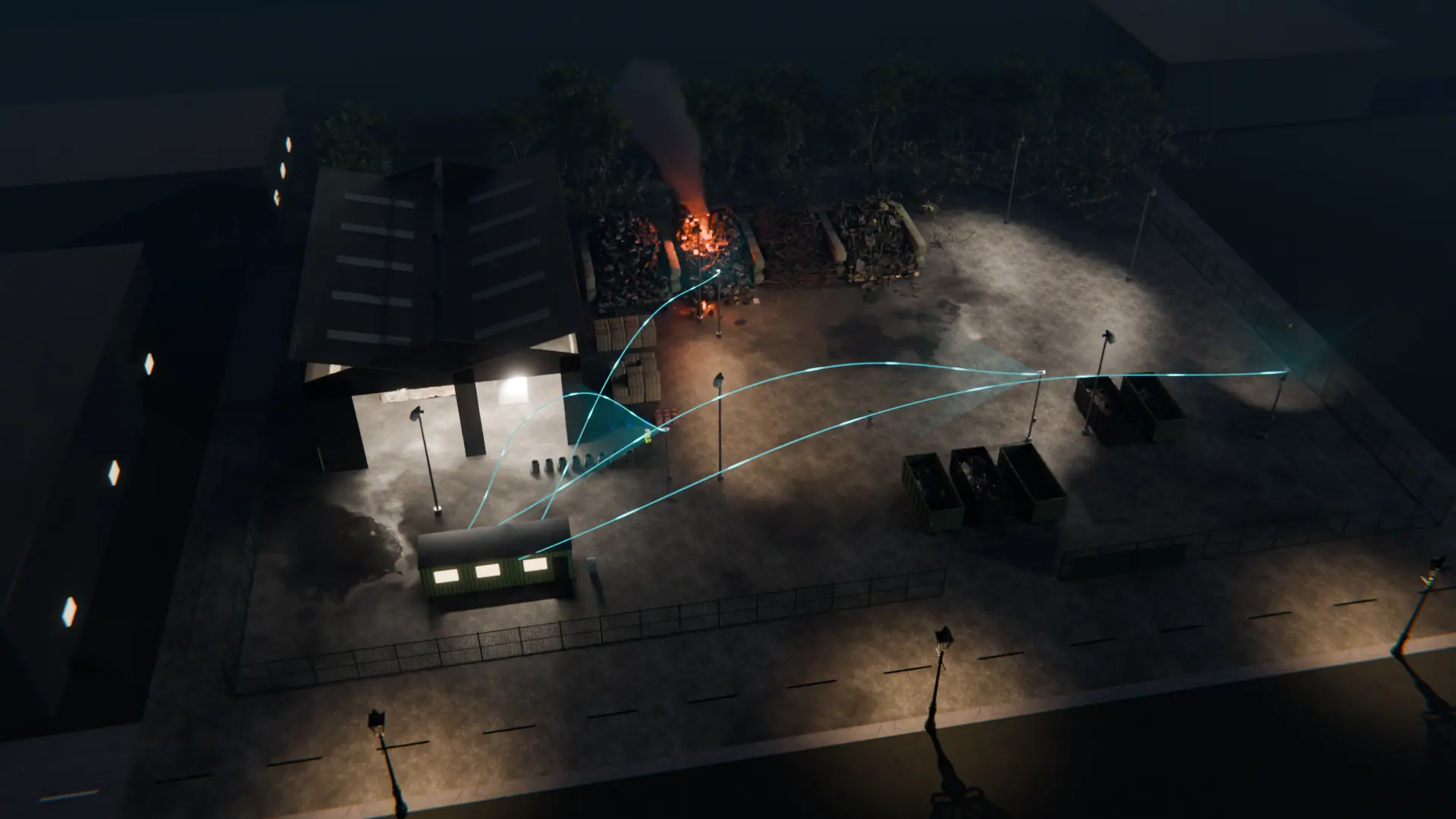
Illustrative 3D renderRelated
Want us to check your site against this?