

Fire prevention plans: thermal cameras vs AI on existing CCTV
Last updated
The Environment Agency does not name one technology. Fire prevention plans need proportionate detection that raises the alarm in working hours and when the site is closed, backed by certification or a recognised standard. Thermal suits self-heating piles; video AI on existing CCTV watches yards for visible smoke. Most layer both.[1]
What does the EA fire prevention plan guidance ask for on detection?
It asks for procedures that detect a fire in its early stages and raise the alarm in working hours and when the site is closed, proportionate to your risks. If your environmental permit requires a fire prevention plan (FPP), the Environment Agency guidance sets out what it must cover. Detection is one section of it, and it is written in terms of outcomes rather than products.
The guidance has three objectives: minimise the likelihood of a fire happening, aim for a fire to be extinguished within 4 hours, and minimise the spread of fire within the site and to neighbouring sites.[1] Detection supports all three, because the earlier a fire is found, the smaller it is when someone responds.
On detection itself, the guidance says you must have procedures in place to detect a fire in its early stages, and you must show in your plan how the detection system will raise the alarm both during working hours and when the site is closed. The system must be proportionate to the nature and scale of your activities and the associated risks, and it can be automated or manual.[1]
It then lists examples of appropriate automated systems: smoke and heat detectors including temperature probes, CCTV visual flame detection systems, and spark, infrared and ultraviolet detection. Whatever you use, its design, installation and maintenance must be covered by an appropriate third-party certification scheme such as UKAS, or meet an appropriate recognised standard such as a British Standard, and you must provide evidence of that certification in your plan. If you do not meet a recognised standard or accreditation, you must show you can still meet the three objectives.[1]
Two practical points follow. First, both thermal monitoring and CCTV-based detection appear in the guidance, so the question is rarely which one is allowed; it is which one suits each area of your site. Second, the certification and evidence requirement applies to the system as a whole, so check what your chosen supplier can provide before you write it into the plan. The current guidance on GOV.UK shows it was last updated on 11 January 2021; check the publication page for any later changes before you submit.[2]
Our fire prevention plan checklist goes through every section of the plan, not only detection.
What do thermal cameras do well on a waste site?
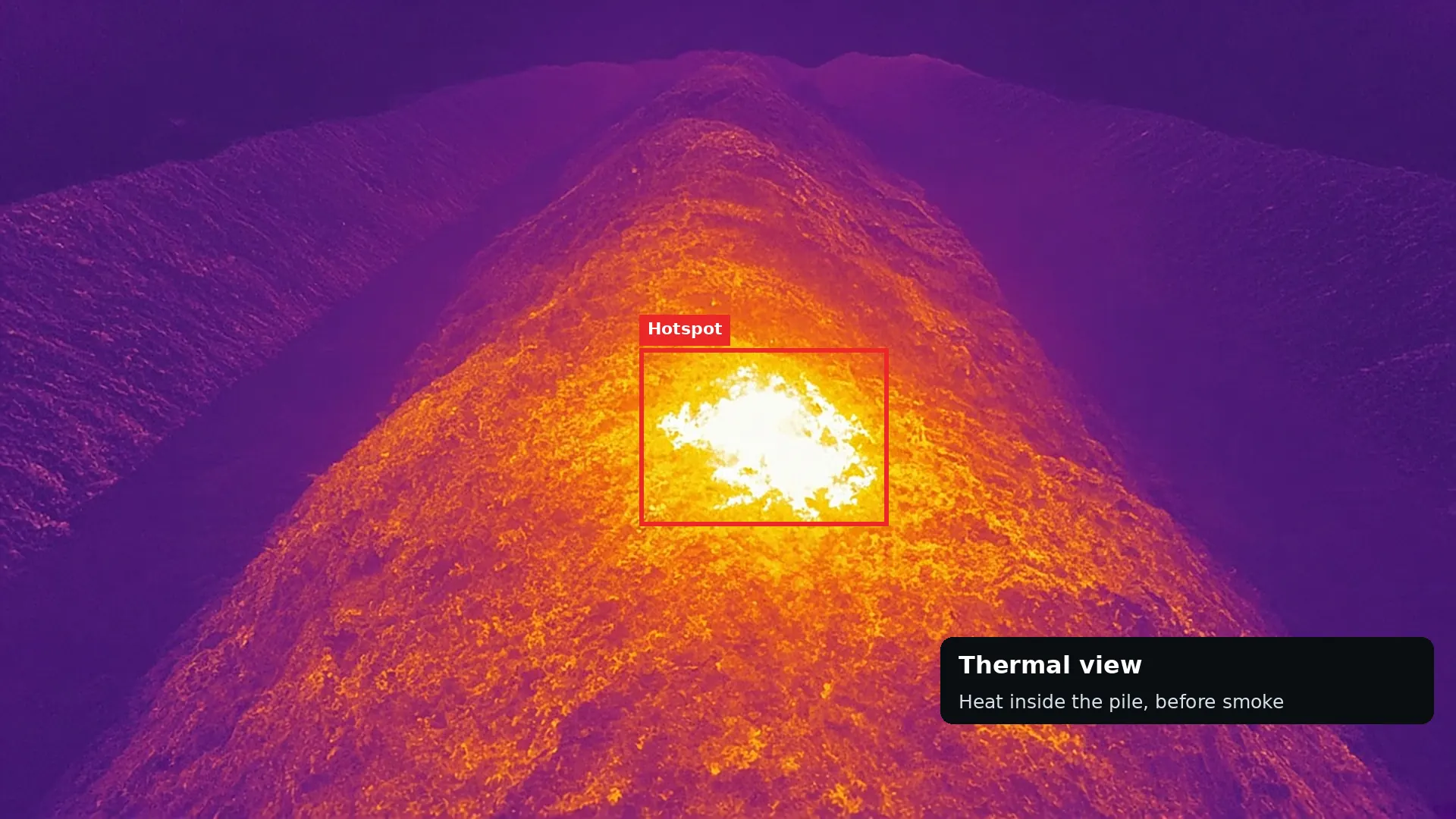
A thermal camera measures the infrared energy coming off a surface and turns it into a temperature image. On a waste site, that means it can show a pile getting hotter than it should, often before there is any smoke to see.
That is its big strength. Many waste materials can self-heat: biodegradable waste, wood chip, compost-like material and fines can warm up inside a pile over days. A thermal camera pointed at the surface of a pile can pick up a hot spot as heat works its way out, and an alarm set on a temperature threshold can prompt someone to turn, break up or move the material before it ignites.
Thermal cameras also do not need light. They work the same at midnight as at midday, and they can see through light smoke that would hide a pile from a normal camera. For a defined area such as a deep bay, a baled store or the quarantine area, a thermal camera with temperature alarms gives clear, measurable monitoring that fits neatly into an FPP.
Their limits come from the same physics. A thermal camera only sees the surface in front of it, so heat deep inside a large pile may not show until late. Sun-warmed surfaces, hot exhausts and plant can look like hot spots, so thresholds and masking need care. And they are usually new, dedicated hardware, often mounted on masts with their own controller, so covering a whole yard takes many units.
What does video AI on existing CCTV add to an FPP?
It adds wide, yard-scale coverage of visible smoke and flame on cameras you already have. Video AI watches the picture from the CCTV cameras you already have and looks for visible smoke and flame. When it finds them in an area you care about, it sends an alert with the clip.
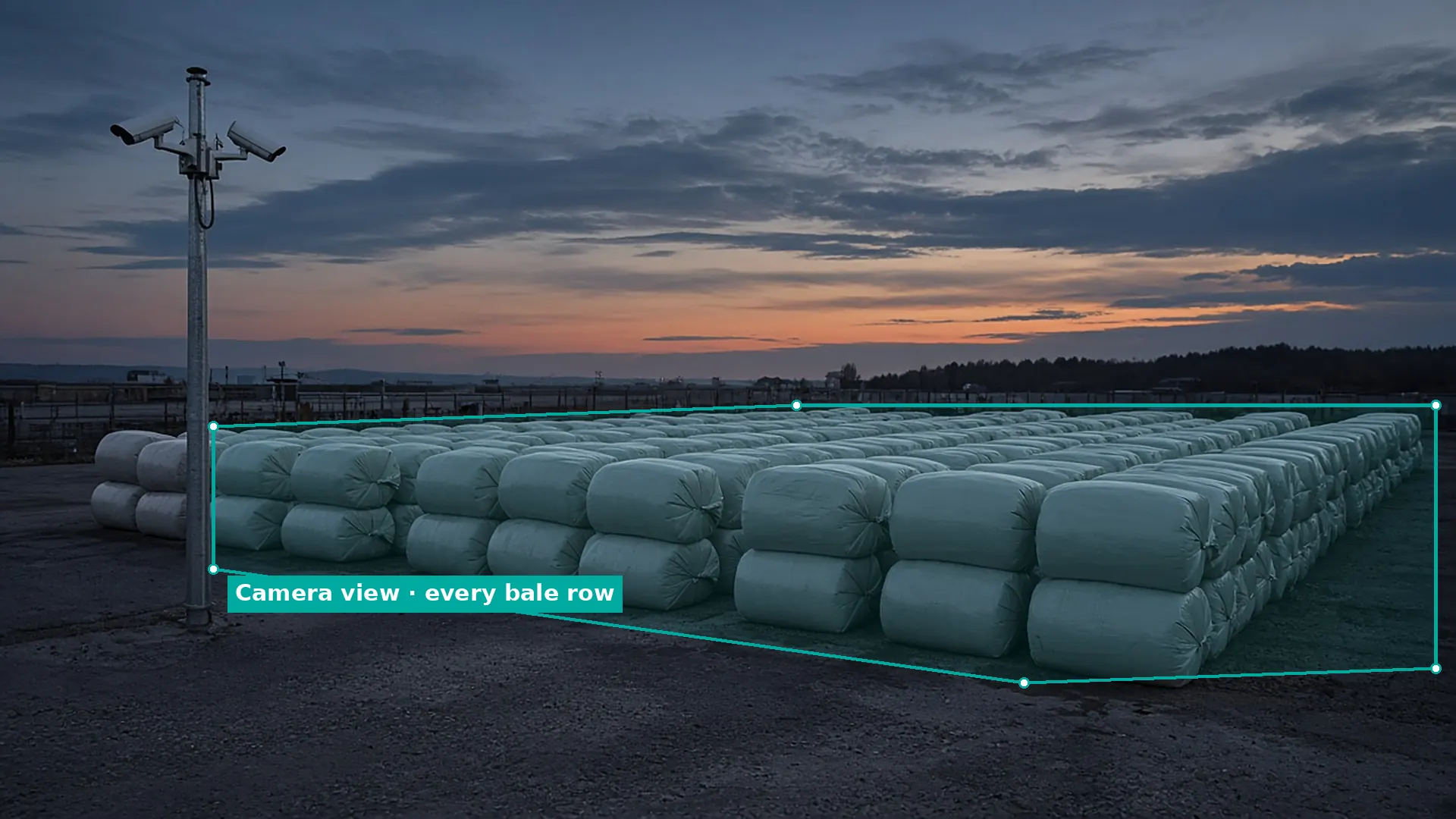
Its strength is coverage. Most waste and recycling sites already have CCTV on tall poles for security, with wide views across stockpiles, bays, roads and buildings. Adding smoke and fire detection to those cameras covers large open areas without mounting new hardware for every view. It also watches the air above the piles, where smoke from a fire usually shows first, and the gaps between bays that a thermal camera aimed at one pile does not see.
The alert is also easy to act on. Every Woodcock AI alert arrives with the video clip and a plain-English description, so the person on call at night can see straight away whether it is smoke from a pile or steam from a vent. Alerts to a monitoring centre (ARC) and phone-call alerts are available as optional add-ons.
Woodcock AI lets you draw polygon detection areas round each pile or bay, so a camera alerts only on the areas that matter and ignores the road beyond the fence. A self-learning AI is fitted to each site and learns what is normal for each camera, and every detection has a feedback button that goes into retraining. You can set alert schedules per camera. Coming soon, early 2027: you'll be able to ask your cameras plain-English questions about past footage and download the matching clip.
Its limits are those of the camera. Video AI sees visible smoke and flame, not heat inside a pile, so it will not see self-heating before smoke appears. Thick fog, heavy rain and dirty lenses reduce what any camera can see, and blind spots behind buildings or tall stacks stay blind. That is why it belongs alongside heat monitoring and certified detection, not in place of them.
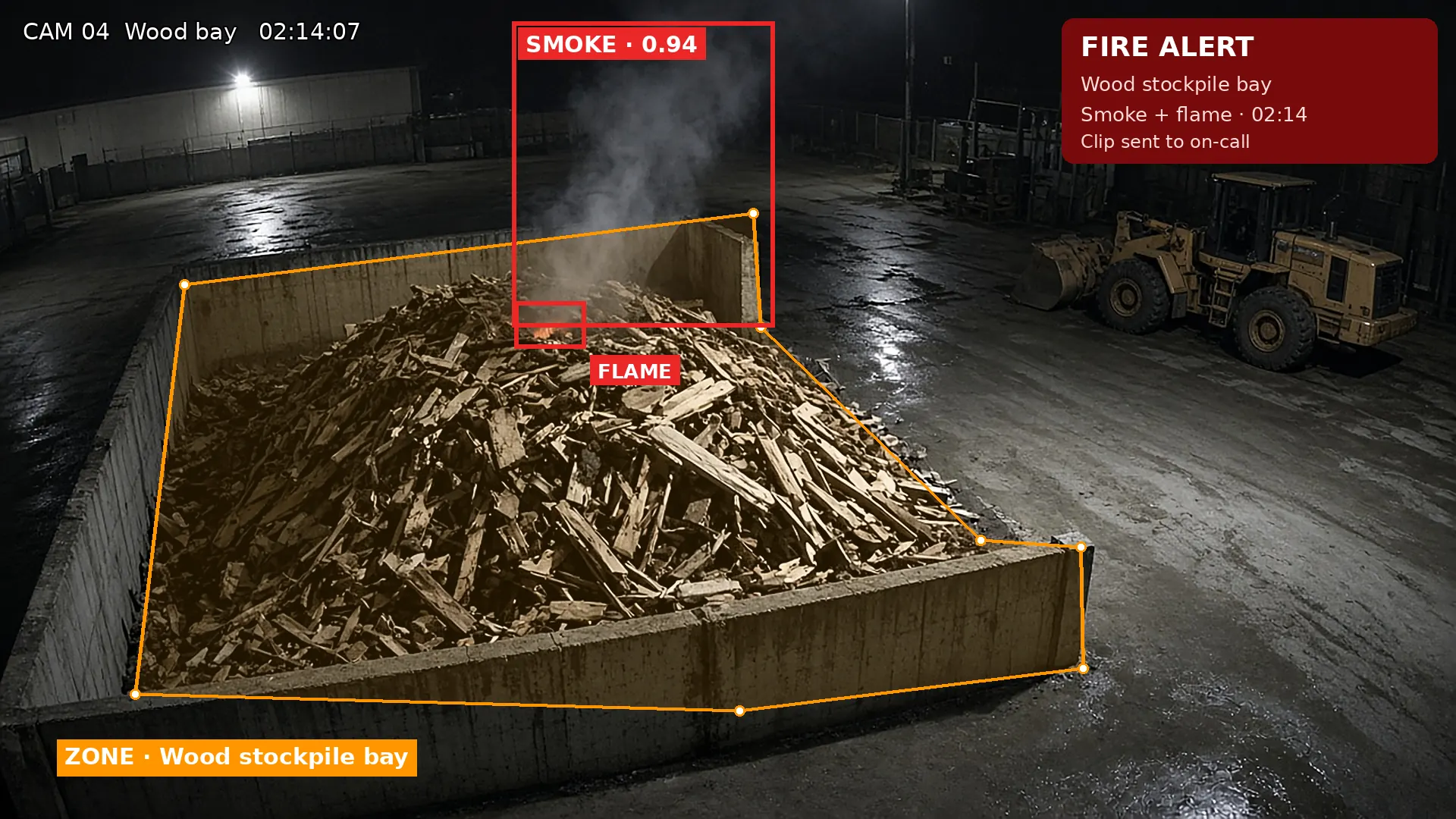
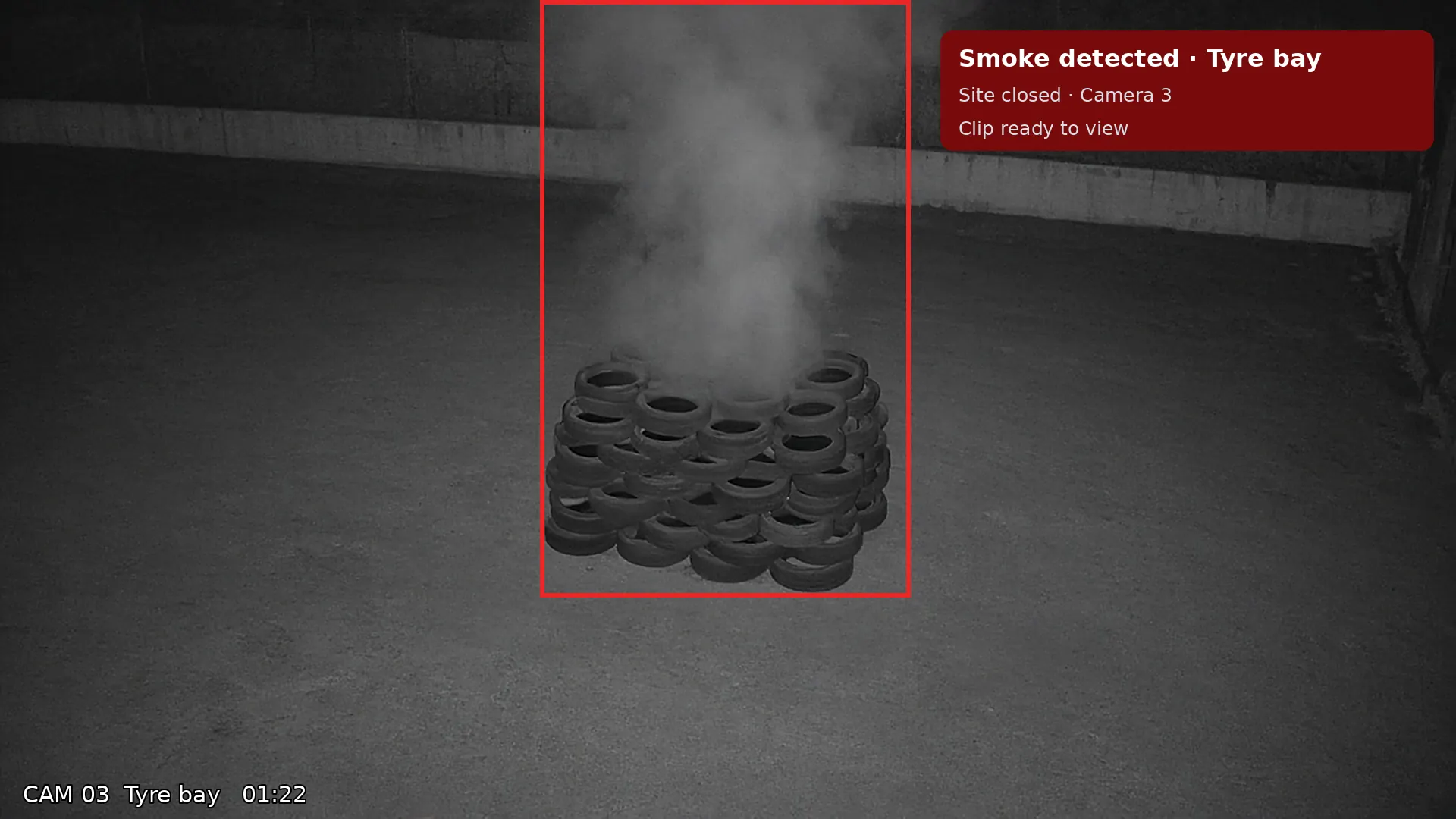
Smoke above the pile, on a camera already there
This is a real detection on an existing night-time camera at a waste site. The camera was already watching the yard for security; adding smoke and fire detection meant it also raised an alert with the clip.
How do thermal cameras and video AI compare for an FPP?
Thermal senses surface heat on the areas it is aimed at; video AI senses visible smoke and flame across wide views. The two methods look for different signs of a fire, so they are strongest in different places. This table compares them on the points that matter for an FPP.
| Point | Thermal cameras | Video AI on existing CCTV |
|---|---|---|
| What it senses | Surface temperature, shown as a heat image | Visible smoke and flame in the normal camera picture |
| Earliest sign it can catch | A rising hot spot on the surface of a pile, before smoke may be visible | A smoke plume or flame as soon as it shows in view |
| Works in darkness | Yes, it does not need light | Yes on infrared cameras, within the infrared range |
| Sees inside a pile | No, only the surface it is pointed at | No, only what is visible |
| Hardware | Usually new, dedicated cameras on masts, often with their own controller | Runs on the CCTV cameras most yards already have |
| Coverage | Best on defined areas such as a bay, a row of piles or a quarantine area | Wide views of yards, stockpiles, roads and buildings |
| What triggers false alerts | Sun-heated surfaces, hot plant and exhausts | Mist, steam, dust and headlights, reduced with detection areas and feedback |
| Evidence it gives you | A temperature reading and a heat image | A video clip of what happened, from a camera you already trust |
This is a general comparison, not a test result. Performance on your site depends on the camera, the view, the material and the weather. For on-camera analytics as a third option, see video AI vs thermal vs on-camera analytics.
Why do most waste sites layer thermal and video AI?
A fire on a waste site can start inside a pile, at the surface, or from an outside source such as a hot load, a vehicle or a discarded battery. No single method sees all of those well, which is why layering makes sense.
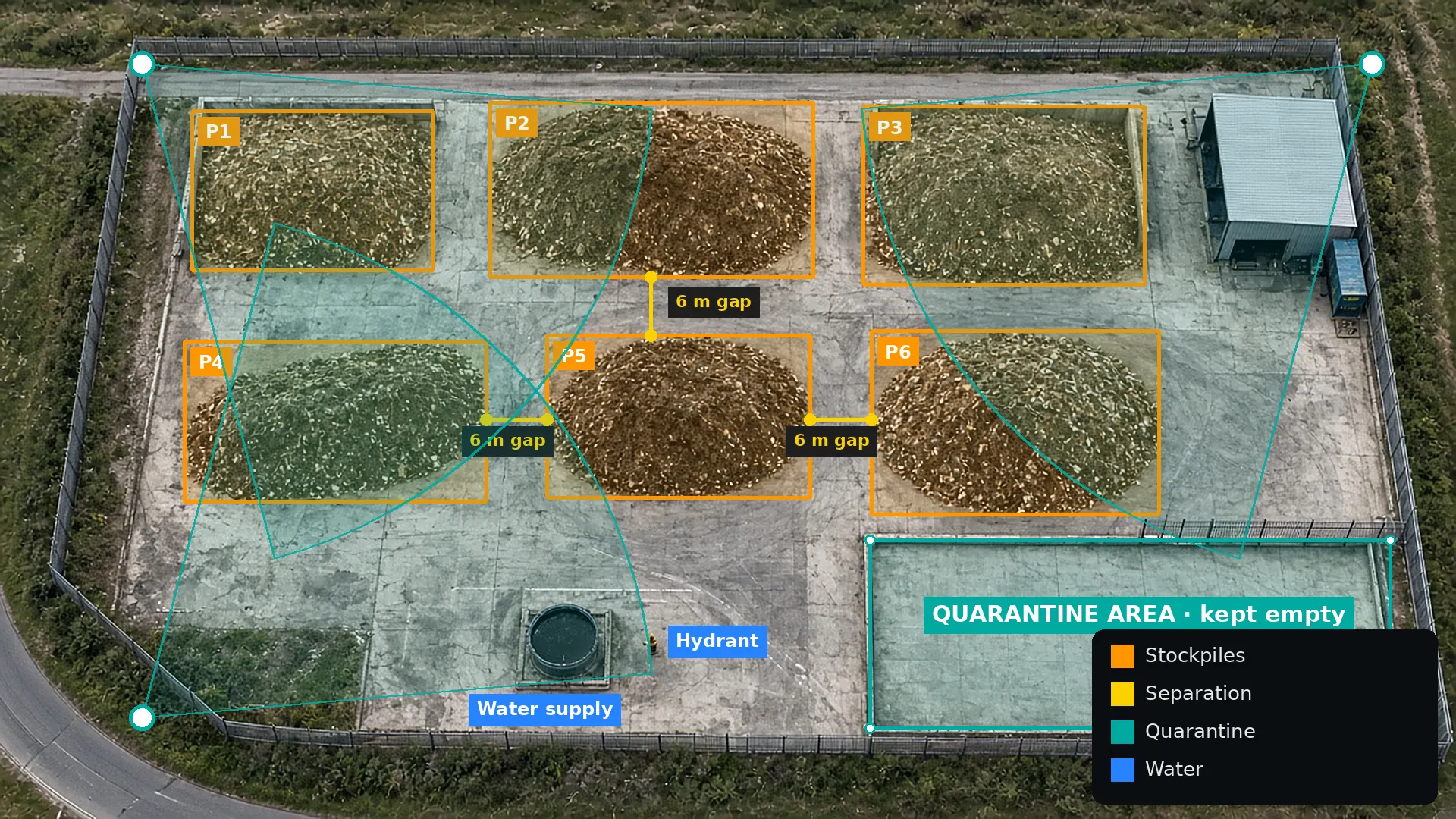
A common pattern looks like this. Site management comes first: pile sizes, separation distances, stock rotation and a quarantine area, all set out in the FPP. On top of that sit heat monitoring for the piles most likely to self-heat, using thermal cameras or temperature probes. Then visual detection on existing CCTV covers the wider yard, the air above the piles, the gaps between bays, and the roads and buildings around them. At the top sit the certified alarm and response arrangements: who is alerted, how, and when the fire service is called.
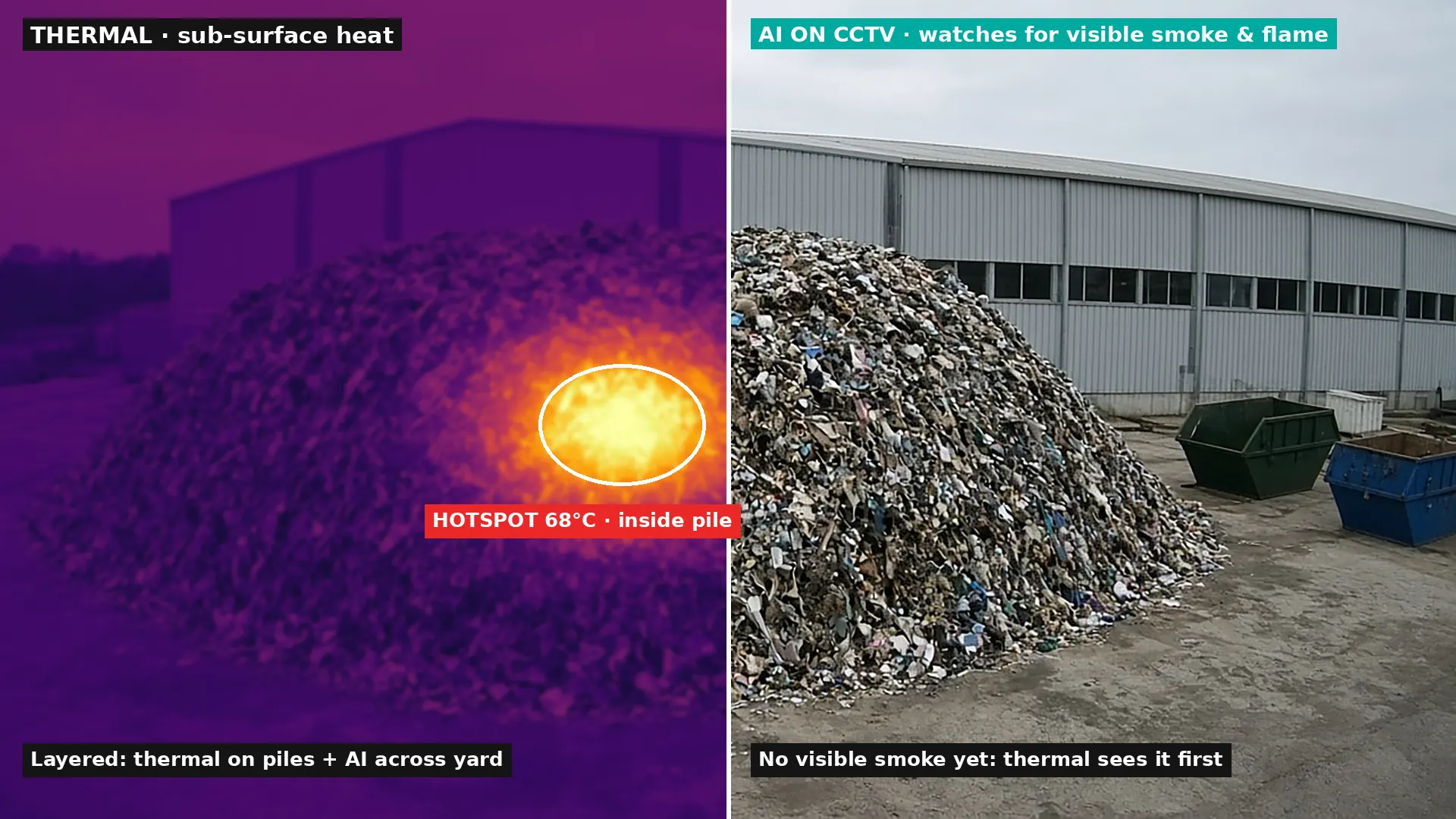
Each layer covers a weakness in another. Thermal sees surface heat before smoke; video AI sees smoke rising from a pile the thermal camera is not pointed at. Thermal works in thick smoke; video AI gives a clip that shows what is actually happening. Both work at night, which matters because a significant number of waste site fires happen after working hours.[3]
Layering also helps with the evidence your plan needs. A site plan that shows which camera or detector covers each pile, which ones are certified and who responds at each time of day is easier to explain to the Environment Agency, the fire and rescue service and your insurer. Our guide to what insurers expect from fire detection covers the insurer side.
See what your existing cameras already cover
A free site assessment checks which of your cameras can connect, what each one can see of your piles, bays and quarantine area, and where video smoke and fire detection would sit alongside the thermal monitoring and certified detection your plan relies on.
Which method suits which part of a waste site?
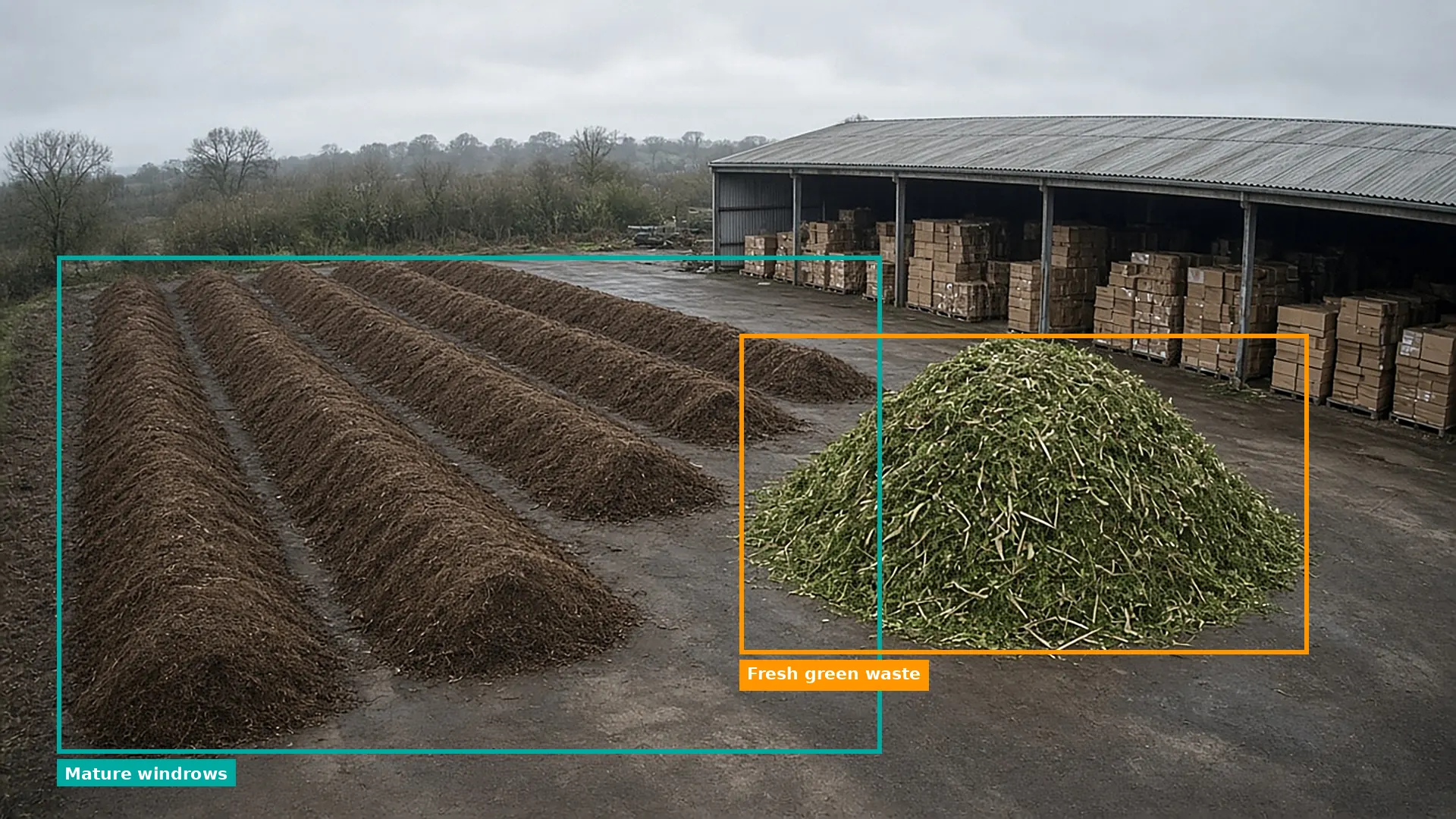
Thermal or probes suit deep bays and self-heating piles; existing CCTV with video AI suits open yards, tipping areas and boundaries. Rather than one choice for the whole site, work through each area and ask what is most likely to start a fire there and what would see it first.
- Deep bays and self-heating piles. Heat builds inside before smoke appears, so thermal monitoring or temperature probes earn their place. The guidance also asks you to check temperatures within bays.[1] A CCTV view over the bay adds a visual check and a clip.
- Open yards and rows of piles. Wide areas with many piles are hard to cover with dedicated thermal views. Existing pole-mounted CCTV with video smoke and fire detection covers the yard and the air above it.
- The quarantine area. A defined spot where hot or suspect loads are placed. It suits a dedicated thermal or flame detector, with a camera giving the wider picture.
- Reception and tipping areas. Hot loads and lithium-ion batteries often arrive here. Video detection on the cameras watching the tipping floor can catch smoke from a load soon after it is tipped. See our guide to lithium-ion battery fires.
- Buildings and shredders. Indoor areas follow the building's own fire alarm design. Video AI can add early warning on cameras inside large open buildings, alongside the certified system.
- Perimeters and neighbours. The third FPP objective is about spread to neighbouring sites. Cameras along the boundary can watch for smoke from piles near the fence.
How does detection raise the alarm when the site is closed?
Through automated detection that sends the alarm to someone who will act on it at night and at weekends. The FPP guidance asks how your detection raises the alarm both in working hours and when the site is closed.[1] Out of hours is where many plans are thinnest.
During the day, people on site often notice smoke before any system does. At night and at weekends, the plan relies entirely on automated detection and on someone receiving and acting on the alarm. Fire and rescue services in England attended 256 industrial waste fires in the year ending December 2025, up from 183 in 2021, so the stakes are real.[4] See our waste fire facts for the official figures.
For thermal systems, check where the temperature alarms go after hours and who responds. For video AI, decide who receives alerts at night and what they check. With Woodcock AI, you set alert schedules per camera, so smoke and fire detection can run around the clock while intrusion alerts run only when the site is closed. Alerts go by app and email with the clip. The out-of-hours site security checklist covers the wider picture.
Where does AI CCTV fit in an FPP alongside thermal?
As an additional visual layer over the yard, alongside the certified detection and heat monitoring your plan relies on. Section 13 of the Environment Agency guidance, Detecting fires, does not pick one technology. It sets out what detection must achieve and how you must evidence it.[1]
“You must have procedures in place to detect a fire in its early stages so you can reduce its impact. You must demonstrate in your plan how the detection system will raise the alarm if a fire is detected both during working hours and when the site is closed.”
The guidance says your system must be proportionate to the nature and scale of your activities and the associated risks, and may be automated or manual. Its examples of appropriate automated systems are “smoke and heat detectors including temperature probes”, “CCTV visual flame detection systems” and “spark, infrared and ultraviolet detection”.
“The design, installation and maintenance must be covered by an appropriate third party certification scheme such as UKAS, or meet an appropriate recognised standard such as a British Standard. You must provide evidence of certification in your fire prevention plan. If you do not meet a recognised standard or accreditation, you must demonstrate that you can still meet the 3 objectives.”
Read honestly, that points to layers rather than a contest. Thermal cameras and temperature probes are the stronger tool for heat building inside or on the surface of a pile before anything is visible. AI on your existing CCTV watches for visible smoke and flame across the whole yard, including the areas and hours thermal units do not cover, and sends the alert with the clip so someone can check it straight away.
AI video detection supplements certified detection; it does not replace it. If your plan relies on a system for its detection section, the guidance expects evidence of certification or a recognised standard, or a case showing you can still meet the 3 objectives. Ask your fire engineer, insurer and the Environment Agency what applies to your site.
How each method maps to the detection section
The table lines up what the guidance asks of detection with what each method can contribute. It is a planning aid, not a statement of what your regulator will accept.
| What the plan must show | Thermal cameras and probes | Video AI on existing CCTV |
|---|---|---|
| Detect a fire in its early stages | Surface heat on the piles it is aimed at, often before any smoke | Visible smoke and flame anywhere a connected camera has a clear view |
| Raise the alarm in working hours | Alarm output to the system it is set up with | App alert with the clip, plus email, to the people you name |
| Raise the alarm when the site is closed | Depends on how the alarm is routed to a keyholder or monitoring centre | The same alerts on a schedule for each camera; monitoring-centre (ARC) and phone-call alerts are optional add-ons |
| Check temperatures within bays | Yes, with thermal cameras or temperature probes | No. Video AI does not measure temperature |
| Proportionate to your risks | Best on the few piles most likely to self-heat | Best for wide coverage on the cameras you already have |
| Evidence of certification or a standard | Ask the supplier what the system, as designed and installed, is certified to | Describe it as an additional layer alongside your certified detection |
How to evidence it in your plan
- Mark on your site plan which areas each thermal unit, probe and CCTV camera covers, so gaps are visible.
- Say how each system raises the alarm in working hours and when the site is closed, who receives it and what they do.
- Attach the certification or standard for your primary detection system, and describe AI on CCTV as an additional layer.
- Record how the system is tested and maintained, and how false alarms are reviewed.
Read section 13 in full in the Environment Agency fire prevention plan guidance on GOV.UK.
How do I layer thermal and video AI in my FPP?
Map every pile and camera, put heat monitoring where self-heating is likely, use existing CCTV for the wide view and write down who gets each alert. Seven steps take you from your current plan to a layered set-up you can explain to the Environment Agency, the fire service and your insurer.
Read the detection section of your FPP
Find what your plan says about detection in working hours and when the site is closed, and which systems it names. Note any certification evidence it relies on.[1]
Map your piles, bays and quarantine area
Mark every stockpile, bay, baled store and the quarantine area on a site plan, with the material and the maximum pile size for each.
Add every camera and detector you already have
Put your CCTV cameras, thermal cameras, temperature probes and any flame detectors on the same plan, with what each one can see.
Decide where heat monitoring matters most
Piles prone to self-heating, deep bays and the quarantine area are the usual places for thermal cameras or temperature probes.
Use existing CCTV for the wide view
Add video smoke and fire detection to the cameras that already overlook the yard, so the gaps between thermal views and the air above the piles are watched too.
Write down who gets each alert and when
Set who receives alerts in working hours and when the site is closed, what they check first and when they call the fire service.[1]
Keep the evidence together
Hold the plan, camera register, certification evidence and alert log in one place for the EA, your fire risk assessment and your insurer, and review it after any change or near miss.
Working hours
- Staff on site, thermal alarms and video AI all watch
- Alert arrives in the app with the clip, plus email
- Site supervisor checks the clip and the area
- Fire service called if needed; plan actions start
Site closed
- Thermal alarms and video AI on a schedule for each camera
- Keyholder rota gets the app alert and email
- Optional add-ons: monitoring centre (ARC) or a phone call
- Keyholder or operator follows the agreed response
This guide is general information, not fire engineering, legal or insurance advice. Your permit, your regulator, your fire risk assessment and your insurer decide what applies to your site. It covers the Environment Agency guidance for England; Scotland, Wales and Northern Ireland have their own environmental regulators.[5]
Which comparison answers your question?
Stay here if your question is about a permitted site's fire prevention plan. To compare the technologies in general, decide on guarding or deal with nuisance motion alerts, these pages go deeper.
What else do site managers ask about thermal vs AI CCTV?
More in the Woodcock AI FAQ and the glossary.
Do I need thermal cameras for a fire prevention plan?
Not necessarily. The Environment Agency guidance does not require one specific technology. It asks for detection that is proportionate to your activities and risks, that raises the alarm in working hours and when the site is closed, and that is covered by third-party certification or a recognised standard. Thermal cameras are a common choice for heat monitoring of piles, but your plan has to justify whatever mix you choose.[1]
Does the Environment Agency accept CCTV for fire detection?
The guidance lists CCTV visual flame detection systems among the automated systems that may be appropriate, alongside smoke and heat detectors including temperature probes, and spark, infrared and ultraviolet detection. The design, installation and maintenance must be covered by an appropriate third-party certification scheme or meet a recognised standard, and you must provide evidence of that in your plan.[1]
What is the difference between thermal and video AI fire detection?
Thermal cameras measure surface temperature, so they can spot a pile heating up before smoke shows. Video AI watches the normal camera picture for visible smoke and flame. Thermal is strong on defined areas; video AI on existing CCTV gives wide coverage of the yard without new hardware.
Can video AI replace thermal cameras on a waste site?
We do not suggest it does. Video AI sees visible smoke and flame; it does not measure heat. Where your fire prevention plan relies on thermal monitoring or temperature probes, keep them. Video AI adds early visual warning across the areas your existing cameras already watch.
- Site plan marking what each thermal unit, probe and camera covers
- How every system raises the alarm, day and night
- Certification or standard for your primary detection
- Camera register with each detection area
- Test, maintenance and false-alarm review records
- Alert log with clips
Can thermal cameras see a fire inside a stockpile?
No camera sees inside a pile. A thermal camera sees the surface it is pointed at, so a fire deep in a pile may only show once heat reaches the surface. That is one reason the guidance also covers stock rotation, pile sizes and checking temperatures within bays.[1]
Is video AI fire detection certified for FPP purposes?
Certification depends on the system as designed, installed and maintained for your site. Woodcock AI is used to add early warning on top of the certified detection your plan relies on. Ask us in the site assessment what evidence is available for your set-up, and check with the Environment Agency what your plan needs.
What about detection when the site is closed?
The guidance asks you to show how the detection system will raise the alarm both in working hours and when the site is closed. With Woodcock AI, alerts go to the people you choose by app and email with the clip. Alerts to a monitoring centre (ARC) and phone-call alerts are available as optional add-ons.[1]
Can I test video AI on my site before adding it to my plan?
Yes. A live test on your cameras connects 2–3 of your own cameras for about a fortnight, so you can see real alerts from your yard before you describe video AI in the plan as an additional layer. To start, book a site assessment.
Sources
Regulatory guidance, law, statistics and industry guidance referred to on this page.
- Environment Agency, Fire prevention plans: environmental permits (guidance, updated 11 January 2021). The three FPP objectives; procedures to detect a fire in its early stages; how the detection system raises the alarm in working hours and when the site is closed; detection proportionate to the risk; automated systems that may include smoke and heat detectors including temperature probes, CCTV visual flame detection systems, and spark, infrared and ultraviolet detection; third-party certification or a recognised standard; checking temperatures of waste in bays. Last checked 24 October 2026.
- Environment Agency, Fire prevention plans: publication page and change history. The guidance and FPP template, with the history of revisions. Last checked 24 October 2026.
- WISH, WASTE 28: Reducing fire risk at waste management sites (issue 3, March 2020). Good practice guidance written with the EA, HSE, NFCC and others. Notes that a significant number of waste site fires happen after working hours. Last checked 24 October 2026.
- MHCLG, Number of industrial waste fires, England 2021 to 2025. Fire and rescue services in England attended 256 industrial waste fires in the year ending December 2025, up from 183 in 2021. Last checked 24 October 2026.
- The Regulatory Reform (Fire Safety) Order 2005, article 13. Where necessary, premises must be equipped, to the extent that it is appropriate, with fire detectors and alarms. Last checked 24 October 2026.

What can your existing cameras already cover?
A free site assessment reviews your cameras, what each one sees of your piles, bays and quarantine area, and where video smoke and fire detection would sit alongside your thermal monitoring and certified detection.
3D renderWhat should I read next?
Once you have chosen a method, describe it with our fire prevention plan template for the detection section.