

Unseen loads
Mixed waste is tipped before anyone can see inside it.
Woodcock AI adds early fire detection to the CCTV a waste transfer station already has. It watches the tipping floor, residual and bulky waste bays, the quarantine area, loading bays and the yard for the first visible smoke and flame, day and night, and sends the clip to the people you choose by app and email. It works alongside your fire alarm, detection and suppression systems, not instead of them.
Last updated 27 October 2026
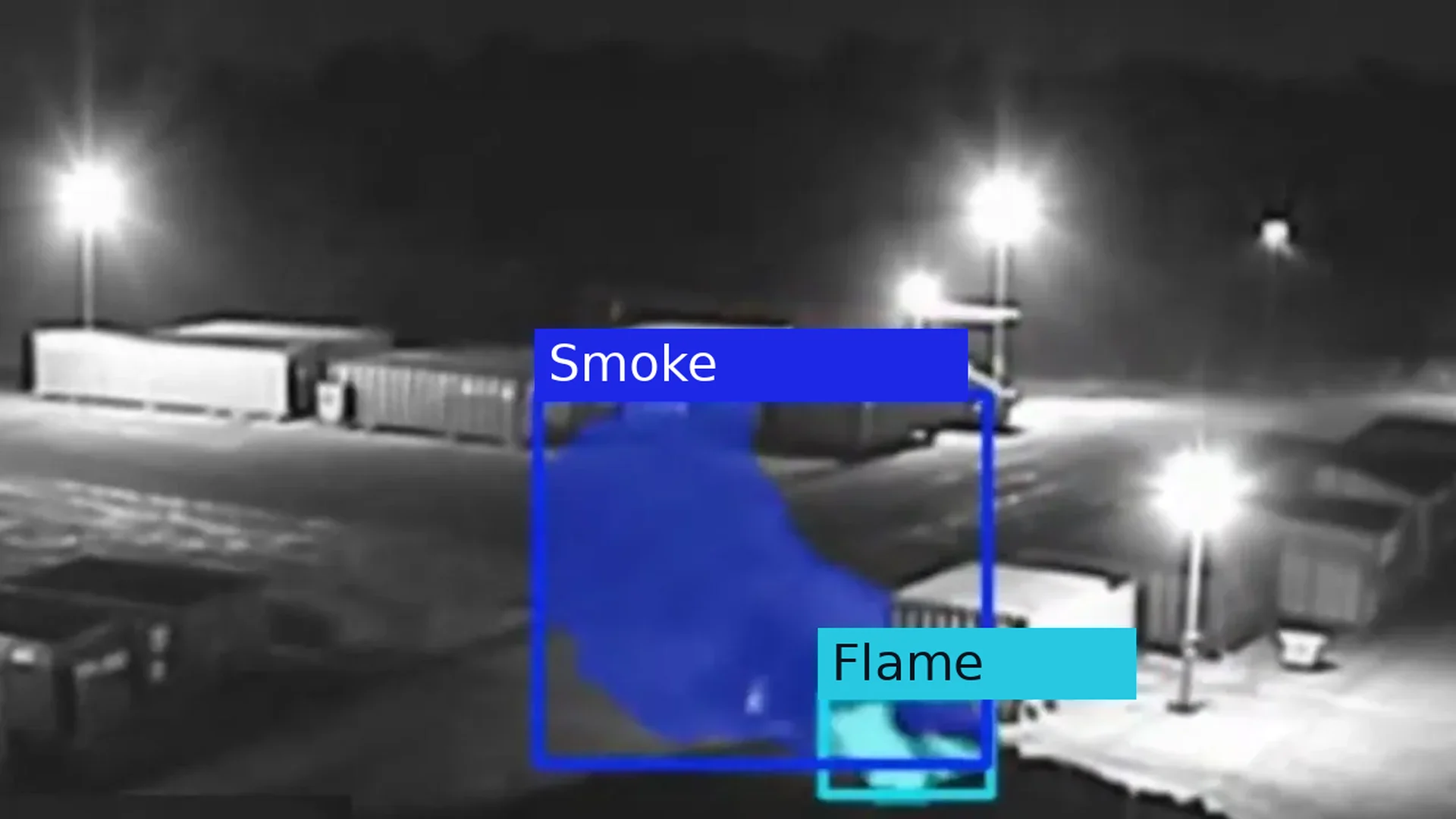
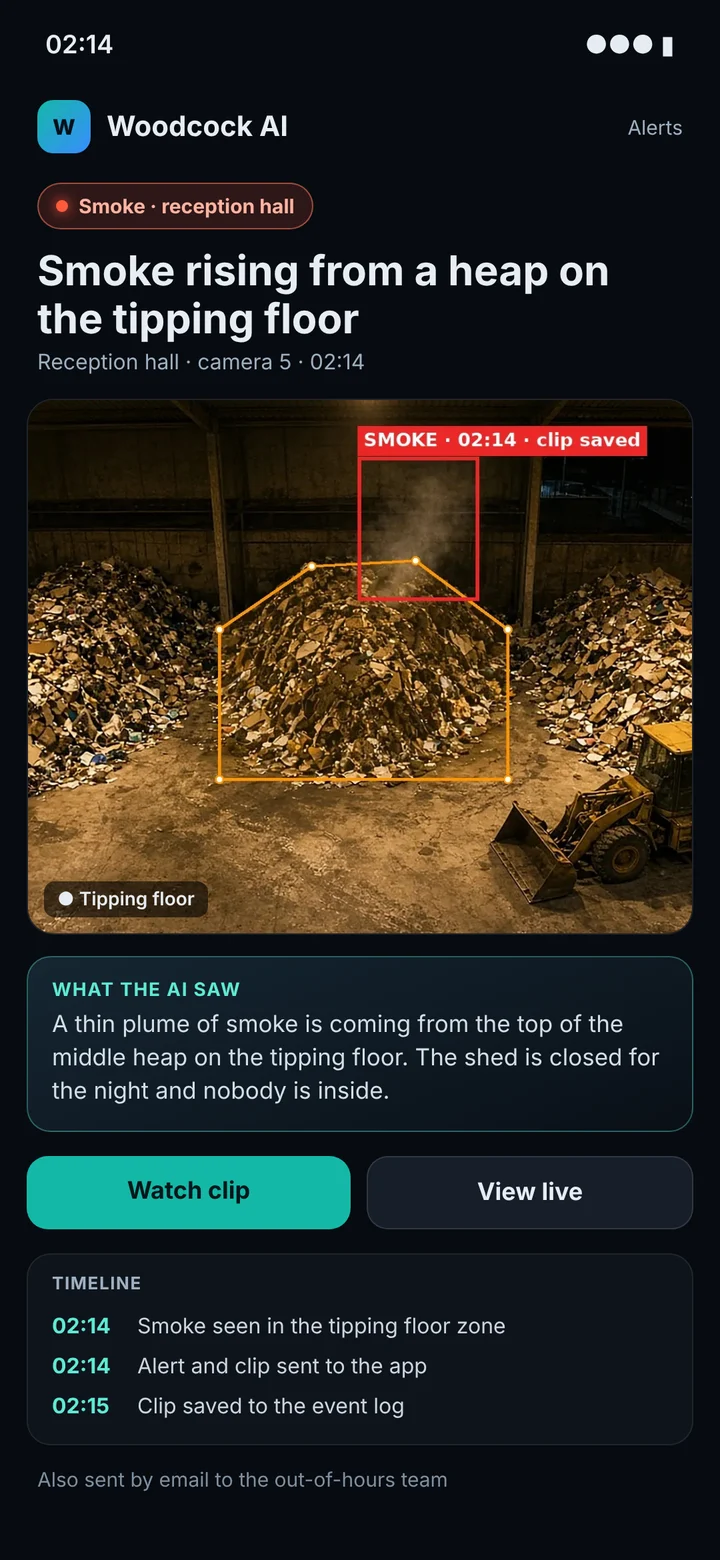
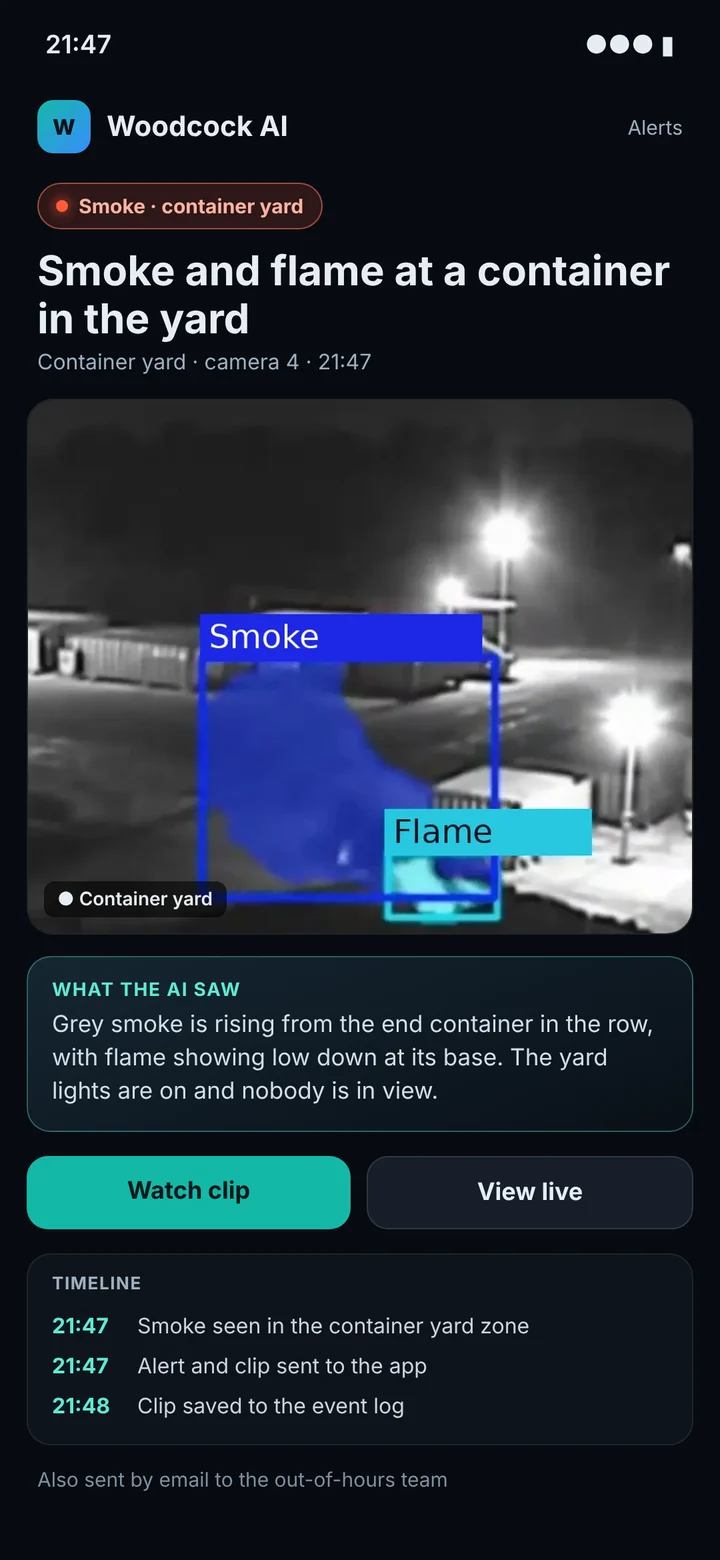
Waste transfer stations catch fire mainly because they take in mixed loads they cannot fully see inside, and hold them in piles and bays, often overnight. Hot loads, hidden batteries and smouldering material can sit in a pile for hours before smoke shows, and many fires start when the site is shut.
A transfer station is a simple site on paper. Collection vehicles and skip lorries tip in the reception hall, the waste is sorted or bulked, and it leaves again in bigger loads for treatment, recycling or disposal. WISH guidance notes that a simple waste transfer station may in effect have little more than a reception area. That is exactly where the risk sits.
The figures above come from the government's published data on industrial waste fires attended by fire and rescue services in England, which covers recycling centres and waste warehouses and bulk storage. We counted them directly from the published Table A81 spreadsheet. The four-hour figure matters because the Environment Agency's fire prevention plan guidance asks permitted sites to aim to put out any fire within four hours. Almost two in five of the 2025 incidents ran past that point.
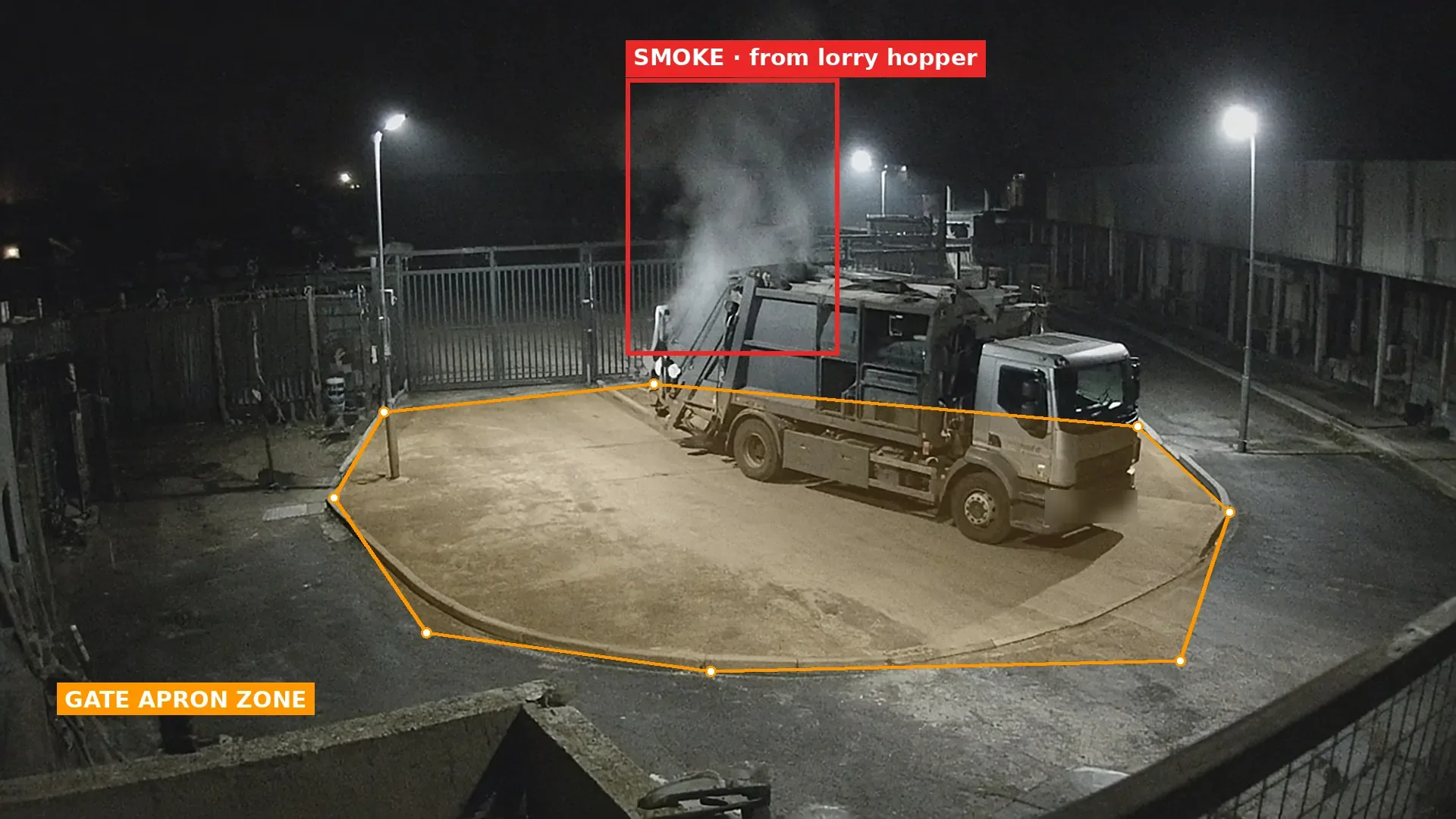
WISH names hot loads as one of the most common causes of fires in reception areas. A hot load is a load that is already smouldering, or contains something that is, when it arrives: hot ash, a disposable barbecue, a garden burner, a damaged battery or oil-soaked rags. The Environment Agency lists steam or smoke, batteries (especially lithium-ion), oils and oil-soaked rags among the signs to look for, and expects every permitted site to have a written procedure for identifying, isolating, monitoring, cooling and putting out a hot load.
WISH also points out that hot loads follow the calendar. Barbecue ash after bank holidays, garden burners in spring, and bonfires and fireworks in early November all bring their own surge.
Mixed waste is tipped before anyone can see inside it.
Lithium-ion cells turn up in household and commercial waste.
Nights, weekends and bank holidays leave piles unwatched.
Most fires at a transfer station start in one of six areas: the tipping floor, the residual and bulky waste bays, the quarantine area, the loading bays and the yard. Tap an area on the plan, or use the buttons, to see the risk there and what a camera needs to see. The dashed outlines show where zones would be drawn.
The risk: The reception area is where loads arrive unseen. WISH guidance names hot loads as one of the most common causes of fires there, and warns that items can smoulder deep in a pile and burst into flame overnight or at the weekend.
What the camera should see: A camera over the whole tipping floor, with a polygon zone that follows the edge of the floor and the face of each pile, watched for smoke and flame around the clock.
The risk: Residual and general waste is mixed and unpredictable, and it often sits in bays against push walls until it is bulked. Pipework on push walls can end up buried when waste is piled high.
What the camera should see: A view along the line of bays, with a separate zone per bay, so an alert says which bay the smoke came from.
The risk: Mattresses, furniture and mixed bulky items are large, open and easy to ignite, and they hide what has been thrown in with them.
What the camera should see: A camera on the bulky waste area or stockpile, zoned to the stack itself and not the walkway or the road past it.
The risk: The Environment Agency expects a quarantine area for suspect and hot loads, kept clear and big enough to take at least half of the largest pile. A load put there is a load somebody already suspects.
What the camera should see: A dedicated view of the quarantine bay, watched for smoke and flame at all times, with the clip sent to the person who moved the load there.
The risk: Bulked waste waits in containers, trailers or bays to be hauled away, often overnight. A container that was loaded warm at the end of a shift can start to smoke hours later.
What the camera should see: A view of the loading bay and the container row, with a zone over each container and the bulked pile.
The risk: Arson is a real risk at waste sites, and fires also start in the yard: in skips, in vehicles parked up and in waste stored outside.
What the camera should see: A camera on the gate and fence line with an intrusion zone armed out of hours, plus smoke and flame zones on outside storage.
You detect it early by watching the whole floor with a camera, around the clock, for the first smoke or flame at the surface of a pile. A camera above the reception hall sees every heap at once, and video AI can raise the alarm at two in the morning on a Sunday as readily as at midday.
The reception hall is a hard place for traditional detection. It is large, high and open, with doors that are open for much of the day, dust in the air and vehicles coming and going. WISH notes that some sites have successfully installed camera-type detectors over external reception bunkers, and that the detectors used on waste sites include video systems that look for smoke or other signs of fire. A camera that already watches the floor for site security can be put to this second job.
In Woodcock AI you draw a polygon detection zone over the tipping floor, following the edge of the floor and the face of each heap rather than a rough box over the whole view. When smoke appears inside the zone, an alert goes out with the clip and a plain-English description, so the person on call sees which heap it is and how fast it is growing.
Good housekeeping still matters. WISH advises an end-of-shift fire watch, avoiding late high-risk loads, and emptying or keeping the reception area to a minimum overnight, spreading waste out rather than leaving it in a high pile. A camera does not replace any of that; it covers the hours after the fire watch has gone home.
WISH guidance says data indicates that the most common times for fires in reception areas are Saturday nights, Sundays and first thing on Monday morning, at the first push-up. This is what each of those moments looks like, and what the cameras do.
The last loads are tipped, the end-of-shift fire watch is done and the shutters come down. Anything smouldering inside a pile is now on its own.
Cameras: Smoke and flame zones on the tipping floor and quarantine bay stay armed. Intrusion zones on the yard come on.
WISH guidance says data shows Saturday nights are among the most common times for fires in reception areas, when nobody is on site.
Cameras: The first visible smoke goes to the key holder by app and email, with the clip, so they can see it before deciding to call the fire service.
Still shut. A slow smoulder can grow for hours without anyone seeing it.
Cameras: Every camera keeps watching. Each event is saved with its clip and a plain-English description.
WISH names the first push-up on Monday morning as another common time: moving the pile lets air into a smouldering pocket.
Cameras: The tipping floor zone is still armed while the loading shovel works, and the alert shows exactly where smoke appeared.
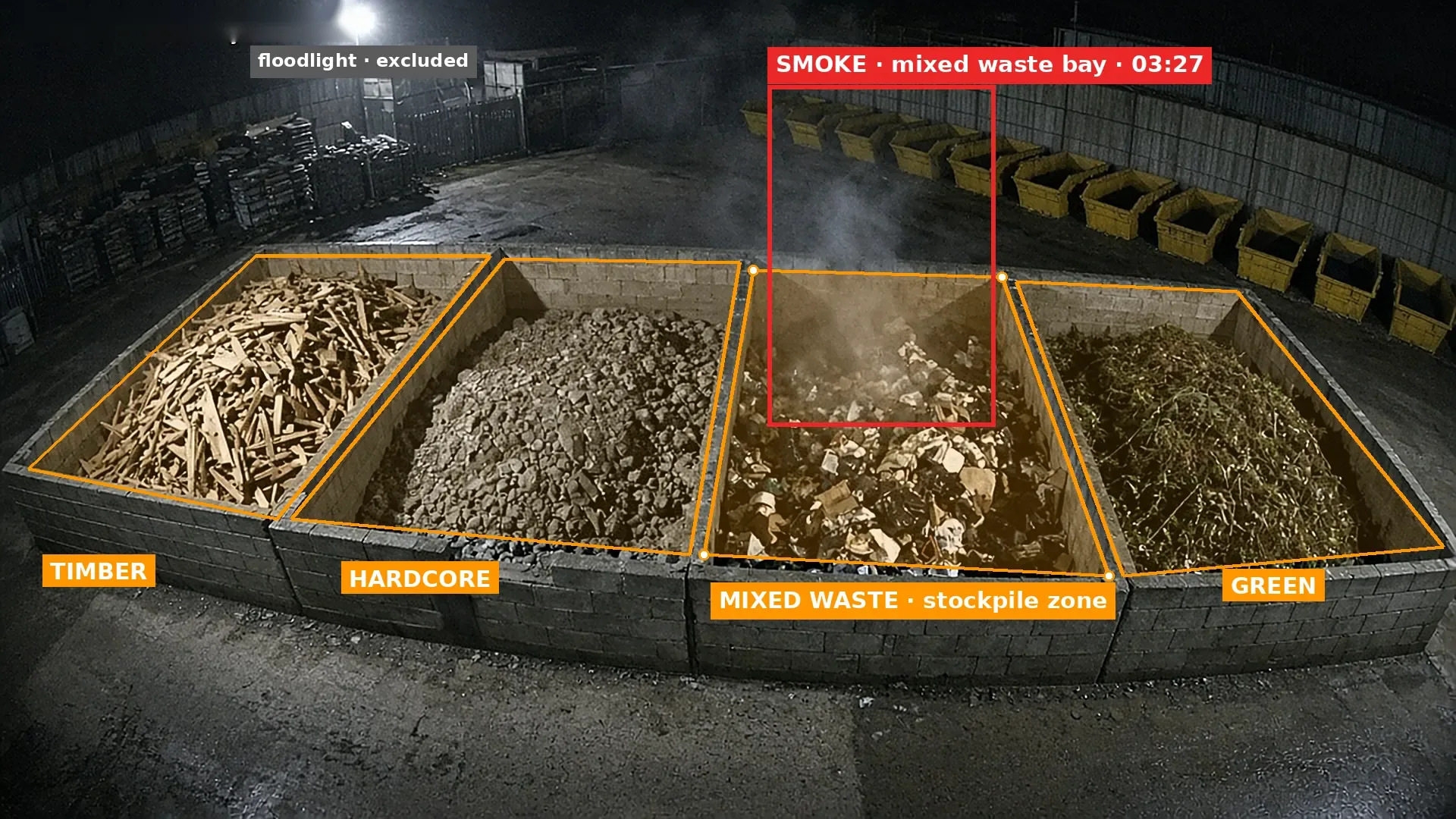
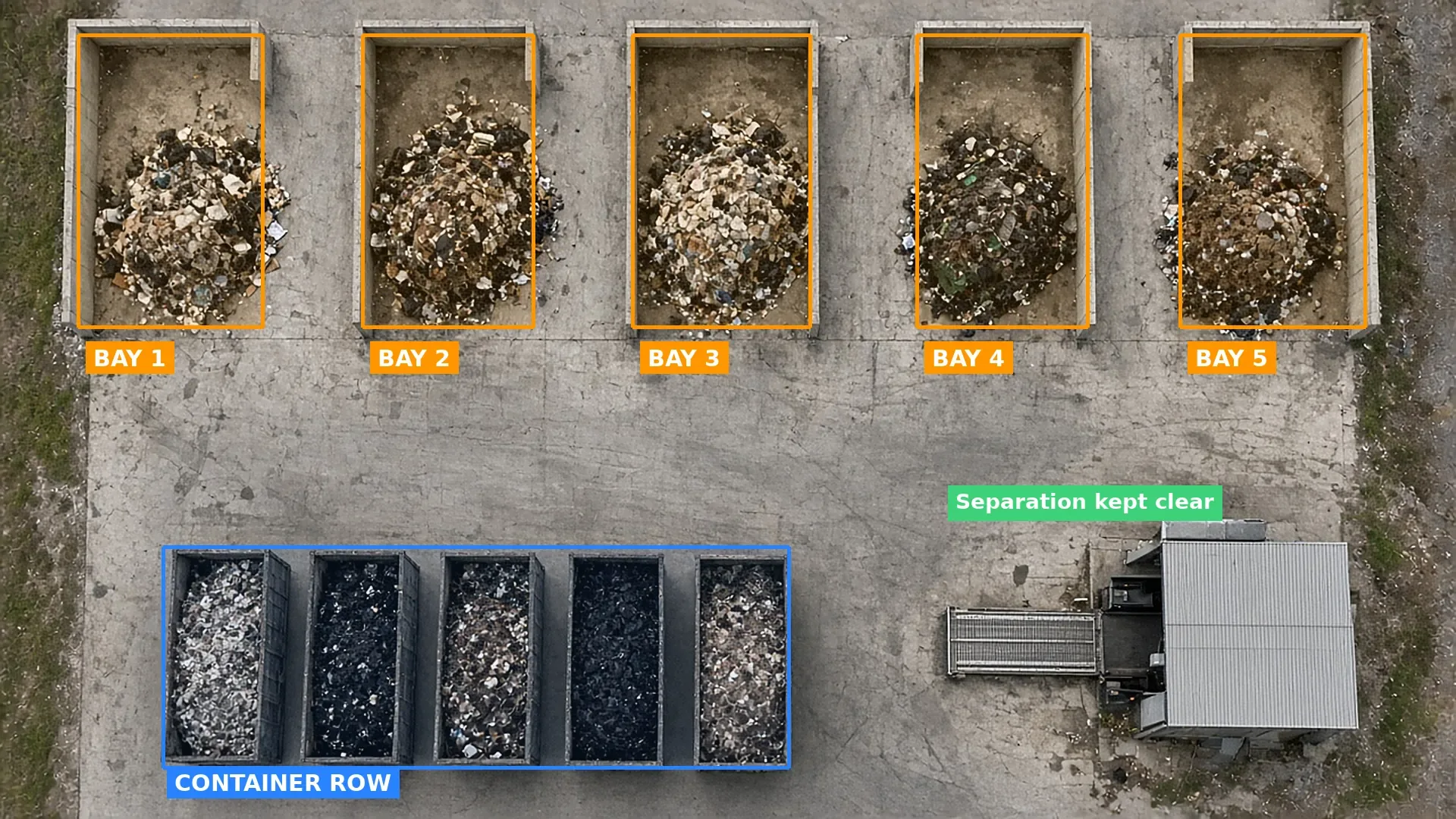
Give each bay its own zone on a camera that looks along the line of bays, so an alert says which bay the smoke is in. Residual waste and bulky items are the least predictable material on site, and they often wait in bays against push walls until there is enough to bulk.
Bays are where pile management meets reality. The Environment Agency's guidance sets limits on pile size, with a maximum height of 4 metres and a maximum length and width of 20 metres for most waste, and expects either 6 metres of separation between piles or fire walls and bays with at least 120 minutes of fire resistance and a metre of freeboard above the waste. WISH points out that suppression pipework fitted to push walls can end up buried if waste is piled too high, and suggests painting a maximum pile height line so everyone can see the limit.
A camera along the bays shows all of that at a glance, and it watches for smoke in each bay separately.
 Bale store at night
Bulky waste such as mattresses and sofas burns readily and hides what was thrown in with it, so zone the stack itself, not the walkway. For outdoor stockpiles and the effect of wind, rain and night on detection, see our outdoor fire detection guide.
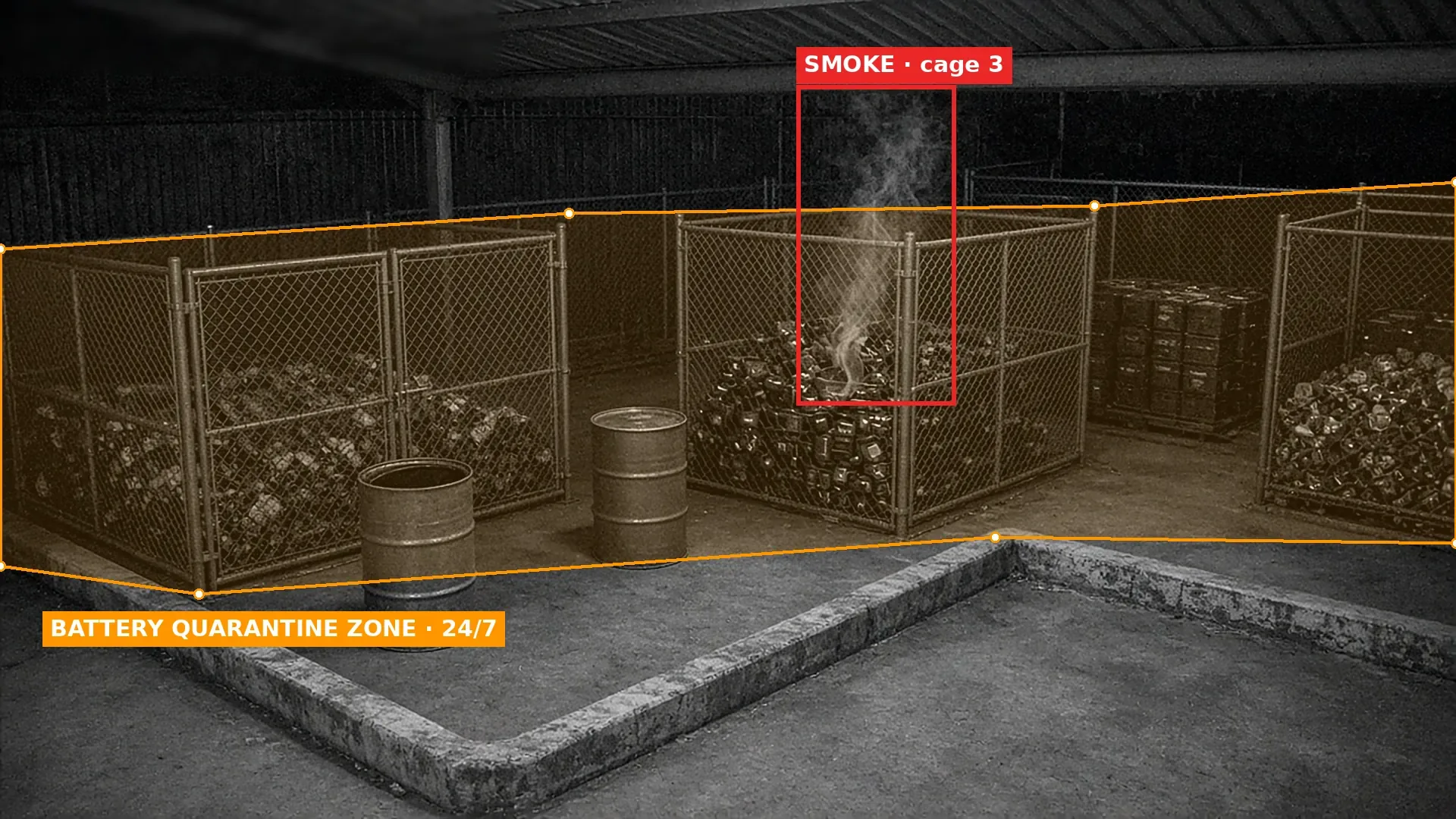
You cannot see every battery at the tipping floor, so you combine acceptance checks, a quarantine area and continuous watching. The Environment Agency notes that batteries are found in many waste streams and expects damaged lithium batteries to be quarantined, and a camera on the quarantine area watches what has been set aside.
Lithium-ion cells end up in household and commercial waste inside vapes, toys, tools, phones and power banks. A cell crushed in a collection vehicle or punctured by a loading shovel can overheat long after it was tipped. Our lithium-ion battery fires page covers where these fires start across the waste chain and what cameras can see.
The quarantine area is the site's safety valve. The fire prevention plan guidance expects it to be able to hold at least half of the largest pile, to sit at least 6 metres from other waste, to be kept clear, and to be used to move waste away from a fire within an hour. Monitoring is the hard part at night, which is why a dedicated camera on the quarantine bay or battery cage is one of the most useful views on the site.
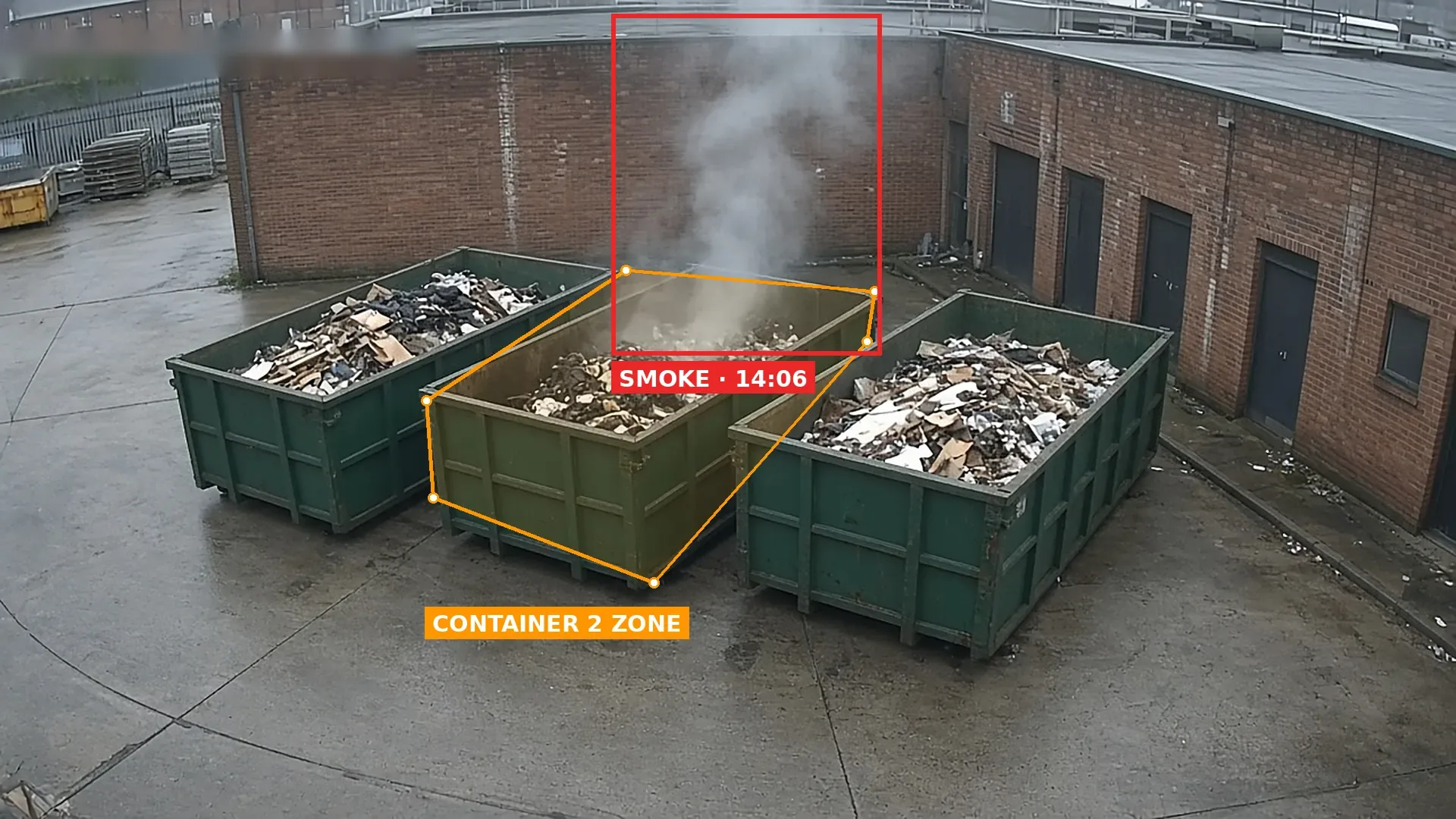
Watch them like any other pile. Bulked waste often waits in roll-on roll-off containers, skips or trailers for collection the next day, and a container loaded warm at the end of the shift can start to smoke hours later.
The fire prevention plan guidance treats waste in containers such as skips, roll-on roll-off containers and shipping containers differently from loose piles: containers are exempt from the pile size limits, but each one must be accessible from at least one side and able to be moved in a fire. That only helps if someone knows a container is smoking in time to move it. A camera on the loading bay, with a zone over each container, gives that warning.
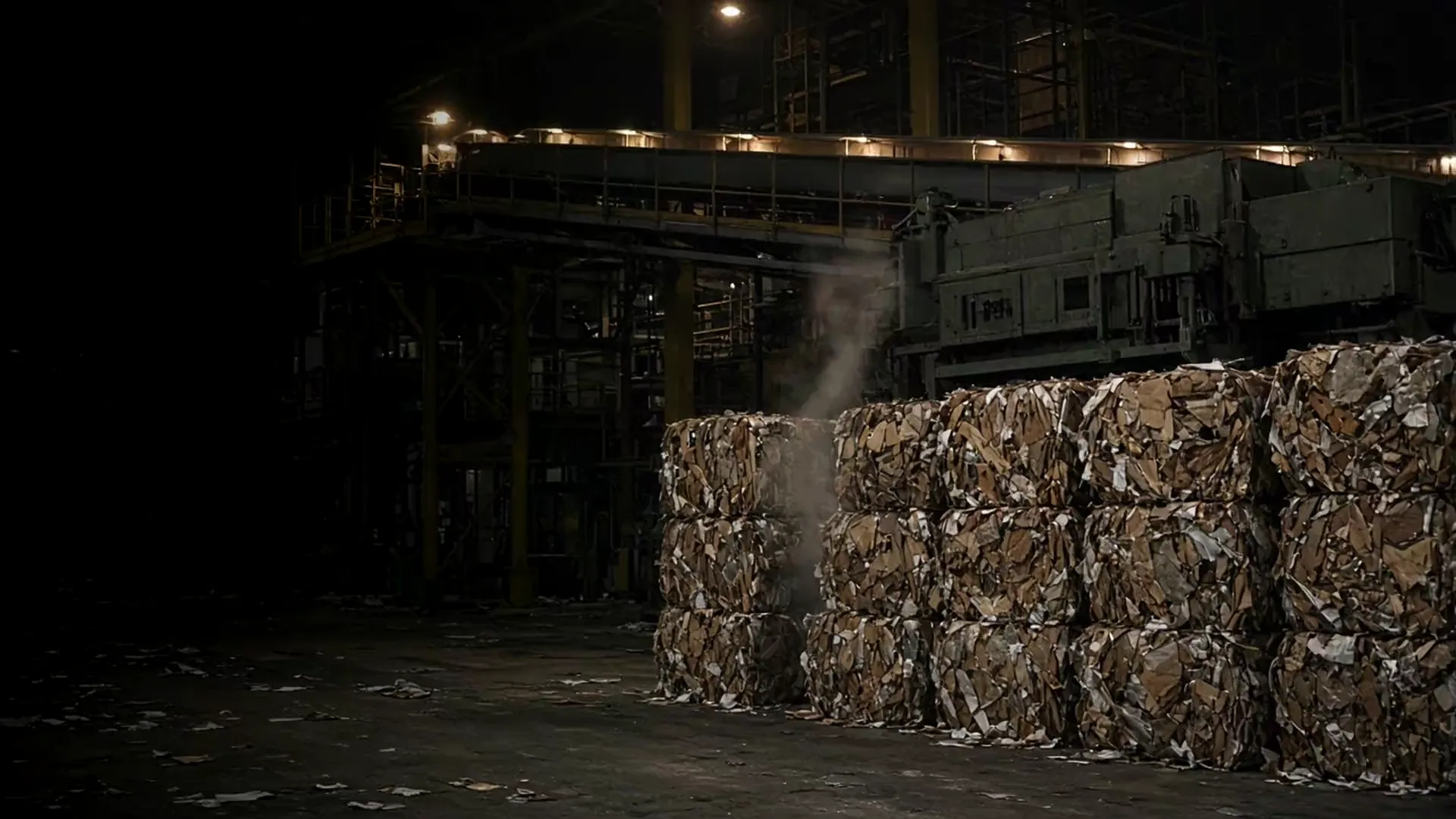
Baled and bulked outputs need the same attention. Bales and bulk piles waiting for haulage sit in one place for long periods, and dust and haze around a baler are normal while it runs. That is where a self-learning model earns its keep.
It learns each camera's normal scene. A transfer station is full of things that look a little like smoke: steam from wet loads, dust from loading shovels, diesel exhaust and haze under floodlights. Woodcock AI fits a model to each camera, trained on footage of that view where nothing happened, so it learns what normal looks like there.
Every detection has a feedback button. Mark an alert as not useful and the feedback goes into retraining for that camera, so it keeps getting better at telling the dust behind a baler from the smoke from a bale. This self-learning AI is the result of years of development, now running on real waste and industrial sites.
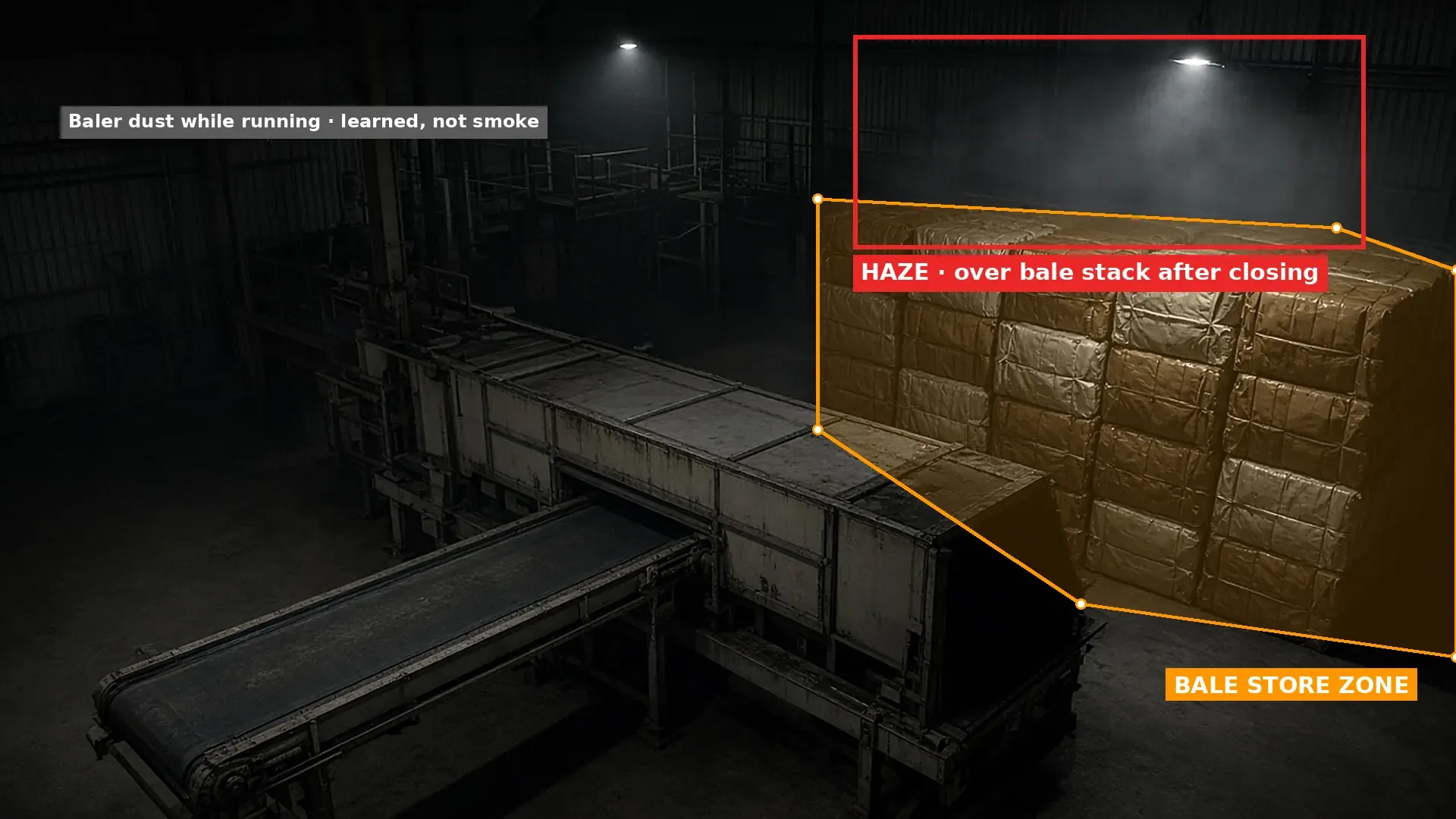
Because every alert carries the clip, the person on call can tell in a few moments whether it is steam off a wet load or smoke from a pile. For practical fixes to lenses, lighting and night views, see how to reduce CCTV false alarms, and for how video smoke detection works on ordinary cameras, see our video smoke detection guide.
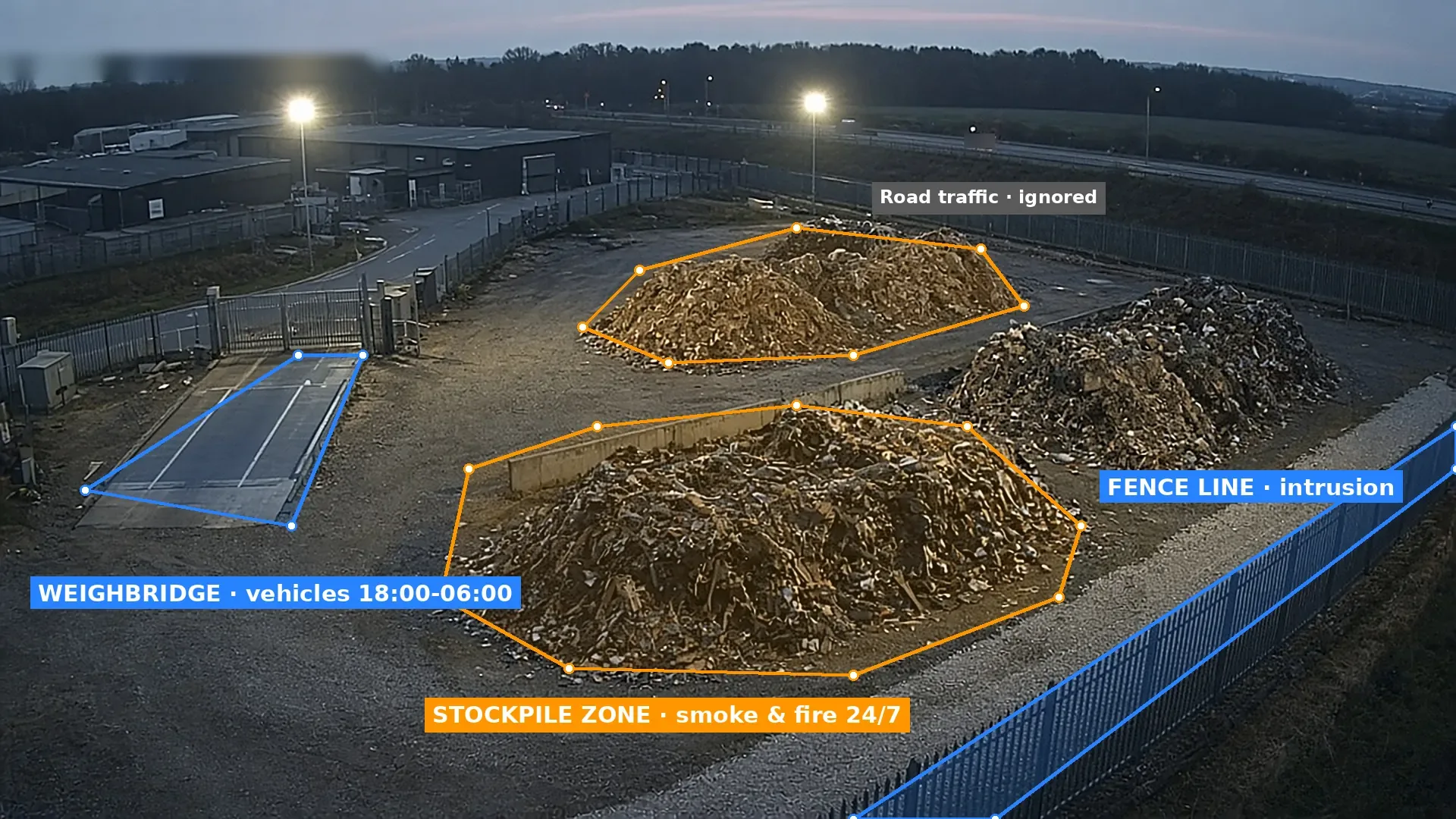
Yes. One camera can watch a stockpile for smoke and flame around the clock, a fence line for intruders out of hours and the weighbridge for vehicles at night, each with its own polygon zone and schedule.
Arson is a real risk for waste sites, and the fire prevention plan guidance expects security measures such as fencing, intruder alarms and CCTV, including arrangements outside working hours. The same cameras that watch the piles can watch the gate and the fence. An intrusion zone that follows the fence line, armed once the site closes, raises the alert when someone climbs in, and a line-crossing rule across the gate catches anyone coming through it. See intrusion detection for more.
It can support several parts of it. If your permit covers combustible waste, including mixed waste that contains any combustible waste, the Environment Agency expects a fire prevention plan, and its guidance lists CCTV visual flame detection among the automated systems that may be appropriate.
The guidance asks for detection that picks up fires at an early stage and raises the alarm during working hours and when the site is closed, proportionate to the risk. It expects systems to be designed, installed and maintained under third-party certification, such as a UKAS-accredited scheme, or a recognised standard; where they are not, you need to show how your plan still meets its objectives. Woodcock AI does not claim to replace a certified system. Describe in your plan what the cameras watch, how alerts reach people and how the system is maintained, and agree it with your permitting officer. Our fire prevention plan checklist covers the rest of the plan.
| Section of the guidance | What it asks for | What the cameras can add |
|---|---|---|
| Arson and site security (7.1) | Security measures such as fencing, intruder alarms and CCTV, with arrangements outside working hours. | Intrusion zones on the gate and fence line, armed out of hours, with the clip sent to the key holder. |
| Batteries (7.9) | Batteries turn up in many waste streams; damaged lithium batteries should be quarantined. | A camera on the quarantine bay or battery cage, watched for smoke and flame at all times. |
| Hot loads (7.13) | A written procedure to identify, isolate, monitor, cool and extinguish hot loads, and a quarantine area to put them in. | A zone on the tipping floor and the quarantine area, so a suspect load is watched after it has been moved. |
| Quarantine area (12) | Big enough for at least half of the largest pile, 6 metres from other waste, and kept clear. | A view that shows the quarantine area is clear, and that anything in it is being watched. |
| Detection (13) | Detect fires at an early stage and raise the alarm during working hours and when the site is closed. | Early visual smoke and flame detection on the cameras you have, with alerts by app and email around the clock. |
| Objectives (1) | Minimise the likelihood of a fire, aim to put any fire out within 4 hours, and minimise the spread of fire. | An earlier alert gives your team and the fire service more time to deal with a fire while it is small. |
Outside the permit, the Regulatory Reform (Fire Safety) Order 2005 requires a fire risk assessment and, where necessary, fire detectors and alarms appropriate to the size and use of the premises and the substances present. WISH guidance, which HSE endorses, adds that unless people are watching every part of the site for fires around the clock, detection systems are likely to be needed, and advises checking with your insurer and asking suppliers for proof and references.
The guidance says water supply requirements may be reduced where early detection and action mean a pile will not become fully involved, but WISH cautions that detection alone at external stacks is unlikely to justify the same changes as suppression. Comparing detection approaches? See fire prevention plans: thermal cameras or AI CCTV.
The people you choose for each camera and time of day. Every alert goes out by the Woodcock AI app, as a push notification with the clip, and by email, with a plain-English description of what the camera saw.
Alerts to a monitoring centre (ARC) and phone-call alerts are available as optional add-ons. At a transfer station that closes on Saturday afternoon, the alert might go to the site manager and a key holder at weekends, and to the shift supervisor during the week. Fire alerts and intrusion alerts can go to different people. Every event is saved with its clip for the fire service, your insurer and your own investigation.
Coming soon, early 2027 You'll be able to ask your cameras what happened in plain English, for example whether anything was tipped in the quarantine bay after the fire watch, and download the clips that answer it. Alert descriptions are live today.
No. Video AI is one layer alongside your fire alarm, any certified detection and your suppression system. The fire prevention plan guidance expects suppression where waste is stored in a building, and nothing on this page changes that.
What cameras add is coverage of the open areas where point detectors struggle, early sight of smoke at the surface of a pile, and the clip that lets a person decide what to do.
Connect the cameras you already have, draw zones over the areas that matter, set the schedules and choose who is alerted. Most transfer stations already have CCTV over the reception hall, the yard and the gate, so the work is usually connecting and zoning rather than replacing hardware.
Woodcock AI works on sites with a network connection to their cameras. A site assessment checks your recorder, cameras and connection first.
We review your camera views over reception, the bays, the quarantine area, the loading bays and the yard, plus your recorder and network connection.
Woodcock AI connects to your existing IP cameras or recorder over ONVIF or RTSP, through an on-site edge server or the cloud.
Polygon zones are drawn on each view: the tipping floor, each bay, the quarantine area, the containers and the fence line.
Smoke and flame zones can run around the clock, intrusion zones out of hours, with longer cover for weekends and bank holidays.
Pick who gets each alert by app and email, with the clip. Add a monitoring centre or phone-call alerts for nights and weekends if you need them.
Each camera has a model fitted to its scene, and the feedback button on every detection goes into retraining for your site.
Need more cameras, or a new system? We offer design, supply and install, covering site survey, design, supply, installation, commissioning, go-live and ongoing support. Read how it works for the technical detail. Want to see it first? Ask for an on-site demo, or a live test on your cameras: we connect two or three of your own cameras for about a fortnight. Installers and security companies can add it to the systems they look after through the installer programme.
Tick what is already true on your site. Your answers are saved in this browser only. The points follow the Environment Agency fire prevention plan guidance and WISH advice on reception areas.
Anything unticked is worth raising in a site assessment. Running other waste sites too? See recycling plants and MRFs, skip hire yards and the waste and recycling hub, and the UK waste fire statistics for the wider picture.
Short answers on fire prevention plans, hidden fires, false alerts and set-up. More in the Woodcock AI FAQ.
Yes, where a camera can see the area. Woodcock AI watches your existing cameras over the tipping floor, bays, quarantine area, loading bays and yard for the first visible smoke and flame, and sends the clip by app and email to the people you choose, including at night and at weekends when the shed is shut.
No. It works alongside them. Your fire alarm, detection and suppression stay as your risk assessment, permit and insurer require. Video AI adds a wide view of open areas such as tipping floors and external bays, with the clip in every alert.
It can form part of it. The Environment Agency guidance lists CCTV visual flame detection among the automated systems that may be appropriate, and expects systems to be covered by third-party certification or a recognised standard, or for you to show how the plan still meets its objectives. Agree what you install with your permitting officer.
No. WISH guidance says there is no fully effective way to detect a fire deep in a pile before it breaks the surface. A camera spots the first smoke or flame at the surface, at any hour, which is why pile limits, turning and a fire watch still matter.
Each camera has a model fitted to its own scene and trained on footage where nothing happened, so it learns what normal looks like there. Polygon zones keep detection on the piles and bays, and feedback on any detection goes into retraining for your site.
Usually not. Woodcock AI works with most IP cameras and recorders over ONVIF or RTSP, on sites with a network connection to their cameras. If an area is not covered, we can design, supply and install extra cameras.
Yes. Every camera has its own schedule. Smoke and flame zones can run around the clock while intrusion zones run only out of hours, with longer cover for weekends and bank holidays.
By the Woodcock AI app, as a push notification with the clip, and by email, to the people you choose for each camera and time of day. Alerts to a monitoring centre (ARC) and phone-call alerts are available as optional add-ons.
Yes, through the installer programme. If you would rather we handle everything, we offer design, supply and install.
Book a site assessment, then choose an on-site demo or a live test on your cameras: we connect two or three of your own cameras for about a fortnight.
We only quote figures we can trace to an official source. Published and last updated 27 October 2026 by Woodcock AI.
A site assessment reviews the cameras over your tipping floor, bays, quarantine area, loading bays and yard, and confirms what is supported before anything is set up.