

Fuel and diesel theft: lock it, watch it, act fast
To prevent fuel and diesel theft, make your tanks and vehicles hard to reach, make the fuel hard to draw off, and find out quickly when someone is at it. That means fencing, lighting and tanks kept in plain view; locked caps, valves, pumps and cages, anti-siphon devices and level alarms; and CCTV that alerts you when a person or vehicle reaches the fuel after hours. Hauliers reported a rise in diesel thefts from lorries in October 2026.

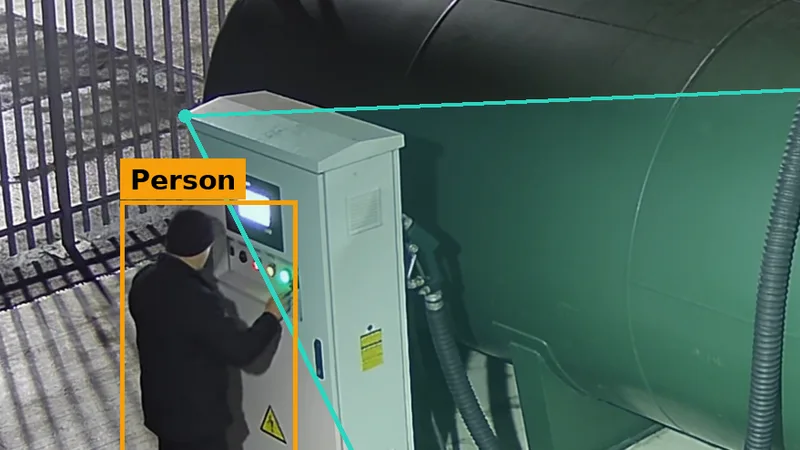
Last updated 31 October 2026. Diesel and heating oil are easy to sell, hard to trace and often stored where nobody is watching at night. Hauliers lose fuel from lorries parked in yards and on industrial estates. Depots lose it from bunkers and pumps. Building sites lose it from bowsers and plant. Farms, rural businesses and homes lose it from yard tanks and heating oil tanks. This guide covers where fuel theft happens, what the latest reporting shows, the measures police, insurers and industry bodies recommend, what the oil storage rules expect, where cameras should watch, and how AI detection on your existing CCTV can tell you someone is at the fuel while there is still time to act.
Why is fuel such a target?
From a thief’s point of view, fuel is close to cash. It can be used straight away, sold on quietly or split between several buyers, and once it is in someone else’s tank it is almost impossible to identify. It does not need breaking for parts or shipping abroad. A lorry’s side tanks, a site bowser or a yard bunker can hold hundreds or thousands of litres in one place, and much of it is stored outside, overnight, with no one on site.
The methods are simple. Fuel caps are forced, pipes are cut, pumps and hoses are used if they are left unlocked, and plastic tanks are sometimes drilled. Thieves usually bring containers and a van or pickup to carry them away. In October 2026 the Telegraph reported lorry drivers being hit by a surge in diesel thefts.
The loss is more than the fuel. A lorry with its tank drained or a fuel pipe cut cannot leave the yard in the morning, so deliveries are missed and drivers sit idle. A Worcester haulier interviewed by the BBC in October 2026 described around 400 litres being taken from two vehicles, with pipes on the fuel sending units cut and fuel caps broken, leaving the vehicles off the road for a day. A drained heating oil tank can mean a cold house or office until the next delivery. On a building site, a bowser emptied overnight can stop the plant before the day has started.
There is also the mess. Spilled diesel and oil, cut pipes and drilled tanks lead to leaks that can reach drains, ditches and watercourses. That is a pollution problem as well as a security one, and clearing it up falls on the owner of the fuel.
What does the latest reporting show?
There is no single national figure for fuel theft. It is recorded as theft, often under different headings by different forces, and many small losses are never reported. The best evidence comes from police specialist units, insurers and industry bodies, and from the businesses affected.
For hauliers, the clearest picture comes from the National Vehicle Crime Intelligence Service (NaVCIS freight), which works with police forces and the freight industry. Fleet News reported in June 2026 that NaVCIS recorded 3,424 freight crime incidents involving HGVs in 2025, around nine a day. Of those, 1,831 (54%) happened at independent parking locations such as industrial estates and laybys, and 699 (20%) at motorway service areas. Fleet News also notes that freight crime has no Home Office crime code of its own, so year-on-year comparisons are not reliable.
Those figures cover all freight crime, from load theft to curtain slashing, not just fuel. They do show how exposed a parked lorry is, and how much of the risk sits away from secure truck stops. NaVCIS’s freight bulletin of 2 October 2026 also warns that the run-up to peak season raises the risk, and asks operators to report crimes promptly so patterns can be spotted.
Away from the roads, police forces and rural bodies continue to warn about heating oil and farm fuel. The police crime prevention advice on oil tank theft says it has been increasing, and Cleveland Police issued advice in April 2026 for rural residents and businesses on protecting heating and farm fuels. The NFU’s theft advice lists fuel among the things farmers should secure, alongside machinery, tools and livestock.
How does fuel theft usually happen?
Every theft is different, but the pattern is familiar. The site is looked over first, sometimes from the road, sometimes by someone who stops to ask directions or claims to be delivering. Thieves come back after dark with a van or pickup and containers, often plastic jerry cans or an empty IBC. They get at the fuel by forcing caps, cutting pipes or locks, or using a pump and hose that has been left unlocked. Filling containers takes a few minutes, and then they are gone.
The signs are often only noticed later. Cleveland Police lists broken locks, damaged pipework, a smell of fuel and a sudden drop in the tank level as things to look out for. A lorry that will not start, a gauge reading lower than it should, or a dark patch on the ground under a tank are other clues.
The weak point for the thief is time. Fuel is heavy, containers have to be filled and carried, and the job is noisy. If someone knows straight away that there is a person at the bunker or a vehicle at the tank, there is a chance to act. If the first anyone knows is a driver unable to leave in the morning, that chance has gone.
What security measures stop fuel theft?
Police, insurers and industry bodies give similar advice: make the fuel hard to reach, hard to draw off, and quick to notice when it goes. The NFU, NFU Mutual’s fuel oil protection guidance, OFTEC and the police all point to a mix of physical, mechanical and electronic measures.
Make it hard to reach
- Keep tanks in view. Site tanks and bowsers where they can be seen from the house, the office or a camera, not tucked behind a building.
- Fence and cage. A locked compound, cage or building around bunkers, bowsers and drums. Lockable gates on yards and field entrances.
- Lighting. Security lighting on the tank, the pump and the lorry park makes it harder to work unseen and gives cameras a clearer picture.
- Screening with care. Hedges or fencing can hide a heating oil tank from the road, but they should not hide it from you or the camera.
Make it hard to draw off
- Lock everything. Fill caps, valves, taps, delivery hoses and pumps locked when not in use, and pump power isolated at night.
- Lockable fuel caps and anti-siphon devices on lorries, plant and generators.
- Keys. Keep pump and cap keys in a key safe inside a locked building, never on a hook by the tank.
- Never lock the vent. UKIFDA points out that a tank’s vent must stay open. Lock the fill point, not the breather.
Find out quickly
- Level alarms. Electronic gauges and level-drop alarms warn when the fuel level falls suddenly.
- CCTV that alerts. Cameras that only record show you what happened. Cameras with AI detection tell you while it is happening.
- Regular checks. Read tank levels and keep fuel records, so a loss is spotted the same day, not at the next delivery.
- Neighbours and police. Join farm watch or business crime schemes, and report suspicious vehicles.
For hauliers, parking matters too. Fleet News reports that most HGV freight crime happens at independent parking such as industrial estates and laybys. Secure yards and accredited truck parks, including those in the Park Mark Freight scheme, reduce the risk. When lorries are parked in your own yard, park them tank side to tank side or close to a wall where you can, and keep the yard gate locked.
What do the oil storage rules say?
In England, businesses storing oil in containers of 201 litres or more must follow the oil storage regulations. The GOV.UK guidance on storing oil covers drums, fixed tanks, intermediate bulk containers (IBCs) and mobile bowsers. Fixed tanks need a bund or other secondary containment that holds 110% of the contents. Homes are covered for larger tanks, of 3,501 litres or more.
Several of the rules are about security as well as pollution. The guidance says a flexible delivery pipe should be kept in a lockable cabinet, or fitted with a lockable valve that is locked when not in use. Pumps should be secured so they cannot be used without permission, for example by locking them, cutting the power or putting them in a lockable cage. Taps and valves should be locked shut when not in use, and bowsers must have locks on their taps, valves and pumps. Tanks should be positioned away from where vehicles could hit them, or protected with barriers or bollards.
The Environment Agency can serve notices requiring work to prevent pollution. Farms storing fuel oil for agricultural use follow separate rules, and Wales, Scotland and Northern Ireland have their own regulations, so check the guidance that applies to you. Either way, a locked pump, a locked hose and a tank in a cage are good security and good pollution practice at the same time.
NFU Mutual’s fuel oil protection guidance also reminds owners that fuel is a fire and explosion risk as well as a theft and pollution one. A risk assessment for the fuel store should cover all three.
Where should cameras watch?
Start with the places a thief has to go. They have to get in, reach the fuel, and get the containers out. On most sites that gives a short list: the gate and the entrance apron, the lorry park, the fuel bunker and pump, any bowsers, and the heating oil tank.
Where is your fuel kept?
Lorries parked overnight carry hundreds of litres each in their side tanks. A Worcester haulier interviewed by the BBC in October 2026 described fuel pipes cut and fuel caps broken while lorries stood in the yard overnight. Draw a line across the gateway and a zone over the lorry park, armed when the last driver leaves. A vehicle at the gate at midnight or a person walking between parked trucks becomes an alert with a clip. It is not number plate recognition, but it shows what arrived and when.
Vehicles at the gate, people among the trucks
Construction sites keep diesel in towed bowsers and in the tanks of plant, generators and lighting towers. GOV.UK guidance says bowser taps, valves and pumps must have locks and be locked when not in use. A zone around the bowser pad catches someone at the hose long before the containers are full. Park the bowser in view of a camera, inside the compound, and away from the fence where a pipe could be passed through.
People after hours
Police advice notes that oil tank theft from homes and businesses has been increasing. Plastic and steel tanks often sit at the side of a building, out of sight. A zone over the tank flags anyone at it, day or night, and a camera on the tank is one of the measures police and OFTEC suggest. Lock the fill cap, but never lock or block the vent.
People 24/7
Many farms keep a large diesel tank in the yard, often close to a lane or a field entrance. The NFU suggests keeping fuel in a locked, alarmed building or cage, using anti-siphon devices and level-drop alarms, and pointing CCTV at the tanks. Vehicle detection in a zone by the tank flags a pickup or van stopping there at night, and a person zone covers anyone on foot.
Vehicles and people after hours
Each area gets its own zone and schedule, armed when the yard shuts and disarmed when work starts.
Many depots, farms and sites already have cameras recording to a recorder in the office. If they are IP cameras or the recorder supports RTSP or ONVIF, AI detection can usually be added to them. Where there are gaps, such as a tank round the side of a barn or a bowser behind the cabins, a site assessment will show where one or two extra cameras would help most. Make sure cameras have power and a connection overnight, and that the tank is lit well enough for a clear picture.
Think about the approach as well as the tank. A camera that sees the gate or the lane gives you a few extra seconds of warning, and catches the vehicle the containers will be loaded into. Keep public roads and footpaths out of your zones, for privacy and to keep alerts focused on your own land.
How does AI detection on CCTV help prevent fuel theft?
Ordinary CCTV records. Unless someone is watching live, the footage is usually looked at after the fuel has gone. That can help the police, but it does not save the fuel or stop the leak. Woodcock AI watches the camera feeds for you and raises an alert when something you care about happens, so someone can act while the thieves are still there.
- Intrusion detection. Flags a person in a zone you draw, such as the fuel compound, the bowser pad or the side of the building where the oil tank sits. See intrusion detection.
- Vehicle detection in zones. Flags a vehicle entering a zone, such as the gate apron or the area beside a farm tank, outside working hours. It is not number plate recognition. See vehicle detection.
- Line crossing. Flags a person or vehicle crossing a line you draw, such as the yard gateway or a fence. See line-crossing detection.
- Polygon zones and schedules. You draw each zone to fit the area, such as the bunker but not the road beside it, and set when it is armed. A fuel zone can be armed outside fuelling hours and disarmed when drivers fill up in the morning. See polygon detection zones.
- Self-learning. The system learns from feedback on alerts at your site, so it gets better at telling real events from things that are not, such as headlights sweeping the yard or a cat on a tank. See self-learning AI.
- Smoke and fire detection. The same cameras can flag visible smoke and flame. Fuel stores are a fire risk, and fires are sometimes started deliberately near them. See smoke and fire detection.

Each alert goes to the app with a short clip, and by email, so the owner, the transport manager, the security firm or the keyholder can see in seconds what is happening. Detection runs on an edge server on site or on a cloud server, and connects to IP cameras and recorders over RTSP or ONVIF, including Hikvision. Woodcock AI detects people and vehicles; it does not identify who anyone is. You will also soon be able to ask your cameras questions about what happened on site; Ask your cameras is coming soon, early 2027.
The difference is time. A theft found when the first driver turns the key at 5am has had all night to finish. An alert at 02:37 that shows a person at the pump with three empty cans gives someone the chance to call the police while the fuel is still in the tank.
Will I get alerts every time a lorry comes in?
Not if the zones and schedules are set up well. Old motion-detection systems flagged any change in the picture, from a moving branch to headlights on a wall, and people soon stopped looking. AI detection looks for specific things, such as a person or a vehicle, inside a zone you have drawn, during the hours you have set.
Three things keep alerts useful. First, zones: draw them over the bunker, the bowser or the tank, not the whole yard, and leave out the road and the pavement. Second, schedules: arm the fuel zones when nobody should be filling up, and the lorry park only after the last driver has gone, so normal comings and goings do not fill your phone. Third, feedback: mark alerts as useful or not, and the self-learning system uses that to improve at your site. Our guide to reducing CCTV false alarms goes into more detail.
Some false alerts will still happen, especially in the first days while zones and schedules are tuned. Night shifts, early deliveries and fuel tanker drops need to be planned into the schedule. The aim is that when your phone goes off at night, it is worth looking at.
What will my insurer expect?
Insurers vary, so read your policy wording and talk to your broker before you change anything. Some policies set conditions for fuel stores and vehicles, such as locked tanks and pumps, keys kept securely, vehicles parked in a locked yard, or alarms on tanks. If a condition is not met, a claim can be reduced or refused. Cover for the fuel itself, for damage to tanks and vehicles, and for pollution clean-up can sit in different parts of a policy, so check all three.
Keep records. Regular tank readings, fuel delivery notes, a note of where keys are kept and a log of security checks all make a claim easier and help the police show what was taken.
What should happen when an alert fires at night?
Agree the plan before you need it. Who gets alerts at night and at weekends? Who attends, and when? When is it a 999 call? Who checks for leaks afterwards?
- Check the clip. It shows within seconds whether it is a fox, a driver back early, or a person at the pump with containers.
- Call 999 if a crime is in progress. Give the address, where on site, and what you can see: how many people, what vehicle, which way they are heading. Report it afterwards on 101 or online if it has already happened.
- Never confront thieves. Fuel, vapour and cutting tools are a dangerous mix. Use lights or a keyholder response service, and wait for the police.
- Report and record. Save the clip, report the theft, tell your insurer, and for freight crime let NaVCIS know too. Check for leaks and damaged pipes before anyone fills up or drives off.
If fuel has leaked into a drain, ditch or watercourse, report it to the environmental regulator straight away. A quick response limits the damage and the clean-up.
How do you get started?
Start with where the most fuel sits overnight: the lorry park, the bunker, the bowser, the farm tank or the heating oil tank. Check what cameras you already have, how they record, and whether they can see the fuel and the way in. Check the lighting at night. Then plan zones and schedules for each area, and agree who gets which alert.
Our site assessment looks at the cameras already on site, the routes thieves are likely to use, and the zones, lines and schedules that would cover them. If you want to see it working first, we can run a live test on your cameras: we connect two or three of them for about a fortnight, so you see the alerts on your own site before you decide. An on-site demo is also available.
For hauliers and contractors with several depots or sites, the same approach scales. Each site gets its own zones and schedules, and alerts can go to the manager responsible for that site, a security firm, or both.
What about privacy and data protection?
If your cameras capture people, data protection law applies. The Information Commissioner’s Office has guidance on CCTV and video surveillance. Have a clear purpose, point cameras at your own land as far as possible, put up signs, keep footage only as long as you need it, keep it secure, and be ready to handle requests for footage. Our guide to GDPR and AI CCTV covers this in more detail.
Polygon zones help here too. Drawing zones on your tanks and yard, and leaving public roads, pavements and neighbours’ land out, keeps alerts focused where they should be. Drivers and staff should know that cameras are in use in the yard and at the fuel point.
What are the limits?
- It does not measure fuel. Woodcock AI watches the picture, not the tank. Use level alarms and fuel records alongside it.
- A camera needs a view. It cannot see a tank behind a wall, inside a closed building or round the back of a barn with no camera.
- It needs light or a camera that works in the dark. Check what your cameras see at night.
- It needs power and a connection. If the power or internet goes off, cameras and alerts stop. Plan for this.
- It does not read number plates. It flags vehicles and people in zones; the clip shows what happened.
- Someone has to respond. An alert is only useful if someone acts on it.
Sources
- Fleet News, Nine thefts a day from trucks in 2025 (16 June 2026).
- NaVCIS, Freight, and Freight bulletin 020 (2 October 2026, PDF hosted by BIFA).
- The Telegraph, Lorry drivers hit by surge in diesel thefts (8 October 2026).
- BBC News, Fuel is now liquid gold, haulier says after theft (October 2026).
- GOV.UK, Storing oil at a home or business.
- NFU, Theft on farm: advice and support.
- NFU Mutual, Risk management programme for fuel oil protection (PDF).
- Police.uk, Oil tank theft.
- Cleveland Police, Rural resident or business? Protect your heating and farm fuels (April 2026).
- OFTEC, Guidance on avoiding heating fuel thefts.
- UKIFDA, Tank care and security.
- Information Commissioner’s Office, CCTV and video surveillance guidance.
We have summarised these sources in our own words. Always read the current versions in full. This page is general guidance, not legal, insurance, environmental or security advice; your insurer, the police, the environmental regulator and a competent security adviser decide what applies to your site.
Worried about fuel going missing?
Book a site assessment and we will look at the cameras on site and plan zones, lines and schedules for the gate, the lorry park, the bunker, bowsers and tanks, plus who gets which alert. Or ask for a live test on your cameras first: we connect two or three of them for about a fortnight.
Related pages
Frequently asked questions
How do I stop diesel being stolen from my lorries?
Park in a locked, lit yard or an accredited truck park where you can, fit locking fuel caps and anti-siphon devices, park tank sides close together or against a wall, and use CCTV that alerts someone when a person or vehicle enters the lorry park after hours.
Is fuel theft rising in the UK?
There is no single national figure. Hauliers reported a surge in diesel thefts from lorries in October 2026, and police advice says oil tank theft has been increasing. NaVCIS recorded 3,424 HGV freight crime incidents in 2025, around nine a day, though that covers all freight crime, not only fuel.
How can I protect a heating oil tank from theft?
Keep it in view, light it, fit a lockable fill cap and a remote gauge or level alarm, and point a camera at it. Lock the fill point, never the vent. Police and OFTEC both suggest CCTV as part of the protection.
Do the oil storage rules require tanks to be locked?
In England, the guidance for businesses storing 201 litres or more says delivery pipes, valves, taps and pumps should be locked or secured when not in use, and bowsers must have locks. Farms storing agricultural fuel oil follow separate rules.
Can CCTV stop fuel theft?
Recording alone usually shows what happened afterwards. CCTV with AI detection can alert you when a person reaches the tank, a vehicle stops at the fuel or someone crosses the yard gateway after hours, so someone can call the police while the fuel is still there.
Can Woodcock AI work with the cameras I already have?
Usually, yes. It connects to IP cameras and recorders over RTSP or ONVIF, including Hikvision, and runs on an edge server on site or on a cloud server. It flags people, vehicles, line crossings, smoke and flame in zones you draw.
Last reviewed 31 October 2026