

Perimeter intrusion detection: the options compared for UK industrial and commercial sites
Perimeter intrusion detection systems (PIDS) warn you when someone tries to get over, through or under a site boundary, early enough to act. The main options are fence-mounted sensors, electric fences, buried cable, microwave and infrared beams, radar, thermal cameras and AI video analytics on existing CCTV. Each suits different sites, and NPSA guidance says every alarm needs quick verification, usually by CCTV. AI on the cameras you already have adds polygon zones and line crossing that flag people and vehicles, with the clip in the alert.

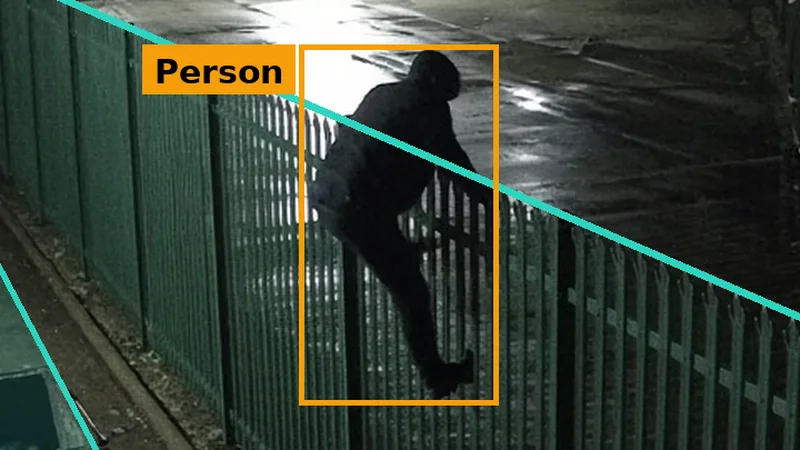
Last updated 31 October 2026. Most break-ins at industrial and commercial sites start at the boundary. Someone climbs a palisade behind the units, cuts through weldmesh where the fence runs out of sight, drives through a gap in the hoarding or tries the gate after the site has closed. A perimeter intrusion detection system is meant to tell someone while that is happening, not the next morning when the damage is found. This guide explains what perimeter intrusion detection systems are, compares the main types honestly, sets out what UK guidance from NPSA and the police says about verification and false alarms, and shows how AI on the CCTV cameras you already have can cover a boundary with polygon zones and lines.
It is written for managers of yards, depots, industrial estates, construction sites and solar farms, and for their security installers. It compares approaches, not brands, and gives no prices: cost depends on the boundary, the ground and what is already installed.
What is a perimeter intrusion detection system?
NPSA, the National Protective Security Authority, describes perimeter intrusion detection systems (PIDS) as a generic term for technologies that give advance warning of an intruder trying to get into a secure area. The idea is simple: notice the attempt at the boundary, not once the intruder is already at the store, the plant or the stock.
NPSA groups PIDS into families by where the detector sits. Barrier-mounted systems are fixed to the fence itself. Ground-based systems are buried along the boundary. Free-standing systems create a beam or a detection field between posts or units. NPSA also covers rapidly deployable kit, which can be put up quickly for a short period, and wide-area systems that detect and track people across open ground.
For most commercial and industrial sites, a fifth option now sits alongside these: video analytics running on the cameras already watching the fence, gates and yard. Rather than sensing vibration or a broken beam, the software looks at the picture and recognises a person or a vehicle where one should not be.
Why does perimeter detection matter for commercial sites?
Business crime is common. In the Home Office’s 2023 Commercial Victimisation Survey (CVS) for England and Wales, an estimated 26% of all business premises, around 409,000, were victims of at least one of the crimes it measures in the previous 12 months. Theft was the most common crime, experienced by 14% of premises, followed by burglary including attempts (8%) and vandalism (8%).
Half of premises hit by crime (50%) reported a direct financial loss. 55% of premises hit by crime reported at least one crime to the police; of premises that reported a crime, 45% said the police attended the scene, and 41% were dissatisfied with the response, against 35% who were satisfied. Knowing at the time, while someone is still on the fence, is what changes the outcome.
Outdoor sites are especially exposed. Valuable things sit in the open, the boundary is long and out of sight, and the site is empty all night. Our guides to commercial burglary, metal theft and plant and machinery theft cover the crimes themselves.
Does perimeter detection stop intruders?
No, and NPSA is clear on the point: PIDS detect, they do not delay. A fence sensor or a camera alert does not stop someone climbing over. It tells you they are doing it. That is why perimeter detection works best as one layer among several.
- Deter and delay. A sound fence, a strong gate, good lighting and clear signs make a site less attractive and slow intruders down. The barrier is what buys time.
- Detect. Sensors or cameras notice the attempt as early as possible, ideally at the fence rather than at the store.
- Verify. Someone, or something, works out what caused the alarm. NPSA says all alarms need quick verification, typically by CCTV, and that perimeter lighting may be needed for cameras to do that at night.
- Respond. A keyholder, a mobile patrol, a guard, a monitoring centre or the police acts on what has been seen.
When you compare options, compare how each one fits all four stages, not only how it detects.
What are the main types of perimeter intrusion detection?
The descriptions below summarise NPSA’s guidance and general industry practice. They are deliberately general: how well any system works depends on how it is chosen, installed, set up and maintained on your site, and no honest supplier can tell you how it will perform without seeing the boundary.
Fence-mounted sensors
Barrier-mounted systems fix sensors to the fence fabric or posts. NPSA lists several kinds: microphonic or piezo-electric cable, fibre optic cable, and point sensors such as geophones and accelerometers, which detect the vibration of someone cutting, climbing or lifting the fence. The fence is divided into zones so the alarm shows roughly where along the boundary the attack is happening.
Fence sensors suit long, consistent fences in good condition. NPSA notes that they should be on the secure side of the fence so they cannot easily be tampered with, and that the fence itself matters: a fence that is too rigid may not carry the vibration well, and one that is too loose moves in the wind. Climbing attacks can be harder to detect than cutting. Wind, heavy rain, animals, vegetation and blown debris against the fence are common causes of nuisance alarms.
Electric fences
NPSA also lists electric fences under barrier-mounted systems. A pulsed electric fence is both a deterrent and a detector: it raises an alarm when wires are cut, shorted or touched. It is a specialist installation with electrical safety and warning sign requirements, so it needs a competent installer.
Buried cable and tubes
Ground-based systems sit under the ground along the boundary: ported coaxial (leaky feeder) cable, buried microphonic cable or fluid-filled pressure tubes. Their great advantage is that they are invisible and follow the shape of the ground. NPSA points out the downsides: the groundworks make them a significant installation, they cannot easily be moved once laid, they can struggle to tell animals from people, and water and tree roots can affect them.
Microwave
Microwave systems create a detection field, either between a transmitter and a receiver (bistatic) or from a single unit (monostatic, using the Doppler effect). Someone walking or crawling through the field disturbs it. NPSA notes that microwave copes better than infrared with bad weather and undulating ground, but has dead zones close to the heads, so zones have to overlap. The ground between the units needs to be kept clear.
Active infrared beams and PIR
Active infrared beams run between posts. Breaking one or more beams raises an alarm. NPSA says they need flat ground and a clear line of sight, and can be affected by fog, snow and heavy rain. Passive infrared (PIR) detectors, the kind used indoors, are a poor fit outdoors: NPSA describes outdoor PIR as giving poor detection and high false alarm rates.
Radar and wide-area detection
Wide-area systems watch an open space rather than a line. Ground radar is the usual example: it detects and tracks movement across a field, a large yard or the ground around a solar array, and works in darkness. On its own, radar tells you that something is moving and where, not what it is, so it is normally paired with cameras. It suits large, open areas better than busy yards.
Thermal cameras
Thermal cameras see heat rather than light, so they can pick out a warm body against a cool background in the dark without any lighting. They are often used on long boundaries and unlit sites, usually with analytics running on the thermal picture. They are new hardware, and a thermal image shows less detail than a colour camera. Our comparison of video AI, thermal and on-camera analytics goes further.
AI video analytics on existing CCTV
Video analytics uses the camera picture itself. Older video motion detection reacted to any change in pixels, which is why it became known for alerting on rain, spiders, shadows and headlights. Modern AI detection recognises objects instead: it looks for a person or a vehicle and only raises an alert when one is in a zone or crosses a line you have drawn, during the hours that rule is armed. Because the alert is a camera clip, verification is built in.
Its limits are the limits of the camera: it can only watch what a camera sees clearly, and it needs light or infrared at night.
How do the options compare?
The table compares the options on how they detect, where they fit, what to watch out for and how alarms are checked. It is deliberately qualitative. What matters is how a system behaves on your fence, your ground and in your weather, which is what a site survey is for.
| Option | How it detects | Suits | Watch out for | How alarms are checked |
|---|---|---|---|---|
| Fence-mounted sensors | Cable, fibre optic or point sensors pick up the vibration of someone cutting or climbing the fence | Long, sound fences of a consistent type | Wind, rain, wildlife and vegetation moving the fence; fences that are too rigid or too loose; climbing can be hard to detect | Needs cameras or a patrol to see the zone that alarmed |
| Electric fence | A pulsed fence that raises an alarm when wires are cut, shorted or touched | High-risk boundaries where a visible deterrent helps | Electrical safety and warning signs; take advice from a competent installer | Needs cameras or a patrol |
| Buried cable or tubes | Pressure or disturbance in the ground as someone crosses | Sites where hidden detection matters and the ground is stable | Groundworks; cannot easily be moved; can struggle to tell animals from people; water and tree roots | Needs cameras or a patrol |
| Microwave | A field between a transmitter and receiver, or from one unit, that a body disturbs | Open runs, including undulating ground, where a clear zone can be kept | Dead zones near the heads, so zones overlap; vegetation and standing water | Needs cameras covering each zone |
| Active infrared beams | Someone breaks a beam between posts | Short, straight, flat runs with a clear line of sight | Fog, snow and heavy rain; uneven ground; birds and debris breaking the beam | Needs cameras covering each beam |
| Radar | Detects and tracks movement across open ground | Large open areas such as fields, solar farms and big yards | Movement of anything in the area; needs a camera to show what it is | Usually paired with cameras that point at the target |
| Thermal cameras | See heat rather than light, often with analytics | Long boundaries and dark sites with no lighting | New hardware and power; less detail for working out what an object is | The thermal picture itself, often with a colour camera alongside |
| AI on existing CCTV | Recognises people and vehicles in polygon zones and crossing lines you draw | Sites that already have cameras covering the fence, gates and yard | A camera can only see what it points at; needs light or infrared at night | The alert arrives with the clip, so verification is built in |
| Rapidly deployable kit | Temporary sensors set up quickly by a small team | Short-term needs: events, temporary works, a gap while repairs are made | Needs re-checking if left in place for long | Depends on the kit; usually cameras |
Two points stand out. Every option except camera-based detection needs cameras anyway to verify its alarms. And the options are not exclusive: NPSA recommends deploying PIDS alongside CCTV, access control and security staff, and a high-risk site might combine fence sensors on a long rear boundary with AI on the cameras covering gates and yards, all feeding one response plan.
For many industrial and commercial sites, the practical starting point is the cameras already installed. If they already see most of the fence, the gates and the yard, adding AI detection to them turns a recording system into a detection and verification system without new sensors or groundworks. Any gaps can then be covered with an extra camera or a different sensor.
How does perimeter detection work on existing cameras?
Woodcock AI connects to the IP cameras and recorders a site already has, over RTSP or ONVIF, including Hikvision, and runs on an edge server on site or on a cloud server. On each camera view you draw the rules for that part of the boundary.
- Line crossing. A line along the top of a fence, across a gate or along a wall. You choose which direction counts, so someone climbing in raises an alert and a member of staff walking out does not.
- Polygon zones. A shape with as many corners as you need, drawn to follow the inside of the fence, the yard or a compound. A person or vehicle inside the zone while it is armed raises an alert. Polygons can hug an angled or curved boundary and leave the pavement, road or a neighbour’s land outside.
- Intrusion detection and vehicle detection: only people and vehicles count, so rain, shadows and swaying branches do not.
Each zone and line has its own schedule. When a rule is broken, an alert goes to the app with a snapshot and the clip, and by email, with an AI description of what the camera saw, such as “one person climbing over the rear fence into the yard, no vehicle in view”. Woodcock AI can also send alerts to a monitoring centre (ARC) as an optional add-on; our comparison with remote CCTV monitoring explains how the two work together.
The system is self-learning. It learns each camera on your site, so the steam vent, the swaying tree and the headlights on the road become part of the normal view, and every detection has a feedback button: marking an alert as correct or false feeds into retraining for your site. Woodcock AI has been in development for years and is now running on customer sites across the UK.
Coming next: Ask your cameras Coming soon, early 2027, which will let you ask the system questions about what your cameras have seen.
How does this look on different sites?
Every perimeter is different, but the same rules adapt to most sites. Choose a site type to see what to watch for.
Which kind of site are you protecting?
Scrapyards and metal recyclers hold stock that is easy to sell and heavy to move, so thieves bring a vehicle close to the fence. A line along the fence top flags anyone coming over, and a zone along the inside of the boundary flags a person among the stockpiles at night. If a camera sees the lane outside, a zone there can flag a vehicle stopping against the fence after hours, as long as it covers only the part of the lane you need. See our scrapyards page.
Fence lines and vehicles at the boundary
A construction site perimeter changes as the job moves on. Hoarding goes up and comes down, gates move, and the compound shifts. Cameras on temporary poles or the site cabins can carry zones over the compound and plant parking, and lines along stretches of hoarding, which are redrawn when the layout changes. See our construction page.
Hoarding, compound and plant
Vehicle storage yards, dealers’ overflow sites and auction yards hold rows of vehicles behind palisade or weldmesh. A line across the gate, armed after closing, flags a vehicle or person coming through, and zones over the rows flag someone walking between the vehicles at night. Vehicle detection is not number plate recognition, but the clip shows what arrived and when. See our vehicle yards page.
Gate line and rows of vehicles
Each stretch of boundary gets its own line or zone, with its own schedule.
Industrial estates have their own pattern. Units often back onto each other, a railway or a river, so the rear fence is out of sight of everyone. A line along that fence, armed all night, is often the single most useful rule on the site. See our industrial sites page.
Remote and unmanned sites
Solar farms, battery storage sites and substations are the opposite of a busy yard: large, often unlit, rarely visited and far from anyone who could respond quickly. The boundary is long and usually deer fencing or weldmesh across open fields. Cameras on poles along the fence, with lines along the fence and zones over the ground inside it, flag a person or a vehicle on site. Rules can stay armed around the clock, with maintenance visits planned around them. See our solar farms and battery storage page.

On remote sites, send alerts to someone who can act quickly, such as a monitoring centre or a mobile patrol.
How do you reduce false alarms on a perimeter?
False alarms are the main reason perimeter systems get switched off or ignored. NPSA lists the usual causes: weather, animals, technical faults, blown debris and vegetation. It is also frank that no PIDS achieves zero false alarms, and that every system is a balance: set it too sensitive and it raises too many alarms, set it too insensitive and a real breach goes undetected. NPSA gives five alarms per day, per kilometre, in good weather as an acceptable false alarm rate for PIDS, rising in extreme weather.
What helps depends on the cause:
- Weather. Choose technology that suits your conditions; beams struggle in fog, fence sensors in strong wind. For cameras, fit hoods, keep lenses clean and check what each view looks like in heavy rain at night.
- Wildlife. Foxes, deer, badgers and birds are a fact of life on outdoor sites. Detection that recognises people and vehicles, rather than any movement, ignores most of them. Keep zones off fence tops where birds land if you are using zones rather than lines.
- Headlights and moving light. Passing headlights sweep across fences and yards. Keep zones off roads, angle cameras away from traffic where you can, and avoid pointing cameras at wet tarmac or glass.
- Vegetation and debris. Cut back trees and long grass along the fence line, keep the boundary clear of blown litter, and mask out moving trees from camera rules.
- Technical faults. Maintain sensors, cameras and power; NPSA recommends an uninterruptible power supply for PIDS.
Our guide to reducing CCTV false alarms goes through each cause in detail.
What do the police require for alarm response?
If you want the police to respond to activations from a remotely monitored system, the rules matter. The National Police Chiefs’ Council’s Police Requirements for Security Systems (March 2024), adopted by forces in England, Wales and Northern Ireland, set out how it works.
- Type A systems are installed and monitored to the standards the policy sets, by compliant companies, with activations passed to the police by a compliant monitoring centre. They can be given a unique reference number (URN), issued by the police force, which is what gets a police response to an activation.
- Remote detector-activated CCTV can be given a URN if it is installed to the standard the policy names and the extra requirements in its Appendix R. The installer and monitoring centre handle this, not the end user.
- Type B systems, without a URN, have no guarantee of police response. The policy says Type B calls need evidence from a person at the scene that an offence is happening, and should be made by that person directly to 999 or 101.
- False calls count. A system with a URN gets the highest level of response until it has three false calls in a rolling 12 months, after which police response is withdrawn; the customer is warned after two. For CCTV systems, the thresholds are the same as for intruder alarms. Response can be restored once the fault is fixed and the system has gone 90 days free of false calls.
If police response matters to you, talk to an installer and monitoring centre that work to the NPCC policy. Whatever route you choose, false alarms have a cost, so detection that cuts out nuisance activations protects the response you rely on.
For many sites, the first response is a keyholder, patrol or guard who checks the clip and calls 999 if a crime is in progress. Our comparisons with security guards and remote monitoring look at those options.
How should a perimeter schedule work?
A working site is busy in the day and should be empty at night. Schedules let each rule match that pattern.
- Fence lines can stay armed 24 hours a day on most sites, because nobody should come over the fence at any time.
- Gate lines are armed outside working hours, when nobody should drive in.
- Yard and compound zones are armed from when the last person leaves until the first arrives, with longer hours at weekends and on bank holidays.
How do you choose the right perimeter system?
NPSA’s advice is to choose a PIDS from a clear statement of what it needs to do, known as an operational requirement, rather than starting from a product. That means writing down the threat, the site and the response before talking about technology. Four questions cover most of it.
- What is the threat? Who is likely to try to get in, how, when and what for?
- What is the boundary like? How long is it, what fence or wall is it, what is the ground like, where are the trees, gates, roads and neighbours, and how is it lit? NPSA lists environment, climate, landscape and wildlife as key factors.
- How will alarms be verified? Which cameras will show each stretch of boundary, and are they good enough at night?
- Who will respond? Who gets the alert, at what hours, how fast can they act, and how will police response work if you need it?
Then mark on a site plan which cameras already see which stretches of fence, gate and yard.
Anything no camera sees is a gap. Some gaps can be closed by moving a camera or adding one. Others, such as a long boundary across open fields, may suit a different technology.
Our guide to choosing an AI CCTV system and out-of-hours site security checklist cover the wider questions.
How does data protection apply to perimeter cameras?
Perimeter cameras often see beyond the boundary: a pavement, a road, a neighbour’s yard. CCTV that captures people is covered by data protection law, and the Information Commissioner’s Office guidance on video surveillance expects you to have a clear purpose, to be open about it with signs, to keep footage only as long as you need it and to keep it secure.
Polygon zones help here. A zone that hugs the inside of the fence keeps detection to your own site, even when the camera sees past it. Woodcock AI detects people and vehicles in zones and on lines, and smoke and flame. It does not use facial recognition, identify who anyone is or read number plates. Our AI CCTV and GDPR guide covers this in more detail.
How do you get started?
Start with the cameras you have. Note what they cover, what they see at night and where people have got in before.
Our site assessment looks at the cameras already on your site, the parts of the perimeter most at risk, and the lines, zones and schedules that would cover them. It also tells you honestly where a camera cannot do the job. If you want to see it working first, we can run a live test on your cameras: we connect two or three of them for about a fortnight, so you see alerts on your own boundary before you decide. We can also arrange an on-site demo.
What are the limits of camera-based perimeter detection?
- A camera needs a view. It cannot watch a stretch of fence it does not point at, or see behind a building or a stack.
- It needs light or infrared at night. Check what each camera actually sees in the dark and in rain.
- It needs power and a connection. If either goes off, cameras and alerts stop.
- It detects; it does not delay. The fence and gate still have to slow people down.
- It does not read number plates or identify people. It flags people and vehicles in zones and on lines; the clip shows what happened.
- Someone has to respond. An alert is only useful if someone acts on it.
Sources
- NPSA, Perimeter Intrusion Detection (PIDS) (last updated 9 January 2026), and NPSA’s Guide to Perimeter Intrusion Detection Systems.
- National Police Chiefs’ Council, Police Operational Advice and Security Industry Requirements for Response to Security Systems (March 2024).
- Home Office, Crime against businesses: findings from the 2023 Commercial Victimisation Survey.
- Information Commissioner’s Office, Guidance on video surveillance, including CCTV.
We have summarised these sources in our own words. Always read the current versions in full. This page is general guidance, not legal, insurance or security advice; your insurer, the police, your monitoring centre and a competent installer decide what applies to your site.
Want to know when someone is at your fence tonight?
Book a site assessment and we will look at the cameras on your site and plan lines, zones and schedules for the fence, gates and yard. Or ask for a live test on your cameras first: we connect two or three of them for about a fortnight.
Related pages
Frequently asked questions
What is a perimeter intrusion detection system (PIDS)?
A PIDS is any technology that warns you when someone tries to get over, through or under a site boundary. NPSA describes it as a generic term for technologies that give advance warning of an intruder trying to get into a secure area. Types include fence-mounted sensors, buried cable, beams, microwave, radar, thermal cameras and video analytics.
What is the best perimeter security system for an industrial site?
There is no single best system. It depends on the threat, the length and type of boundary, the ground, the weather, the lighting and who will respond. Many sites start with AI on the cameras they already have, then cover any stretch of fence no camera can see with another camera or sensor.
Can existing CCTV be used for perimeter intrusion detection?
Often, yes. AI on existing cameras can watch for a person or vehicle crossing a line along a fence or gate, or entering a polygon zone inside the boundary, on a schedule. It needs a clear view of the fence and enough light or infrared at night.
How do you stop animals and weather setting off perimeter alarms?
Choose detection suited to your conditions, keep vegetation and debris clear of the fence, and use detection that recognises people and vehicles rather than any movement. NPSA notes that no perimeter system achieves zero false alarms, so the aim is a rate people still trust.
Will the police respond to a perimeter CCTV alert?
Under the NPCC 2024 requirements, police response to remotely monitored systems depends on a URN, which needs a compliant system and monitoring centre. Without one, there is no guaranteed response, and a person at the scene should call 999 if a crime is in progress.
Does Woodcock AI need new sensors or cameras for perimeter detection?
Usually not. It connects to existing IP cameras and recorders over RTSP or ONVIF, including Hikvision, and runs on an edge server on site or on a cloud server. A site assessment shows where an extra camera or sensor would help.
Last reviewed 31 October 2026