

Fly-tipping CCTV for business and farm land
If waste is dumped on your land, you have to clear it and pay for it. Councils dealt with 1.26 million fly-tips in England in 2024/25, and most arrive in a van or car that stops, opens up and unloads. CCTV helps most when it raises an alert while that is happening: AI detection on your existing cameras flags a vehicle or person in a zone you draw over the gateway, verge or skip after hours, with the clip on your phone to save, report and act on.

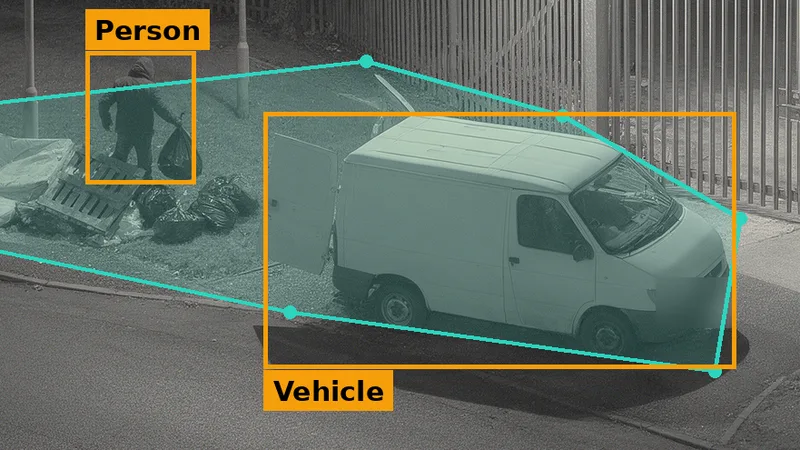
Last updated 31 October 2026. Fly-tipping is one of the most common crimes affecting farms, industrial estates, car parks and business yards in the UK, and one of the most frustrating. The waste is not yours, but if it is dumped on your land, the clear-up and the bill usually are. This guide sets out what the latest figures show, who is responsible for what, how to report it, what actually deters repeat tipping, and how AI detection on the CCTV you already have can tell you while a van is still on your verge, rather than leaving you to find the pile the next morning.
How big a problem is fly-tipping?
Big, and growing. Defra publishes fly-tipping statistics for England every year, based on what local councils report. The latest edition, Fly-tipping statistics for England, 2024 to 2025, shows councils dealt with 1.26 million incidents between April 2024 and March 2025. That is up 9% on the 1.15 million the year before, and works out at about 21 incidents for every 1,000 people.
Household waste made up 62% of incidents, some 777,000 of them, up 13%. That includes house and shed clearances, old furniture, carpets and DIY waste. Construction, demolition and excavation waste rose 12% to 70,000 incidents, white goods to 60,000, and commercial waste accounted for 69,000. The big ones are rising too: 52,000 incidents were the size of a tipper lorry load or larger, up 11%.
Councils carried out 572,000 enforcement actions in the same year, most of them investigations, and issued 69,000 fixed penalty notices. Court fines fell 9%, to 1,250. Councils seized 139 vehicles. In other words, most fly-tips are investigated, but relatively few end in a penalty, and fewer still in court. Evidence is usually the missing piece.
One point matters a lot for businesses and landowners. Defra is clear that its figures exclude the majority of incidents on private land, because councils do not usually clear those. Waste tipped in your gateway, your car park or your yard, and cleared at your own expense, is mostly not in the 1.26 million. The real total is higher, and the cost of it lands on landowners.
Where does fly-tipping happen?
Defra records the type of land each incident was found on. Highways, meaning pavements and roads, were the most common, at 37% of incidents. Footpaths and bridleways came next at 20%, then council land such as housing estates, car parks and parks at 18%, and back alleyways at 9%. Agricultural land, watercourses and railways are grouped together in a smaller category.
Those categories are about public land, because that is what councils clear and record. On private land, the pattern is familiar to anyone who runs a farm or a unit on an estate: the gateway off a quiet lane, the verge outside a closed gate, the far corner of the car park, the service road behind the units, and the company skip. They have three things in common. A vehicle can pull in. Nobody is around at night. And there is often already some rubbish there, which makes the next load feel acceptable.
Size tells the same story. The most common size category in 2024/25 was a small van load, at 31% of incidents, followed by a car boot or less, at 27%. Most fly-tipping is not a lorry tipping in the dark. It is a van or a car that stops, opens its doors and unloads, often in a matter of minutes.
Is fly-tipping illegal, and who has to clear it up?
Yes. Fly-tipping is the illegal dumping of waste, and depositing controlled waste without a permit is an offence under section 33 of the Environmental Protection Act 1990. The duty of care in section 34 also means anyone producing or handing on waste, including householders, has to make sure it goes to someone authorised to take it. That is why so many fly-tips trace back to a cheap clearance offer from an unregistered collector.
Clearing it is a different matter. The National Fly-Tipping Prevention Group, which is chaired by Defra, puts it simply: councils are only responsible for clearing waste from public land, and landowners are responsible for the land they own. GOV.UK’s guidance on reporting fly-tipping says that if someone has dumped waste on your land, you will need to decide how to deal with it and pay for someone to dispose of it properly, and you could be fined if you do not.
So the cost of fly-tipping on private land falls on the landowner, the tenant or the business that runs the site, depending on the lease. It includes the clear-up itself, disposal at the right facility, any hazardous items such as asbestos or chemicals that need a specialist, damage to gates and fences, and time. Some insurance policies cover clear-up costs on farmland and commercial land, often with limits; it is worth checking yours.
How do you report fly-tipping?
GOV.UK sets out who to tell, and it depends on the size of the problem.
- Small-scale fly-tipping, such as a few bags, a couple of pieces of furniture or a small van load, goes to the environmental health team at your local council in England, Scotland or Wales. Northern Ireland has its own route.
- Large-scale dumping, such as a lorry load of 20 tonnes or more, hazardous or industrial waste, or anything that looks like organised waste crime, goes to the Environment Agency in England. You can also report it anonymously to Crimestoppers.
- Crime in progress. If someone is dumping waste right now, or you feel threatened, call the police.
Whichever route, what helps most is evidence: when it happened, what was dumped, and anything that links it to a person or a vehicle. A clear clip of a van reversing onto your verge, with the date and time, is far more useful than a photo of a pile taken the next morning.
Do not move or search through the waste yourself if it might be hazardous. Asbestos sheets, drums and gas cylinders need a specialist. For anything else, record it, report it, then arrange for it to go to a licensed waste carrier and keep the paperwork.
Where should cameras watch for fly-tipping?
Start with where it has happened before, then the places a vehicle can stop out of sight. Choose a hotspot to see what the camera watches and why.
Which part of the site?
Farm and field gateways are some of the most tipped places in the countryside. They sit off quiet lanes, they have a hard standing a van can reverse onto, and nobody is there at night. A camera on the yard or a pole, with a zone drawn over the gateway itself and armed from dusk to dawn, flags the vehicle as it pulls in, while the doors are still shut.
Vehicles after hours
Back roads and alleyways behind industrial units and shops collect sofas, fridges, mattresses and bags. Defra counted 109,000 incidents in back alleyways in a year. A zone along your side of the road, not the whole road, catches a vehicle stopping by your fence after hours without alerting on every car that drives past.
People and vehicles at night
An empty car park at night is an easy place to empty a boot. Bags go in the hedge or by the bins and the car is gone in two minutes. A night schedule on the car park zone flags a vehicle that pulls in after closing and a person getting out, and the clip shows what they did.
Vehicles and people at night
Commercial skips and bins get filled by other people: a mattress over the side, a TV by the bins. You then pay to have someone else’s waste taken away, and some of it you may not be allowed to put in that skip at all. A zone round the skip catches people after hours, and smoke and fire detection watches it all the time.
People at night, fire 24/7
Each hotspot gets its own zone and its own schedule. Smoke and fire detection can run day and night on any of them.
Other places are worth a look too. Lay-bys and verges along your frontage. Disused yards and empty units, which can be tipped for weeks before anyone notices. Gates left open during the day, where a vehicle can pull in at lunchtime. And anywhere you have had a fire in tipped waste before, because people come back.
Two practical points on placement. First, the camera needs to see the vehicle stop, not just the pile it leaves. A camera that covers the gateway from the yard side often sees the van reverse in, the doors open and the bags go down, and that is the clip councils find useful. Second, it needs to work in the dark. Most modern IP cameras have infrared, and a light on the gateway helps both the picture and the deterrent.
Does CCTV stop fly-tipping?
On its own, recorded CCTV mostly helps after the event. A camera that records to a box in the office can show what happened, if someone has time to search hours of footage, and if the picture is good enough. That has its place. But the waste is still there, the van is long gone, and the footage may not show enough to identify anyone.
Visible cameras do deter some tipping. A camera on a pole by the gateway, with a sign, makes a quiet spot feel watched. But regular tippers learn quickly which cameras nobody looks at.
What changes the picture is knowing at the time. If you get an alert with a clip while the van is still on the verge, you can call the police if it is in progress, watch what happens, and save the clip straight away with the date and time on it. If the same van comes back next week, you know within seconds, not the morning after.
That is why prevention works best in layers. Physical measures block the easy access. Lighting, signs and a visible camera make a spot feel watched. Detection tells you when something happens anyway. And acting on it, by reporting, clearing quickly and fixing the gap, stops it becoming a habit. Waste left in place for weeks tells the next tipper that nobody minds.
How does AI detection on CCTV help?
Woodcock AI watches the streams from your existing cameras and raises an alert when it sees something that matters, in the areas you choose and at the times you choose. For fly-tipping, that means three kinds of detection.
- Vehicles in a zone after hours. Vehicle detection flags a vehicle pulling into a zone you have drawn, such as the gateway, the verge outside the gate or the far end of the car park, during the hours you set. Whether it works well on a given camera depends on the view, so the site assessment confirms it camera by camera.
- People in a zone, or crossing a line. Intrusion detection flags a person in the skip area, the service road or the yard at night. Line-crossing detection flags someone crossing a line along a fence or through a gate, in the direction you choose.
- Smoke and fire. Tipped waste is often set alight, either to destroy evidence or by someone else later. Smoke and fire detection watches the same zones day and night and flags visible smoke or flame while it is still small.
When something is detected, you get an alert in the app with a short clip, and an email. The clip lets you see straight away whether it is a delivery that turned up late, a farm vehicle, or a van unloading bags. You decide what to do, and the clip is already saved.

Woodcock AI connects to IP cameras and recorders over RTSP or ONVIF, including Hikvision and most other mainstream makes. Detection runs on an edge server on site or on a cloud server. In many cases a camera you already have on the gate or the yard covers the hotspot; a site assessment shows where one extra camera would close a gap, such as a pole camera on a remote gateway.
It is not number plate recognition. The alert tells you a vehicle or a person is there, and the clip shows what happened. Whether the footage identifies a vehicle depends on the camera, the angle and the light, which is another reason to plan placement properly.
What makes Woodcock AI suited to fly-tipping?
Three things matter most on land that borders a road or a lane:
- Polygon detection zones. You draw the exact shape each camera should watch: the gateway, your side of the service road, the verge in front of your gate, the skip. The road and the pavement stay outside the zone, so passing traffic and people walking by do not trigger alerts. See polygon detection zones.
- Self-learning. Gateways and car parks at night bring headlights sweeping across the view, rain, moving branches, foxes and badgers. The system learns what is normal on each camera, which cuts the false alerts that train people to ignore their phones.
- Years of development, now in use. Woodcock AI has been developed over several years and is in use today on working waste, recycling and industrial sites, where gates, verges, yards and skips at night are everyday risks.
Farms face fly-tipping alongside theft and fires in stored crops and machinery; our page on farm CCTV for fire and intrusion covers that side. Sites where fires are set deliberately should also read our guide to arson prevention for business sites.
How do schedules work around opening hours?
Each camera has its own schedule, and each detection type on it can follow that schedule.
- Vehicles and people on the gateway, verge, car park and service road arm when the site closes and stay armed until the first person is due in, and all weekend if the site is shut. Tipping peaks when nobody is around: evenings, early mornings, weekends and bank holidays.
- Smoke and fire on skips, bins and known tipping spots run around the clock.
On a farm, schedules can follow the working day, with the gateway zone armed overnight. On a site with deliveries at odd hours, you can leave the delivery route out of the zone, or change the hours in the app when the routine changes. Before a long closure, such as Christmas, check schedules and who receives alerts.
What should happen when an alert comes in?
Plan the response before you need it. An alert at 2am is only useful if the right person sees it and knows what to do.
- Who gets which alert. Agree who receives fly-tipping alerts, who is first to look at night, and who covers holidays.
- What they check. The clip shows in seconds what is going on. If dumping is in progress, call the police. If the waste is on fire, call 999 first.
- Nobody confronts anyone. Fly-tippers are sometimes organised and sometimes aggressive. Do not go to site alone, and never try to stop a vehicle.
- Save the evidence. Keep the original clip with its date and time. Note what was dumped and where. Do not edit the footage.
- Report it. Send the details to your council, or to the Environment Agency for large-scale dumping.
- Clear it quickly. Use a licensed waste carrier and keep the waste transfer paperwork. Tipped waste left in place attracts more.
What else stops fly-tipping on your land?
Cameras work best alongside simple physical changes. The National Fly-Tipping Prevention Group and councils give broadly similar advice to landowners.

- Block vehicle access. Lock gates when nobody is there. Bollards, boulders, bunds or a barrier across a gateway or verge stop a van reversing in. Keep access you need, and check with the council before blocking any right of way.
- Light it. Good lighting on gateways, car parks and service roads helps both cameras and deterrence.
- Sign it. Clear signs that the area is under CCTV make a spot feel watched, and are expected under data protection rules.
- Clear quickly. Waste attracts waste. Clear, report and keep a record every time.
- Mind your own waste. Use a registered waste carrier for your own business waste, keep your waste transfer notes, and make sure skips and bins are not overfilled or left open to the public.
- Talk to neighbours. Neighbouring farms and units often see the same vehicles. Sharing what you see with each other and the council builds a picture.
What about privacy and data protection?
If your cameras capture people, data protection law applies. The Information Commissioner’s Office has guidance on CCTV and video surveillance. In short: have a clear reason for the cameras, point them at your own land as far as you can, put up signs, keep footage only as long as you need it, keep it secure, and be ready to deal with requests for footage. Our guide to GDPR and AI CCTV covers this in more detail.
Polygon zones help here too. Drawing detection zones on your own land, and leaving the public road and pavement out, keeps alerts focused on what happens on your property. Woodcock AI detects people and vehicles; it does not identify who anyone is.
What are the limits?
- A camera needs a view. It cannot see round a hedge, behind a parked lorry or along a lane it does not cover. Placement decides what it can see.
- It does not read number plates. It flags vehicles and people, and the clip shows what happened. Whether a plate or a person can be identified depends on the camera, distance and light.
- It does not guarantee a prosecution. Councils and the police decide what to do with evidence. A clear, timed clip gives them the best chance.
- Remote spots need power and a connection. A gateway at the far end of a farm may need a pole camera with its own power and connection, and alerts need internet to reach phones. We check this in the site assessment.
- It sees visible smoke and flame. It does not detect heat, and it does not replace a fire alarm in your buildings.
Sources
- Defra, Fly-tipping statistics for England, 2024 to 2025 (updated February 2026), and the fly-tipping statistics collection.
- GOV.UK, Reporting fly-tipping, large-scale dumping or other waste crimes.
- National Fly-Tipping Prevention Group, roles, responsibilities and powers.
- legislation.gov.uk, Environmental Protection Act 1990, section 33 and section 34.
- Information Commissioner’s Office, CCTV and video surveillance guidance.
We have summarised these sources in our own words. Always read the current versions. The Defra figures cover England only; Scotland, Wales and Northern Ireland publish their own. This page is general guidance, not legal or security advice; your council, the Environment Agency and your insurer decide what applies to your land.
Tired of clearing other people’s waste?
Book a site assessment and we will look at the cameras you already have over your gateways, verges, car park and skips, and plan zones, schedules and who gets which alert. Or ask for a live test on your cameras first: we connect two or three of them for about a fortnight.
Related pages
Frequently asked questions
Who is responsible for fly-tipping on private land?
The landowner. Councils clear public land; on private land you have to deal with the waste and pay for it to be disposed of properly. GOV.UK says you could be fined if you do not dispose of it properly.
How much fly-tipping is there in England?
Councils dealt with 1.26 million incidents in 2024/25, up 9% on the year before, according to Defra. Most incidents cleared by private landowners are not included, so the real total is higher.
Where do I report fly-tipping?
Report small-scale fly-tipping to your local council. Report large-scale dumping, such as a lorry load or hazardous waste, to the Environment Agency in England. If it is happening now, call the police.
Does CCTV stop fly-tipping?
Visible cameras deter some tipping, and recordings help after the event. Cameras with AI detection go further: they alert you when a vehicle or person enters a zone after hours, with the clip, so you can act and report while it is happening.
Can AI CCTV read number plates of fly-tippers?
Woodcock AI is not number plate recognition. It flags vehicles and people in the zones you draw, and the clip shows what happened. Whether a plate is readable depends on the camera, angle and light.
Can Woodcock AI use our existing cameras?
Usually, yes. It connects to IP cameras and recorders over RTSP or ONVIF, including Hikvision, and runs on an edge server on site or on a cloud server.
Last reviewed 31 October 2026
Empty yard attracting tipping and trespass? See our vacant property security guide.