

Anti-social behaviour prevention: a UK guide to ASB and trespass on business premises
To prevent anti-social behaviour at business premises in the UK, find out where and when it happens, remove what draws people in and the routes onto roofs and into yards, keep the site secure, lit where it can be seen and looking cared for, log every incident and report it to the police or council, and work with them on powers such as dispersal orders, community protection notices, PSPOs, closure orders and, from 26 October 2026, Respect Orders. Never confront a group: make sure it is seen while it is happening, so the right people can act.

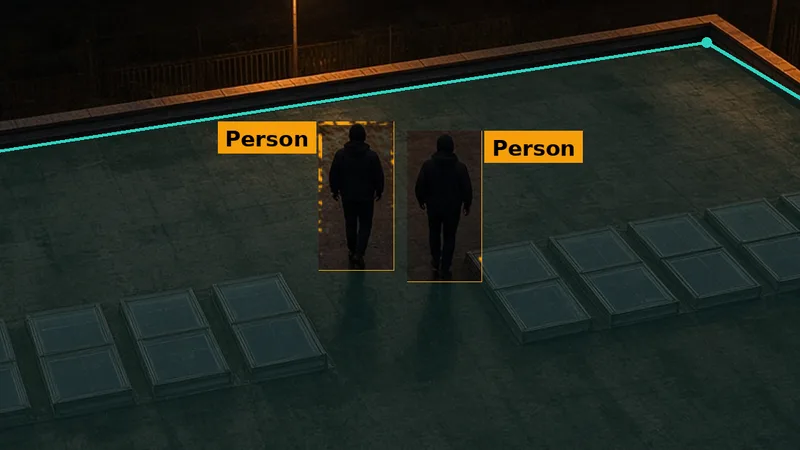
Last updated 2 November 2026. Anti-social behaviour is the problem many businesses live with every week without ever calling it crime. It is the group that gathers in the service yard after closing and leaves bottles, litter and broken glass. It is the youths on the flat roof above the shop, the car meet on the retail park, the off-road bikes on the estate road, the party in the empty unit next door and the fire in the wheelie bin. In 2026 it reached the top of the political agenda too: the Crime and Policing Act 2026 became law on 29 April, and its first anti-social behaviour measures, including the new Respect Orders, came into force on 26 October 2026.
The figures show how common it is. In the Crime Survey for England and Wales for the year ending June 2026, 41.4% of adults said they had experienced or witnessed anti-social behaviour in their local area, up from 36.7% a year earlier, and police in England and Wales record around a million incidents a year. For businesses, the Home Office Commercial Victimisation Survey found that groups hanging about, street drinking and intimidating behaviour were the most common kinds of anti-social behaviour seen at premises, and that the effects people mentioned most were nuisance, disruption to staff and customers being put off.
This guide is for owners, managers and security leads at shops and retail parks, industrial estates and business parks, warehouses, offices, pubs, garages, schools, depots and empty buildings across the UK. It explains what counts as anti-social behaviour in law, what the 2026 figures say, how it affects businesses and what ten real incidents in 2026 had in common. It covers trespass and your duty to people who come onto your site uninvited, the powers police and councils can use and the changes in force since 26 October 2026, how to report and record anti-social behaviour so that it leads to action, and how to use the ASB Case Review if reports keep being ignored. It then sets out how to assess your own site, design out the routes and hiding places that draw people in, protect roofs, car parks and empty units, and keep staff safe. The final sections cover why recorded CCTV so often fails against anti-social behaviour and how AI people and vehicle detection on the cameras you already have can make sure it is seen while it is happening.
It is general guidance, not legal advice. Your police neighbourhood team, your council’s anti-social behaviour or community safety team, a solicitor and your insurer can advise on your own premises, and we link to the legislation, guidance and reports throughout so you can read them in full.
What counts as anti-social behaviour
In England and Wales the main legal definition comes from the Anti-social Behaviour, Crime and Policing Act 2014. For the civil injunction, and now the Respect Order, anti-social behaviour means conduct that has caused, or is likely to cause, harassment, alarm or distress to any person, or, in a housing context, conduct capable of causing nuisance or annoyance to a person in relation to their home. The GOV.UK factsheet on the 2026 Act uses the same core idea: behaviour that causes harassment, alarm or distress.
Police and councils usually sort anti-social behaviour into three broad kinds. Personal anti-social behaviour is aimed at a particular person or group, such as staff who are abused or followed to their cars. Nuisance anti-social behaviour affects a wider community, such as noise, rowdy groups, inconsiderate driving or people climbing on buildings. Environmental anti-social behaviour harms the place itself: litter, graffiti, fly-tipping, drug paraphernalia and damage.
A lot of what businesses call anti-social behaviour is also a crime. Smashing a window or damaging a gate is criminal damage. Setting fire to bins is arson. Breaking into an empty unit to hold a party may be burglary. Threatening staff can be a public order offence or an assault. That matters because it changes who can act and how: a crime can be reported, investigated and prosecuted, while behaviour that is anti-social but not criminal is mostly dealt with through the civil powers described later in this guide.
Scotland and Northern Ireland have their own laws. In Scotland the main statute is the Antisocial Behaviour etc. (Scotland) Act 2004, which provides antisocial behaviour orders, dispersal powers and closure orders under Scottish procedure. In Northern Ireland the Anti-social Behaviour (Northern Ireland) Order 2004 applies. The practical steps in this guide, from logging incidents to designing out hiding places, apply across the UK, but the powers and the procedures differ, so ask your local police and council which apply to you.
Anti-social behaviour in 2026: the figures
The Office for National Statistics bulletin for the year ending June 2026, published on 22 October 2026, reports that 41.4% of adults in England and Wales had experienced or witnessed anti-social behaviour in their local area in the previous 12 months, up from 36.7% the year before. The ONS notes that part of the rise reflects a change to the survey questions in April 2025, so the two figures are not a clean comparison. Police recorded around a million anti-social behaviour incidents over the same period.
The GOV.UK anti-social behaviour factsheet for the Crime and Policing Act 2026, updated on 30 September 2026, gives the figures for the year ending December 2025: 39% of people had experienced or witnessed anti-social behaviour, up four percentage points, and 8% perceived a high level of it in their local area. The most common types people saw were vehicle-related anti-social behaviour, groups hanging around and drug use or dealing. The same factsheet notes that anti-social behaviour recorded by the police fell by about half, from around 2.1 million incidents in the year ending March 2014 to around 1.0 million.
Those two trends point the same way for a business. Fewer incidents are being recorded, while more people say they see or suffer anti-social behaviour, which suggests that a great deal goes unreported. In its inspection of the policing response to anti-social behaviour, His Majesty’s Inspectorate of Constabulary and Fire and Rescue Services (HMICFRS) found that too many forces did not record anti-social behaviour accurately or assess its risk properly, that powers were used inconsistently, and that problem-solving plans were often poorly detailed and rarely evaluated. If your site is a hotspot, the police may simply not know, or may not know how bad it is.
How anti-social behaviour affects businesses
The Home Office Commercial Victimisation Survey 2023 asked business premises in England and Wales about crime and anti-social behaviour over the previous year. Across the sectors covered, 26% of premises had experienced at least one crime of the kinds the survey measures, and 8% said anti-social behaviour was a problem in the area around their premises. Among those premises, the most common kinds were groups of people hanging about (26%), street drinking (23%) and people being intimidating or threatening (21%). In the 2022 survey, which covered different sectors, 9% of premises reported anti-social behaviour, and youths congregating was the most common type, at 35%.
The same survey asked how anti-social behaviour affected the business. A third of premises that perceived it (33%) said it was a nuisance, 29% said it was disruptive to staff and 28% said it deterred customers. Those effects are easy to underestimate because they rarely show up as a single large loss. They show up as staff who do not want to work late or take the bins out, customers who shop elsewhere in the evening, cleaning before opening, repairs to gates, glass and roofs, higher insurance premiums and, sometimes, a fire.
For many sites, the biggest cost is the damage that follows. Youths who climb onto a roof damage tiles, flashing and rooftop plant, and can break through fragile rooflights. Groups in a yard break glass, damage vehicles and set fire to bins, pallets and skips. Car meets leave tyre marks, litter and damaged kerbs and barriers. An empty unit that has been broken into for a party can be stripped of cable and fittings and left full of rubbish. And people who are hurt on your premises, even when they had no right to be there, can raise questions about your duty as an occupier, which we come to below.
Six kinds of ASB at business sites
Anti-social behaviour at business premises tends to take a handful of forms, and each one needs a slightly different response. Groups gathering in yards, doorways and car parks after closing are the most common, often with drinking, drug use, noise and litter. Roof climbing is a growing problem in town centres and on retail units, where flat roofs are easy to reach and out of sight. Car meets and racing use empty car parks and estate roads at night. Off-road bikes and e-scooters use estate roads, paths and open land. Empty units and buildings draw break-ins, illegal raves and people looking for shelter. And all of these can end in vandalism or a deliberate fire.
Which kind of site?
Shops and retail parks see groups gathering in service yards and doorways after closing, people climbing onto flat roofs from bin stores, and car meets on empty car parks. Keep yards gated and tidy, move bins and pallets away from walls, and close car park barriers out of hours. A people zone over the yard and the roof, armed after closing, sends the clip to the keyholder while the group is still there.
Service yards, roofs and car parks
Industrial estates and business parks are busy by day and empty at night, with long roads that draw car meets and off-road bikes, and unit roofs and yards out of sight. Talk to the estate manager and the other occupiers, put gates or barriers on the estate roads, and fix fence gaps. Zones over the estate road and the yard with people and vehicle detection after hours show what arrives and when.
Estate roads, units and fences
Empty buildings draw groups, rave organisers and people looking for shelter or something to take, and fires and damage follow. Keep them secure and inspected, clear anything that burns, and ask the police or council about a closure order if the problem keeps coming back. A zone over the frontage after dark shows the first attempt to get in.
Boards, doors and forecourts
Each kind of site gets zones that suit it: service yards and roofs at shops, estate roads and yards on industrial estates, and frontages at empty buildings.
Ten anti-social behaviour incidents at business sites in 2026
The ten incidents below were all reported by police forces, councils or the press during 2026. They are not the worst cases, and they are not unusual. They were chosen because each involved business premises or business areas and each shows a different kind of anti-social behaviour or a different response. We name the places but not the people or businesses involved.
1. Kirkby, Merseyside: a dispersal zone over a business park (February)
Merseyside Police introduced a section 34 dispersal zone in Kirkby from 3pm on Friday 6 February until 2am on Sunday 8 February 2026, covering an area that included Academy Business Park. Officers said the order followed reports of stones being thrown at houses, damage to vehicles, trees and a medical centre, eggs being thrown, drug use and large quad bikes being ridden in the area. Within the zone, officers could direct people to leave and seize items used in anti-social behaviour.
2. St Ives, Cambridgeshire: an illegal rave in an industrial unit (March)
In the early hours of 8 March 2026, police found an illegal rave of more than 400 people inside an industrial unit on Burrel Road in St Ives, at around 01:30. The BBC reported that three people were arrested on suspicion of offences including burglary, sound equipment was seized, the power was cut and the unit was boarded up, and a dispersal order covered the surrounding area. An empty unit on an industrial estate is exactly the kind of place organisers look for: large, out of sight of homes and empty at night.
3. Inverness: an off-road bike seized at a retail park (April)
In April 2026 police in Inverness seized an off-road bike at Inshes Retail Park as part of a clampdown on illegal e-bikes and off-road bikes in the city. Retail park car parks are wide, smooth and often empty after the shops close, which makes them attractive to riders, and a crash among parked cars or pedestrians is a real risk.
4. Buxton, Derbyshire: off-road bikes on a business park (April)
Police in Buxton carried out hotspot patrols at Harpur Hill Business Park after reports that riders were bringing unregistered off-road bikes in vans, parking on the business park and riding them along a public footpath. The Derbyshire Times reported on Saturday 11 April 2026 that a kissing gate had been removed to let the bikes through, walkers had been verbally abused, and farmers’ fences and gates had been damaged. The business park was the riders’ car park, and its occupiers were left with the vans, the noise and the risk.
5. Spalding, Lincolnshire: youths climbing on roofs (April)
In April 2026 police in Spalding issued a safety warning after reports of youths trespassing on and damaging roofs in the town centre. They warned of the risk of serious falls and said they were working with businesses on regular reporting so they could target patrols. It is a pattern seen in many market towns: flat and low roofs behind high streets are easy to reach from yards and bin stores and are hidden from the street.
6. Braintree district, Essex: a PSPO against car meets (May)
On 29 May 2026 Braintree District Council introduced a district-wide public spaces protection order to tackle anti-social driving, including car meets, racing and stunts. The council said reports had centred on industrial and business areas, including Bluebridge Industrial Estate in Halstead, the industrial estates in Witham, Springwood Industrial Estate and Horizon 120, and that 84% of people who responded to its consultation supported the order. Industrial estates and business parks are popular with car meets because their roads are wide and empty at night.
7. Beeston, Nottinghamshire: a shop roof and an assault (August)
In late August 2026 youths climbed onto a shop roof in Beeston four nights in a row, starting on Monday 24 August. The BBC reported that the shop owner was assaulted after confronting the group, and police used dispersal orders of 12 and 24 hours. A neighbouring café owner said customers had been put off. It is a stark reminder of the most important safety rule in this guide: never confront a group yourself.
8. Nottingham: arrests on the roof of an empty department store (August)
In August 2026 two boys aged 13 and 15 were arrested on the roof of a former department store in Nottingham city centre on suspicion of breaching a closure order. The order had been issued in December 2025 and extended several times because people kept getting into and onto the empty building. Large empty buildings in town centres draw people up onto their roofs, and they can be very dangerous.
9. Melton Mowbray, Leicestershire: roof damage in Market Place (October)
From Thursday 15 October 2026 youths climbed onto business roofs in Market Place, Melton Mowbray. The Leicester Mercury reported that they damaged the roof of a Grade II listed building, letting rain in, and threw soil from planters. Police said they had identified the group and increased patrols. For the business, the damage to a listed roof brings repair costs, possible consent requirements and disruption long after the group has gone.
10. Warrington, Cheshire: a dispersal order ahead of a car meet (October)
On Saturday 24 October 2026 Cheshire Police issued a section 34 dispersal order from 6pm to 11pm covering Junction Nine Retail Park in Warrington, ahead of an unauthorised car meet that had not been approved by the landowner. Acting in advance, on intelligence about a planned meet, is one of the best uses of the dispersal power, and it relies on the police knowing what is planned and where.
Two days earlier, on 22 October, Lincolnshire Police issued a dispersal order in Holbeach from 19:25 to 07:25 after a group of about 20 youths caused anti-social behaviour around the town, including at shops. The pattern is the same as in many of the cases above: a group, a business area and an evening.
What the ten incidents had in common
Read together, the ten incidents share four features. Almost all happened when the businesses were shut, in the evening, at night or at weekends. They happened in places that are out of sight of the street: roofs, service yards, the back of a business park, empty units and car parks after closing. They were repeated, sometimes night after night, at the same place. And in most cases the response was a power used by the police or council, such as a dispersal order, a PSPO or a closure order, which depended on reports, evidence and intelligence from the people affected.
For a business, that suggests four practical questions. Where on your site could a group gather or climb without being seen from the street? When is the site empty? How would you know that it had happened, other than finding the damage the next morning? And would your reports and records give the police and council what they need to act?
Trespass on business premises
Much anti-social behaviour at business sites starts with trespass: someone coming onto land or into a building without permission. In England and Wales simple trespass is usually a civil matter rather than a crime, which is why the police often cannot remove people just because they are on your land. The occupier can ask them to leave and can use reasonable force to remove them if they refuse, though it is almost always safer to call the police, and can take civil action for possession or damages.
Trespass becomes criminal in several ways. Entering a building or part of a building as a trespasser to steal, to cause damage or to commit grievous bodily harm is burglary. Aggravated trespass under section 68 of the Criminal Justice and Public Order Act 1994 covers trespass on land with the intention of obstructing, disrupting or intimidating people carrying on lawful activity there. Damage caused while trespassing is criminal damage. And there are specific offences and police powers for unauthorised encampments and raves.
The Crime and Policing Act 2026 adds a new offence. The GOV.UK factsheet explains that it creates an offence of being on any premises, meaning a building, part of a building or an enclosed area, as a trespasser with intent to commit an offence there. It replaces the old offence in the Vagrancy Act 1824 of being found in or on enclosed premises for an unlawful purpose, which is being repealed. For a business it means that someone found in a closed yard or compound at night, plainly there to steal or cause damage, can be dealt with as a criminal matter even before anything is taken. Check with your police force whether the offence is yet in force in your area, because different parts of the Act start on different dates.

In Scotland the position is different. There is no general offence of simple trespass, and the Land Reform (Scotland) Act 2003 gives the public access rights over much land, but those rights do not extend to buildings, their yards and compounds, or land next to them that is needed for privacy. Trespass with the intention of committing a crime, and damage, are dealt with under Scots law, so ask Police Scotland what applies.
Your duty to trespassers
Businesses are often surprised to learn that they owe a duty to people who come onto their premises without permission. Under the Occupiers’ Liability Act 1984, an occupier owes a duty to a trespasser if three things are true: the occupier is aware of a danger, or has reasonable grounds to believe it exists; the occupier knows, or has reasonable grounds to believe, that a trespasser is in or may come into the vicinity of the danger; and the risk is one against which the occupier may reasonably be expected to offer some protection. The duty is to take such care as is reasonable in all the circumstances to see that the trespasser is not injured by the danger, and it can sometimes be met by taking reasonable steps to give a warning or discourage people from incurring the risk.
Roofs are the classic case. If you know that youths climb onto a flat roof with fragile rooflights, and you know how they get up, the risk of a fall through a rooflight is one you may reasonably be expected to do something about, especially where children are involved. Removing climbing aids, guarding the routes up, warning signs, fencing off dangers and making sure you know when people are up there all help. So does recording what you have done. The same thinking applies to open pits, water, deep tanks, unguarded machinery and empty buildings with damaged floors.
It also cuts the other way. Deterrents must not create new dangers. Barbed wire at a low level, broken glass set in walls or anything designed to injure can create liability, and anti-climb paint, razor wire and spikes need careful siting and warning signs. Ask your insurer and, where relevant, your local authority before fitting them, and keep them out of reach of the public highway.
The powers police and councils can use
The Anti-social Behaviour, Crime and Policing Act 2014 gives police, councils and some other bodies a toolkit of powers. A business cannot use most of them directly, but it can ask for them to be used and supply the evidence that makes them possible. It is worth knowing what each one does, so you know what to ask for.
- Dispersal directions (sections 34 and 35). A police inspector can authorise a dispersal area for a set period. Within it, an officer can direct a person to leave and not return, where their behaviour has contributed or is likely to contribute to harassment, alarm or distress or to crime and disorder, and can take items such as alcohol or fireworks. Kirkby, Beeston, Warrington and Holbeach all used dispersal powers in 2026.
- Community protection notices. Police, councils and designated social housing providers can issue a written warning and then a community protection notice to a person aged 16 or over, a business or an organisation whose conduct is having a detrimental effect, of a persistent or continuing nature, on the quality of life of those in the locality, and is unreasonable. It can require them to stop doing something or to take steps, such as clearing rubbish.
- Public spaces protection orders (PSPOs). A council can make an order covering a public place, banning or requiring certain behaviour there, such as car meets, street drinking or using a car park after hours. Braintree’s district-wide order against car meets is an example.
- Closure notices and orders. Police or a council can close premises that are causing nuisance or disorder, including empty buildings. A closure notice can be followed by a court closure order, which can be extended, as in Nottingham.
- Civil injunctions and Respect Orders. Courts can make orders banning a person from doing things or requiring them to do things, on application from bodies including police, councils and housing providers.
- Criminal behaviour orders. When someone is convicted of an offence, the court can also make an order banning anti-social behaviour.
What changed on 26 October 2026
The Crime and Policing Act 2026 received Royal Assent on 29 April 2026. Under the Commencement No. 3 Regulations, sections 1 to 6, the main anti-social behaviour measures, came into force on 26 October 2026. According to the GOV.UK factsheet, the main changes are these.
- Respect Orders. A new civil order for adults, made by the courts on application from bodies such as the police and councils. It can ban a person from doing things and require them to do positive things, such as attending a drug or alcohol programme. Breach is a criminal offence and an arrestable one. Respect Orders partially replace the civil injunction for adults, which remains for younger people and in housing cases.
- Longer dispersal and closure periods. The maximum period a person can be excluded under a dispersal direction rises from 48 to 72 hours, with a review at 48 hours, and police and councils have 72 hours rather than 48 to apply to court for a closure order after issuing a closure notice.
- Higher fixed penalties. The maximum fixed penalty for breaching a PSPO or a community protection notice is increased, and more people, including designated community safety officers, can issue them.
- Social housing closures. Registered social housing providers can now issue closure notices for their own properties.
- The ASB Case Review. Police and crime commissioners get a stronger role in the Case Review, described below.
The Act also removes the need for police to give a warning before seizing a vehicle used in an anti-social way under section 59 of the Police Reform Act 2002, which matters for off-road bikes, e-scooters and cars at car meets. As with the trespass offence, ask your force whether that change is yet in force in your area.
Reporting anti-social behaviour so it leads to action
Many businesses stop reporting anti-social behaviour because nothing seems to happen. That is understandable, but it is also the single biggest reason nothing happens. Police and councils plan patrols, dispersal orders, PSPOs and closure orders around the reports they receive. HMICFRS found that recording and analysis of anti-social behaviour were weak in too many forces, so a report that is clear, consistent and backed by evidence stands out.
- Call 999 if it is happening now and someone is in danger, a crime is in progress, or people are on a roof or in a building and at risk.
- Report to the police online or on the non-emergency line for incidents that have happened, groups that keep returning or crime such as damage.
- Report to the council for anti-social behaviour that is not a crime, such as noise, litter, fly-tipping and nuisance, and to ask about PSPOs and community protection notices.
- Note the reference number every time, and record who you spoke to.
Keep a log. For every incident, record the date, the time it started and ended, exactly where it happened, what was done, how many people were involved and any descriptions or vehicles, what it cost or disrupted, and the reference number. A log kept over weeks shows the pattern, and patterns are what police and councils need to justify a dispersal area or a PSPO and to target patrols. Spalding police specifically asked businesses to keep reporting so they could build that picture.
The ASB Case Review (the Community Trigger)
If you have reported anti-social behaviour repeatedly and feel nothing has been done, you can ask for an ASB Case Review, formerly called the Community Trigger. Under the 2026 update to the statutory guidance, the default threshold is three qualifying complaints about anti-social behaviour within six months, each reported within one month of the behaviour. Local partnerships can set a lower threshold, and some do. The review brings together the police, council and other agencies to look at what has been done and agree what happens next.
Businesses as well as residents can use the Case Review. Your council’s website will explain how to apply. Your log of incidents and reference numbers is what shows that the threshold has been met, and clips from your cameras help the review see what you have been dealing with.
Who to work with
Anti-social behaviour rarely affects only one business. Talk to your police neighbourhood team, who know the local hotspots and can tell you what they need from you. Talk to your council’s anti-social behaviour or community safety team, which leads on PSPOs and community protection notices. Join or start a business crime partnership, shopwatch or pubwatch scheme, or work through your business improvement district if there is one. In the 2023 Commercial Victimisation Survey only 11% of premises were part of a crime prevention network, so there is plenty of room to do more. And talk to your neighbours, landlord and estate manager: a group moved on from one yard often moves to the next.
Assessing anti-social behaviour at your site
There is no legal form for an anti-social behaviour risk assessment, but the approach police designing-out-crime officers use works well. It takes an hour or two, and it is best done by two people, once in daylight and once after dark, when the site is shut.
- Map the hotspots. On a site plan, mark where anti-social behaviour has happened or where you find its traces: litter, bottles, cans, cigarette ends, nitrous oxide canisters, graffiti, tyre marks, damage, scorch marks and footprints on roofs. Ask staff, cleaners, neighbours and drivers where they see groups.
- Note the times. When does it happen? Your log, staff knowledge and your recorded footage will usually show a pattern, such as Friday and Saturday evenings, school holidays, after the shops close or on light summer evenings.
- Find what draws people in. Shelter from the weather, places to sit, hidden corners, free wifi, lighting at night, smooth tarmac, a view from a roof, an empty building and the absence of anyone in charge all draw groups.
- Trace the routes. How do people get in, and how do they get up? Look for fence gaps, open gates, walls and bins next to fences, pallets, skips, drainpipes, low roofs, canopies and trees that make a ladder onto a roof.
- Make a plan. List the changes, who owns each one and when it will be done, and review the plan after a month and after any incident.
Designing out anti-social behaviour
The principles behind crime prevention through environmental design are simple. People are less likely to behave anti-socially where they can be seen, where it is hard to get in, where a place looks owned and cared for, and where damage is put right quickly. A tidy, well-kept yard with clear sight lines sends a very different message from one full of pallets, rubbish and broken lights.
Lighting
Good lighting helps people and cameras see, but it needs thought. Light the places that can be seen from the street, from neighbouring buildings or by cameras, so that anyone there is visible. Avoid lights that glare into cameras, dazzle passers-by or shine into homes. And be aware that lighting a hidden corner nobody can see can turn it into a well-lit place to gather. Where a space has no reason to be used at night, darkness plus detection can be better than lighting it up.
Protecting roofs
Roof climbing featured in four of the ten 2026 incidents in this guide, in Spalding, Beeston, Nottingham and Melton Mowbray, and it is one of the most dangerous kinds of anti-social behaviour. Flat roofs behind high streets and on retail and industrial units are out of sight, offer a view and a thrill, and are often easy to reach. Fragile rooflights and roof sheets can give way without warning.
Start by finding the routes up. Wheelie bins and bin stores against a wall, pallet stacks, skips, drainpipes, low walls, canopies, fences and trees are the usual ladders. Move bins and pallets away from walls and lock bin stores. Fit pipe guards or anti-climb collars to drainpipes, raise or top low walls and canopies where you can, and cut back trees. Keep roof access ladders locked or caged. Put up clear warning signs about fragile roofs, which also help to show that you have taken steps under your duty to trespassers.
If people still get up, you need to know while they are there. A camera with a view across the roof, or of the routes up, with a people zone drawn over it and armed after hours, sends an alert with a clip as soon as someone appears. That is the point at which the police can be called, with a clear description of how many people there are and where, before anyone falls or the roof is damaged. Finding footprints and broken tiles in the morning helps nobody.
Fences, gates and barriers
A fence only works if it is complete. Walk the line every week and fix gaps, bent panels and lifted mesh, and look for paths worn into the grass that show a short cut. Keep anything that can be climbed, such as pallets, bins and vehicles, away from the fence on both sides where you can. Lock gates when the site is shut, and use barriers or bollards to stop vehicles getting onto yards and car parks out of hours. Anti-climb measures can help on the most vulnerable stretches, but must be fitted with care, at height and with warning signs.
Car meets and racing
Car meets and racing on retail park and industrial estate car parks are a growing problem, and both Braintree and Warrington acted in 2026. The simplest measure is to close the car park out of hours with barriers or gates, where access arrangements allow. Speed humps, tight layouts and planters make a car park less attractive for racing and stunts. If meets keep happening, talk to the council about a PSPO, as Braintree did, and tell the police as soon as you hear about a planned meet, as they can act in advance with a dispersal order, as at Warrington. Vehicle detection in a zone across the car park, armed at night, shows when cars arrive and in what numbers, and gives the police the times and clips they need.
Off-road bikes and e-scooters
Off-road bikes and illegal e-bikes and e-scooters are among the most common kinds of vehicle-related anti-social behaviour, which the GOV.UK factsheet lists as the type people see most. Police can seize vehicles used in a careless or anti-social way under section 59 of the Police Reform Act 2002, and the 2026 Act removes the need for a warning first, though you should check with your force whether that change is yet in force. Barriers, kissing gates and staggered gates slow bikes on paths and estate roads, though they must still allow lawful access, including for wheelchair users. Report the routes, the times and the direction of travel, and keep clips: in Buxton the riders arrived in vans and parked on the business park, which is exactly the kind of detail that helps police.
Empty units and buildings
Empty buildings were at the centre of the St Ives rave and the Nottingham closure order, and they draw groups, people looking for shelter, metal thieves and fire setters. Secure them with boards, steel screens or locks and an alarm, visit regularly and log the checks, cut off utilities that are not needed, and clear rubbish and anything that burns. Our guide to vacant property security covers this in more detail, and your insurer will usually have specific requirements for unoccupied buildings. If an empty building next door keeps drawing anti-social behaviour, ask the police or council about a closure order.
When anti-social behaviour turns to fire
Deliberate fires often start as anti-social behaviour: a bin pushed against a wall and set alight, a fire in a skip or a pallet stack, or a fire lit inside an empty building. Keep wheelie bins locked and away from buildings, keep skips covered and away from walls, store pallets and waste well clear of the building and the fence, and clear rubbish from around empty units. Our guide to arson prevention sets out the steps in full.
Keeping staff safe
The Beeston case shows what can happen when someone confronts a group: the shop owner was assaulted. Make it clear in your procedures that staff must never confront groups, follow people or try to remove them. Staff should stay inside, keep doors locked, call 999 if anyone is in danger or a crime is in progress, and record what they can safely see. Lone workers and keyholders called out at night need a safe procedure, such as not attending alone and waiting for the police. And staff who have been abused or threatened need support afterwards, and a report to the police, because abuse of staff is not part of the job.
Evidence the police can use
Good evidence turns a complaint into action. Police and councils need to know what happened, when, where and, ideally, who. Camera footage is often the best evidence, but only if it is usable. Make sure the camera clocks are set correctly, because footage with the wrong time causes problems. Export the original footage, with its timestamps, rather than filming a screen on a phone. Note who exported it, when and the police reference number. Keep it securely until the police no longer need it.
Cameras and privacy
Business CCTV is covered by data protection law. The Information Commissioner’s Office guidance on video surveillance expects you to have a clear purpose for each camera, to tell people with signs, to keep footage only as long as you need it, to keep it secure and to deal with requests from people to see footage of themselves. For new or changed systems, a data protection impact assessment is good practice and may be required. The Surveillance Camera Code of Practice is aimed at public bodies but is a useful guide for businesses too. Point cameras at your own property and avoid views into neighbouring homes and gardens.
Why recorded CCTV is often not enough
Most business sites already have CCTV, and most anti-social behaviour still happens in front of it. The reason is simple: a recorder only records. Nobody is watching the screens at 22:40 on a Friday when a group climbs onto the roof, and by the time someone looks at the footage the next morning the group has gone, the damage is done and the police have little to act on except a clip of people they cannot identify.
Searching recorded footage takes time too. Finding the moment a group arrived in a yard means scrolling through hours of video from several cameras. Many businesses give up, and the incident goes unreported, which, as the figures above show, is one reason anti-social behaviour at business sites is under-recorded. Monitored CCTV with guards watching the screens helps, but it is expensive for a small site and screens are hard to watch closely for a whole night.
What makes the difference is knowing while it is happening. If the keyholder gets an alert with a short clip as a group walks into the service yard, they can call the police while the group is still there, give an accurate description and say exactly where they are. The clip and the time go straight into the incident log. And over weeks, the alerts show the pattern of when and where it happens, which is what police and councils need to plan patrols or justify a dispersal order.
Where to point cameras
Use your risk assessment map. Aim for one clear view of each place where people gather or get in: the roof, or the routes up to it; the service yard; the car park; the rear fence line and the gates; and the frontage of any empty unit. A camera high on a wall looking across a flat roof, or along a fence line rather than straight at it, usually gives the most useful view. Make sure each view works at night, with enough light or infrared, and that it is not pointing into a neighbour’s home or garden. A camera can only see what is in its view, so walk the site and check there are no blind spots where a group could gather unseen.
Zones, lines and schedules
AI detection on your cameras works best when it is set up around the places and times that matter. You draw a polygon zone round the roof, the service yard or the frontage of an empty unit, rather than a rough box that also covers the street. You draw a line along the rear fence or across a gate, with a direction, so that only someone crossing into the site counts. You use vehicle detection in a zone across the car park, so a car arriving at 23:00 is noticed. And you set a schedule, so the zones are armed only when the site is shut. During the working day, people and vehicles in the yard and car park are normal and nobody needs an alert. A person in the zone after hours is not.
What to do when an alert comes in
Decide in advance who gets the alerts and what they do. The person on call opens the clip and checks what is happening: how many people, where and doing what. If anyone is at risk, such as people on a roof, a crime in progress or staff in danger, they call 999 and give the location and a description. If it is anti-social behaviour that is not urgent, they report it to the police or council online. If your site has a speaker or lights that can be switched on remotely, they may help, but nobody should go out to confront a group. Afterwards, the clip, the time and the reference number go into the log.
Insurers
Anti-social behaviour leads to claims for damage, fire and injury, and insurers notice. When you renew, you may be asked about your incident history, fences, locks and lighting, whether any buildings are unoccupied, and how you would know about trouble out of hours. A clear log, a risk assessment and an action plan, and evidence that incidents are spotted and reported quickly, all help. Your broker or insurer can tell you what matters for your policy.
Anti-social behaviour checklist
The table below summarises the main areas and first steps, and the checklist after it gives a quick test of where your site stands.
| Area | Main risk | First steps | What cameras and AI add |
|---|---|---|---|
| Roofs | Climbing, falls, damage, leaks | Remove climbing aids, guard pipes and low walls | A people zone over the roof after hours |
| Service yards | Groups, drinking, litter, fires | Gate the yard, move bins and pallets, tidy daily | A people zone over the yard after closing |
| Car parks | Car meets, racing, damage | Barriers closed out of hours, layout to slow cars | Vehicle detection in a zone at night |
| Estate roads | Off-road bikes, car meets | Gates or barriers, talk to the estate manager | Zones and lines on the road after hours |
| Fences and gates | Trespass, short cuts, break-ins | Fix gaps, nothing stacked beside the fence | A line along the fence after dark |
| Empty buildings | Break-ins, raves, fires | Secure, inspect, clear, ask about closure | A zone over the frontage after dark |
| Staff | Abuse, threats, assault | Never confront, call 999 if at risk, record | Clips for the police and for the log |
- Do you know where and when anti-social behaviour happens on and around your site, and is it on a map?
- Do you keep a log of every incident with times, impacts and reference numbers?
- Do you report every incident to the police or council, and do you know who your neighbourhood team is?
- Have you removed the routes onto roofs, such as bins, pallets and climbable pipes?
- Are fences complete, gates locked out of hours and car parks closed at night where possible?
- Are empty buildings secured, inspected and cleared of anything that burns?
- Do staff know never to confront a group, and what to do instead?
- Are camera clocks correct and do you know how to export footage for the police?
- Do you have signs, a purpose and a retention period for your CCTV?
- Would anyone know a group was on your roof or in your yard at 22:40 on a Friday, while they were still there?
How Woodcock AI helps with anti-social behaviour
Woodcock AI connects to existing IP cameras over RTSP or ONVIF and runs on an edge server on site or on a cloud server. It adds people and vehicle detection, as well as smoke and flame detection, to the cameras you already have. You draw polygon zones that fit the shape of the roof, the service yard or the empty unit’s frontage, draw lines along the rear fence or across the gate, and set schedules so the zones are armed only when the site is shut. When something happens, an alert with a snapshot and short clip goes to the phones of the people you choose, and an AI description says what the camera saw.
Woodcock AI is self-learning, so it gets better over time at knowing what is normal on each camera, such as a cleaner leaving late or a delivery van that always arrives at 05:30. It is the result of years of development and is now in use on real sites in the UK. Because it also detects smoke and flame, the same cameras can spot a bin fire set by a group as well as the group itself. It watches the views your cameras have and cannot see round corners, and it supplements rather than replaces the steps in this guide and the work of the police and council. For how the same approach fits particular kinds of site, see our guides to industrial estate security, shop security, car park security and vandalism prevention. Ask your cameras, a way to ask the system questions about what it has seen, is Coming soon, early 2027.
Ways to start
Start with a site assessment. We look at where anti-social behaviour happens on your site, which cameras you have and what each one sees by day and at night, and show where people zones, lines and vehicle detection would help. Or ask for a live test on your cameras: we connect two or three of your existing cameras for about a fortnight, so you can see the alerts for yourself before deciding. We are also happy to arrange an on-site demo.
Sources
- Office for National Statistics, Crime in England and Wales: year ending June 2026.
- GOV.UK, Crime and Policing Act 2026: anti-social behaviour factsheet; Anti-social behaviour powers: statutory guidance, 2026 update (PDF); ASB Case Review (the Community Trigger).
- legislation.gov.uk, Crime and Policing Act 2026, Commencement No. 3 Regulations 2026, Anti-social Behaviour, Crime and Policing Act 2014, Occupiers’ Liability Act 1984, Police Reform Act 2002, section 59, Criminal Justice and Public Order Act 1994, section 68, Antisocial Behaviour etc. (Scotland) Act 2004 and Anti-social Behaviour (Northern Ireland) Order 2004.
- Home Office, Crime against businesses: findings from the 2023 Commercial Victimisation Survey.
- HMICFRS, The policing response to antisocial behaviour.
- Incident reports: Merseyside Police (Kirkby), BBC (St Ives), Inverness Courier (Inverness), Derbyshire Times (Buxton), Lincs Online (Spalding), Braintree District Council (Braintree), BBC (Beeston), BBC (Nottingham), Leicester Mercury (Melton Mowbray), Cheshire Police (Warrington) and Lincolnshire Police (Holbeach).
- Information Commissioner’s Office, CCTV and video surveillance, and GOV.UK, Amended Surveillance Camera Code of Practice.
We have summarised these sources in our own words. Figures vary between sources, definitions and periods, and different parts of the Crime and Policing Act 2026 come into force on different dates, so read the current versions in full. This page is general guidance, not legal or insurance advice; your police neighbourhood team, council, solicitor and insurer can advise on your own site. In an emergency, always call 999.
Would anyone know a group was on your roof at 22:40 on a Friday?
Book a site assessment and we will look at where anti-social behaviour happens on your site and what your cameras can see by day and at night, and show where people zones, lines and vehicle detection would help, or ask for a live test on your cameras.
Related pages
Frequently asked questions
What counts as anti-social behaviour?
In England and Wales the main legal test, from the Anti-social Behaviour, Crime and Policing Act 2014, is conduct that has caused or is likely to cause harassment, alarm or distress to any person, or, in housing cases, nuisance or annoyance. At business sites it includes groups gathering and drinking, intimidation of staff, roof climbing, car meets, off-road bikes, raves in empty units, litter, graffiti and damage. Much of it is also crime.
Can the police remove trespassers from my business premises?
Simple trespass is usually a civil matter in England and Wales, so the police cannot always remove people just for being there. But they can act where there is a crime, such as burglary, criminal damage or aggravated trespass, or a risk to safety, and can use powers such as dispersal directions. The Crime and Policing Act 2026 also creates an offence of trespass on premises with intent to commit an offence. Scotland has different rules.
What changed for anti-social behaviour on 26 October 2026?
The first anti-social behaviour measures in the Crime and Policing Act 2026 came into force: Respect Orders for adults, longer maximum periods for dispersal directions and closure applications (72 hours), higher maximum fixed penalties for breaching PSPOs and community protection notices, closure notices for social housing providers, and a stronger ASB Case Review. Ask your police force or council which other changes are in force locally.
How do I use the ASB Case Review?
If you have reported anti-social behaviour repeatedly and feel nothing has been done, you can ask your council for an ASB Case Review, formerly the Community Trigger. The default threshold is three qualifying complaints within six months, each reported within one month of the behaviour, though local areas can set a lower one. Businesses can use it as well as residents. Your incident log and reference numbers show the threshold is met.
How do I stop youths climbing on my roof?
Find and remove the routes up: move bins and pallets away from walls, lock bin stores, guard drainpipes, raise low walls and canopies, cut back trees and lock roof ladders. Put up warning signs about fragile roofs, report every incident and work with the police. A camera looking across the roof with a people zone armed after hours means you know while people are there and can call 999 before anyone falls.
Can CCTV stop anti-social behaviour?
Recorded CCTV alone rarely stops it, because footage is usually checked after the group has gone. What helps is knowing while it is happening. AI on your existing cameras can watch polygon zones over a roof, yard or car park after hours and send an alert with a clip, so the police can be called and the incident logged. Woodcock AI runs on an edge server on site or on a cloud server and supplements the other steps in this guide.
Last reviewed 2 November 2026