

Pub security: break-ins, beer garden theft and pub fires
Pub security means protecting a pub, inn or bar, and the cash, stock, garden furniture, building and people living upstairs, from break-ins, theft, vandalism and fire, most of all after close-down and when a pub is closed or being renovated. The basics are strong rear, kitchen and cellar doors, a secured cellar hatch, tills emptied and left open, spirits and tobacco locked away, garden furniture chained or brought in, bins and smoking areas kept away from the building, an intruder alarm and a close-down routine everyone follows. AI on the pub’s existing cameras then flags a person or a vehicle at the cellar hatch, the back yard, the beer garden, the car park or the back wall after hours, and smoke outside the building, with the clip in every alert.

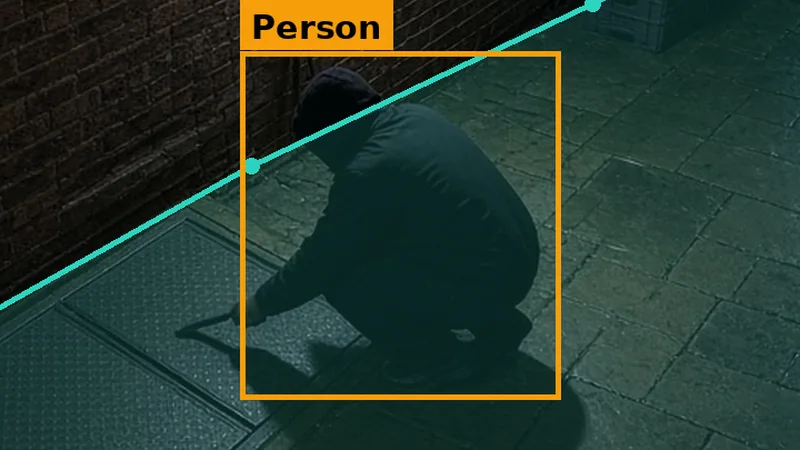
Last updated 1 November 2026. By one in the morning most pubs have changed. The last customers have gone, the glasses are washed, the tills are cashed up and the doors are locked. What is left is a dark building holding things that are easy to sell: spirits, wine and beer, the takings and the staff tips, televisions on the walls, and a garden full of tables, heaters and parasols. In many pubs there is also a landlord, a manager or staff asleep in the flat upstairs.
Those hours after close-down are when back doors are forced and cellar hatches prised open, when garden furniture is loaded into a car, when copper is stripped from pubs that are closed for renovation, and when a cigarette dropped in a bin store or a fire set against a door can take hold with nobody downstairs to see it. This guide covers the main security and fire risks to UK pubs, inns and bars: the figures and recent cases, the rules on licensing, fire safety and Martyn’s Law, where cameras should watch, and how AI on a pub’s existing CCTV can help.
What are the main security risks at a pub?
A village inn, a town-centre bar and a big family pub with a car park look very different, but most face the same four kinds of risk out of hours, and all four are at their worst when the pub is dark.
- Break-ins. Burglars forcing a rear, kitchen or cellar door, or a window, to take alcohol, cash, tips, televisions and tobacco, often in the small hours.
- Theft from outside. Tables, benches, parasols, patio heaters, lanterns and planters taken from the beer garden or the front of the pub, and kegs, gas cylinders and empties taken from the yard.
- Closed and renovating pubs. Pubs that have shut, or are closed while they are refitted, stripped of copper pipe, cable, fittings and anything left inside.
- Fire. Fires set deliberately at doors, bins or empty pubs, and accidental fires from cigarettes in smoking areas, bin stores and planters, often next to a timber or thatched building with people asleep upstairs.
Behind all four is the same fact. A pub is a public building for most of the day and an empty one for most of the night. Anyone can walk in during opening hours and see where the tills are, where the spirits are kept, which door the staff use and where the cameras point. After close-down, the same building is usually left to its locks and its alarm.
What do the figures show about pubs and crime?
The number of pubs has been falling for a quarter of a century. Data from the British Beer and Pub Association, reported by the Morning Advertiser in May 2026, puts the number of pubs in the UK at 44,650 at the end of 2025, down from 60,800 in 2000. That is 16,150 fewer pubs, a fall of 36%, though the rate of closures slowed in 2025, with 350 fewer pubs than a year earlier.
- 161 closures in three months. The same BBPA figures show 161 pubs closed in the first quarter of 2026, almost two a day, up 26% on the 128 that closed in the first quarter of 2025.
- More crime than average. In the Home Office Commercial Victimisation Survey 2022, 36% of premises in the transport, accommodation and food sector, which includes pubs, experienced crime in the previous year, against 28% across all the sectors surveyed.
- Burglary and vandalism. In the 2023 survey, 26% of business premises in the sectors surveyed, about 409,000, experienced crime. Burglary, including attempts, and vandalism were each experienced by 8%.
Two cautions. First, the Commercial Victimisation Survey covers only some sectors in each year and has since been paused, so the 2022 and 2023 surveys are the latest figures there are; there is no official count of crime against pubs on their own. Second, many pub crimes are never reported: a few chairs gone from the garden or a forced door that held may never reach a police record.
The closures matter for security in two ways. Every pub that closes is, for a while, an empty building, and some of them become targets for theft and arson. And the pubs that remain open are working on thin margins, so a break-in, a night’s takings gone or a fire can do lasting damage to the business.
The timing matters as much as the numbers. Every case cited in this guide at a pub that was trading happened after close-down, and the two evening cases were at pubs that were closed.
How do burglars break into pubs?
Most pub break-ins are not subtle. Burglars come in at the back, out of sight of the road, through the kitchen door, the back door to the yard, a window or the cellar hatch, take what they can carry and leave. Recent cases show the pattern:
- Taunton, Somerset. Sometime between 1.20am and 4.45am on Saturday 28 March 2026, someone broke into a pub in Castle Green and stole a quantity of alcohol at around 1.20am. Avon and Somerset Police said he later returned and took more. The police were called at around 5am.
- Pembroke. Shortly before 4am on Sunday 30 August 2026, three masked people smashed their way through the rear door of a pub and took the staff tip pot. The raid was caught on CCTV, but they had covered their faces and wore gloves, making identification difficult.
- Liverpool city centre. Between 1am and 3am on Tuesday 7 July 2026, offenders got into a bar under renovation on Tithebarn Street and took a number of 40-inch televisions over a period of time, Merseyside Police said. They are believed to have left on foot and on pedal cycles.
- Arnold, Nottinghamshire. At about 7.30pm on a Sunday in October 2026, a pub being renovated was broken into. CCTV appears to show a man and a child scaling the wall; copper pipes were taken, the cellar was flooded, and lanterns were taken from the beer garden. It was the second break-in since July.
Three things stand out. The burglars came in at the back or over a wall, not through the front doors. They were in no hurry: at Taunton the thief came back for more, and in Liverpool the televisions were taken over a period of time, which means nobody knew they were there. And in every case there was CCTV of some kind, but it showed what had happened after the event, with faces covered and gloves on. What was missing was somebody being told while it was happening.
For a pub, the question for any detection is not “is there a person?” but “should there be a person here now?” The back yard at 21:00 on a Friday, with staff carrying out the empties and smokers by the door, is not the same as the back yard at 03:52 on a Tuesday, an hour after the last light went off.
How do you stop someone breaking into a pub?
The physical measures matter most, because only they keep someone out of the building. Police crime prevention officers give much the same advice to every pub:
- Strong back doors. Solid rear and kitchen doors, with good locks, hinge bolts and a strong frame. Where a door has a glass panel, fit security glazing or a grille.
- The cellar hatch. Bolt or bar the cellar drop doors from the inside after every delivery, and check them at close-down. A hatch that is shut but not bolted is an open door.
- Windows. Lock every window at close-down, including toilets, the kitchen and the cellar, and fit locks or bars to ground-floor windows at the back.
- The intruder alarm. Set it every night, cover the back of the building and the cellar, and keep the keyholder list current.
- Lighting. Light the back yard, the kitchen door and the cellar hatch, so anyone working at them is seen and so the cameras can see.
- Climbing aids. Move wheelie bins, crates, kegs and garden furniture away from walls, flat roofs and windows, so they cannot be used as steps.
Our commercial burglary prevention guide covers doors, alarms and burglary for any business premises in more detail. This guide is about the risks particular to a pub: the cellar, the garden, the takings, the flat upstairs and the empty pub.
How do you protect cash, tips and stock overnight?
Burglars break into pubs for things they can sell or spend. The less of it there is to find, the less reason there is to try, and the less is lost when they do.
- Empty the tills and leave them open. An open, empty till drawer, visible from the window, tells anyone looking in that there is no cash in it, and saves a forced till.
- Bank often and use a safe. Keep as little cash on site as possible, in a safe fixed to the building, away from the bar.
- Tips too. The Pembroke burglars took the staff tip pot. Keep tips in the safe with the takings, not in a jar behind the bar.
- Lock away spirits and tobacco. Spirits on the back bar are the easiest high-value stock in the building. Lock them away or behind a shutter, and keep the spirits store and the cellar locked.
- Mark and record. Mark televisions, tills and kit with the pub’s postcode, and record serial numbers.
A locked spirits store and an empty till will not stop a determined burglar, but they mean the burglar leaves with less, and the next one has less reason to come.
Why is the cellar a weak point?
The cellar holds most of a pub’s stock: kegs, casks, crates and the gas cylinders that dispense them. In many pubs it also has its own way in from outside, the drop hatch or cellar doors where the drays deliver, set in the pavement, the forecourt or the back yard. It is often the least visited part of the building, below a bar that is empty all night.
- The hatch. Cellar drop doors are designed to open wide for kegs. They need a strong bar or bolts on the inside, and checking after every delivery.
- Deliveries. The hatch is open for the dray, often early in the morning. Make sure someone sees it shut and secured afterwards, and that empties are not left by it for days.
- The cellar door inside. Keep the internal cellar door locked, so someone who gets into the cellar cannot get into the pub, and someone in the pub cannot get into the cellar.
- Gas. Store spare cylinders as your gas supplier advises, secured and away from the hatch, and tell the fire service where they are if there is a fire.
The cellar is also part of the fire picture. At Hoby, the fire at last orders was on the other side of the brick wall from the cellar, with its gas cylinders and kegs. More on that in the fire sections below.
How do you protect beer garden furniture and the outside?
A good beer garden is one of the most valuable things a pub has, and one of the hardest to protect. It is outside, it is usually at the side or back, away from the road, and it is full of things that are worth money and easy to carry: picnic tables and benches, rattan sets, parasols and their bases, patio heaters, festoon lights, lanterns and planters. Much of it is left out all night because there is nowhere inside to put it.
At about 5am on Friday 12 June 2026, in daylight, two hooded figures arrived at a pub in Pontcanna, Cardiff, with a cordless drill and tried to take the legs off the outside tables, while one of them kept watch. At Arnold, lanterns were taken from the beer garden of a pub that was closed for renovation. Thieves who bring tools and a lookout have planned it, and they have usually looked at the garden in daylight first.
- Fix or chain furniture. Bolt benches and tables to the ground, or chain them together through the frames, so they cannot be lifted out one at a time.
- Bring in what you can. Parasols, cushions, lanterns, small planters and heaters inside at close-down, or in a locked store.
- Store gas properly. Patio heater cylinders and spare gas belong in a secure, ventilated store, never left on the heaters overnight in the garden.
- Fences and gates. Keep garden gates locked after close, and fences in good repair, so the garden is not an easy way through to the back of the pub.
- Mark furniture. Mark furniture and heaters underneath with the pub’s postcode, and photograph them, so they can be identified if found.
Thefts from the garden are also often the first visit. Someone who walks through the garden at night to take a parasol has also seen the kitchen door, the cellar hatch and where the cameras point. A garden that is watched after hours protects the building as well as the furniture.
The yard needs the same care. Kegs, casks and gas cylinders left out for collection are worth stealing, and stacks of crates and empties make good steps up to a wall or a flat roof. Keep them in a locked cage or compound, and away from the back wall.
How do you protect a closed or renovating pub?
Pubs that close, whether for good, between tenants or for a refit, change from a building with people in it most of the day to a building with nobody in it at all. They are also often obviously empty: boarded windows, a sign, a skip outside, builders coming and going.
Two of the break-ins cited in this guide were at pubs being renovated. In Liverpool, televisions were taken from a bar under renovation, over a period of time, in the early hours. At Arnold, copper pipes were taken, the cellar was flooded and the beer garden was raided, at about 7.30pm on a Sunday, the second break-in since July. And on the evening of 14 May 2026, a vacant former pub in Jarrow went up in flames in a suspected arson attack.
- Strip it. Take out the stock, the cash, the televisions, the tills and the gas cylinders. Anything left inside is a reason to break in.
- Secure it. Doors, ground-floor windows and the cellar hatch secured, and the garden furniture removed or locked away.
- Inspect it. Walk round it at least weekly, inside and out, and after any bad weather. Insurers usually set conditions for unoccupied buildings; check yours.
- Keep waste away. Skips, strip-out waste and old furniture well away from the building, because they are fuel for an arsonist.
- Watch it all day. A pub being refitted is empty at evenings and weekends, as Arnold shows, not just in the small hours. Arm the cameras whenever the builders are not there.
Our vacant property security guide covers empty buildings in more detail.
What about the flat upstairs and staff who close up?
Many pubs are also homes. The landlord, the manager or staff live in the flat above the bar, and sometimes there are letting rooms. That changes the security picture in two ways.
First, a break-in or a fire downstairs at 3am is not happening in an empty building. At Drayton, a couple were asleep in the flat above when the fire started, and were woken by the alarm. Second, whoever lives upstairs is often the person who is expected to go downstairs when something happens, alone, in the dark.
- Never go down to confront anyone. If you hear or are told about someone in the pub, stay safe upstairs, call 999 and let the police deal with it.
- Separate the flat. A lockable door between the flat and the pub, and its own way out in a fire, as the fire risk assessment requires.
- Close-down in pairs where possible. Two people to lock up, cash up and check the back yard, with the lights on.
- Check before going out. Look at the cameras before opening the back door to the yard at night.
This is one of the reasons the clip in an alert matters. Someone upstairs who gets an alert at 3am can see what set it off on their phone, without going downstairs or opening a door.
How do pub fires start?
Pubs are often old buildings, with timber, thatch and hidden roof spaces, bins and empties stacked in the yard, gas in the cellar and people asleep above. A fire that starts outside at night can reach the building before anyone downstairs knows. Recent fires show the range:
- Drayton, Norfolk. Crews were called at 03:46 on 13 April 2026 to a fire at a pub at Thorpe Marriott, treated as suspected arson. The couple in the flat above were alerted by the alarm, and the roof was damaged. Police appealed for CCTV from between 02:30 and 03:45.
- Bayston Hill, Shropshire. At about 3am on 7 August 2026, fire broke out within the roof space of a village pub. Eight fire appliances and an aerial ladder platform were sent. Nobody was hurt.
- Hoby, Leicestershire. At last orders on a Saturday in August 2026, discarded smoking materials set the bin store and the beer garden fencing alight at a thatched pub. The fire was stopped before it reached the thatch, or the cellar gas and kegs on the other side of the wall.
- Jarrow, South Tyneside. Shortly after 8pm on 14 May 2026, a vacant former pub caught fire in a suspected arson attack. Nobody was hurt.
Hoby was caught because people were still there at last orders. The same bin store alight at 3am, with the staff asleep, would have had much longer to reach the thatch. Smoke from a smoking shelter, a bin store or a planter in the small hours is exactly the kind of fire that nobody sees until it is in the building.

What makes a pub fire spread?
Most pub fires that do real damage start small and outside, or hidden, and grow because nobody is there to see them.
- Smoking areas. Cigarettes dropped in bins, planters, bark chippings and shelters can smoulder for hours after close-down. Provide proper metal bins and empty them into a metal container, not a wheelie bin, at the end of the night.
- Deliberate fires. Fires set against doors, in bins pushed against walls, or inside empty pubs. Keep bins locked and away from the building, and keep letterboxes and doors secure.
- Waste. Cardboard, empties, crates and kitchen waste stacked against the back wall are fuel. Keep them in a compound away from the building, and get waste collected often.
- The building itself. Thatch, timber frames, roof spaces and old wiring let a fire spread fast and out of sight. Keep wiring and kitchen extraction maintained and cleaned, as your fire risk assessment requires.
Our arson prevention guide and outdoor fire detection guide cover deliberate fires and outdoor smoke detection in more detail.
What should you do if a fire breaks out at the pub?
Every pub needs a fire plan that everyone knows, including anyone who lives or stays upstairs. The fire service’s advice is simple:
- Call 999. Give the full address and postcode, and say whether anyone is in the flat or the rooms upstairs.
- Get out. Get everyone out, including the flat and any letting rooms, and close doors behind you if it is safe.
- Stay out. Never go back in for the takings, the stock or the paperwork.
- Meet the crew. Tell them where the cellar is, and where gas cylinders, patio heater gas and any oil tank are kept.
Which rules apply to pub security and CCTV?
No law says a pub must have AI on its cameras. But several rules touch how a pub uses CCTV and manages fire, and knowing them helps decide what the cameras should do.
Licensing
Pubs in England and Wales are licensed under the Licensing Act 2003, and many premises licences include conditions about CCTV. The Home Office’s section 182 guidance, revised in September 2026, says at paragraph 2.3 that CCTV inside and immediately outside the premises can actively deter crime and disorder, and that the location of cameras may be shown on the plans. At paragraph 10.10, it says licensing authorities should not impose general CCTV conditions where they are not appropriate to the premises. Check your own licence: if it has CCTV conditions, such as cameras covering the entrances or recordings kept for a set time, any system you add has to sit alongside the one that meets them, not replace it.
Fire safety
Every pub needs a fire risk assessment under the Regulatory Reform (Fire Safety) Order 2005, carried out by the responsible person and kept up to date. The government’s fire safety guide for small and medium places of assembly, covering premises for up to 60 and up to 300 people, names public houses explicitly. It sets out how to carry out and record the fire risk assessment, and it is a good place to start for any licensee.
Martyn’s Law
The Terrorism (Protection of Premises) Act 2025, known as Martyn’s Law, received Royal Assent on 3 April 2025, with an implementation period of at least 24 months. It applies to premises where 200 or more people can reasonably be expected to be present at the same time; those expecting 200 to 799 fall in the standard tier. Many large pubs and bars will be in scope. The standard tier requirements are about procedures, covering evacuation, invacuation, lockdown and communication, and the factsheet says they do not require physical alterations or specific equipment. CCTV is not required, though knowing what the cameras see helps any plan.
Pubwatch
National Pubwatch is a voluntary organisation that supports local Pubwatch schemes, in which licensees in a town share information about crime and disorder with each other and the police. Joining a local scheme is one of the simplest things a licensee can do, and clear clips from the cameras are useful to share through it, within data protection rules.
Why is a pub hard to protect?
Most security advice is written for a shop or an office: a building that is open in the day, shut at night, and empty when it is shut. A pub is different in almost every way.
It is open late, so close-down is often after midnight, and the hours change with the day, the season and the licence. Anyone can come in during the day and look around. The valuable parts, the cellar, the yard, the garden and the back doors, are usually at the back or side, out of sight of the road. Staff, cleaners, draymen and contractors come and go at odd hours, smokers stand outside until the last minute, and the neighbours’ gardens and the lane at the back are often only a low wall away. And many pubs have people asleep upstairs.
That is why pub security starts with the places that matter most when the pub is closed, the cellar hatch and the back yard, the garden, the car park and the back wall, rather than trying to watch every corner of the building.
Look at a plan of your own pub the same way. Where is the cellar hatch, which door do staff use at close-down, where does the garden furniture stay overnight, where do the bins go, and which walls back onto a lane or a field? Those are the places to lock, light and watch.
Where should cameras watch at a pub?
Start with the back of house, then the garden, then the car park and the boundary. Most pubs already have cameras, often over the bar, the tills and the front door, put in for the licence or after an incident. The gaps are usually outside at the back: the yard, the cellar hatch, the far end of the garden and the back wall.
- Back of house. The cellar hatch, the kitchen and back doors, the yard, the bin store and the gas and keg cage.
- Outside. The beer garden, the smoking shelter and the front terrace, where furniture stays overnight.
- The car park. Where a car or van would pull up to load furniture or stock, and the way in from the road.
- The boundary. The back wall, the side gates and the lane, especially where they cannot be seen from the road.
Each camera needs power, a connection and enough light or infrared at night. ProtectUK’s site security guidance says CCTV is central to most modern security systems, and that its primary purpose is to detect suspicious activity and act as a verification system for other security measures. Check what each camera sees at 03:00 in rain, and in summer when the garden is full of parasols, because the view changes with the season.
How does AI on existing CCTV protect a pub?
Recording-only CCTV shows what happened after the pub has been emptied. AI detection tells someone while it is happening, while the burglar is still at the cellar hatch. Woodcock AI connects to the IP cameras and recorders already on site, over RTSP or ONVIF, including Hikvision, and runs on an edge server on site or on a cloud server (an edge server needs only a power socket and a network connection).
- Polygon zones. Draw a zone of any shape over the cellar hatch and the back yard, the beer garden or the car park, and leave out the door to the flat, the pavement and the neighbours’ gardens.
- Direction-aware lines. Draw a line along the back wall or across a side gate and choose which direction counts, so someone coming over into the yard raises an alert while people walking along the lane outside are ignored.
- People and vehicles. Detection counts people and vehicles, so most movement from cats, foxes, gulls, rain and flapping parasols is ignored.
- Smoke and flame. The same cameras watch for smoke and flame around the clock, in the smoking shelter, the bin store, the garden and the yard.
- Schedules. Each zone and line has its own hours, so the yard can be armed from close-down until the morning, the car park after the last taxi, and smoke detection all the time.
- Alerts with the clip. Each alert arrives in the app and by email with a short clip and an AI description of what happened, so whoever receives it, upstairs or miles away, can decide quickly what to do.
The system is self-learning. It learns each camera, so headlights from the road, festoon lights swinging in the wind and the cleaner’s usual route become part of the normal view, and marking an alert as correct or false feeds into retraining for your site. Woodcock AI has been in development for years and is now running on customer sites across the UK.
Woodcock AI does not read number plates or identify people. It flags that a person or vehicle is somewhere it should not be at a time nobody should be there, and watches for smoke and flame, and the clip shows what happened. Where a pub is having building work done, PPE (hard hats & hi-vis) detection can also be set on chosen zones, such as the area where contractors are working.
Coming next: Ask your cameras Coming soon, early 2027, which will let you ask the system questions about what your cameras have seen.
What does AI detection look like around a pub?
The rules depend on the part of the pub. Choose an area to see an example of how a camera there is set up and what an alert looks like. A cellar hatch alert is shown at the top of this page, and a smoke alert in the fire section.
Which part of the pub are you protecting?
Most pub break-ins start at the back, out of sight of the road: through the kitchen door, a cellar hatch, a yard gate or over the back wall. A zone over the cellar hatch and the back yard, armed from close-down until the morning, flags a person there when nobody should be. A line along the top of the back wall flags someone climbing over. A camera does not stop anyone forcing a door; good doors, locks, bars on the cellar hatch and an intruder alarm do that, and the alert tells someone while it is happening.
The cellar drop hatch, the back and kitchen doors, the yard, the bins, the empties and the gas
Beer gardens are full of things that are easy to carry and easy to sell, and they are usually the least watched part of the pub after close. A zone over the garden, armed from close-down until staff arrive, flags a person among the tables in the small hours, whether they are taking furniture or using the garden to reach the back of the pub. The same camera watches the smoking shelter and the bins for smoke all night.
Tables, benches, parasols, patio heaters, lanterns, planters and the smoking area
Furniture, kegs and stock leave in a vehicle. A zone over the car park, armed after the last taxi has gone, flags a car or van pulling up by the garden fence or the back gate in the small hours, and a person walking from it to the building. Draw the zone over your own car park, not the road or the neighbours’ drives. Our car park security guide covers car parks in more detail.
The car park, the side gates, the lane at the back and the way in for vans
The cellar, the yard, the garden and the car park each get their own zones and lines, with their own schedule.
How does AI detection compare with other pub security measures?
No single measure protects a pub on its own. The table compares the usual options.
| Measure | What it does | Strengths | Watch out for |
|---|---|---|---|
| Doors, locks and shutters | Strong rear, kitchen and cellar doors, bars or locks on the cellar hatch, shutters or grilles where needed | The only thing that physically stops someone getting in | A back door propped open for deliveries or a smoker; a cellar hatch left unbolted after a delivery |
| Cash and stock routines | Tills emptied and left open, takings banked or in a safe, spirits and tobacco locked away | Cheap, and it takes away the reason to break in | Only works if it is done every night, by whoever closes |
| Intruder alarm | Detects someone inside the building and sounds or signals | Covers the inside, where cameras often do not look at night | Says little about who or what set it off; police response can be withdrawn after repeated false calls |
| Lighting | Lights the back yard, the garden, the car park and the doors | Deters, and helps cameras see | Lights left on all night can annoy neighbours; dark corners behind outbuildings remain |
| Securing the outside | Furniture chained or bolted down, heaters and gas stored, bins locked and kept away from walls | Takes away easy things to steal and things to burn | Time at the end of a busy night; a garden too big to clear every evening |
| Staff and Pubwatch | A close-down routine, and sharing information with nearby pubs and the police | Spots patterns, and the same faces, across a town | Nobody is there after the last person locks up |
| Recording-only CCTV | Records what happened | Evidence after the event, and often a licence condition | Nobody sees it until the morning, and covered faces and gloves make identification hard |
| AI on existing CCTV | Recognises people, vehicles, smoke and flame, in zones and on lines you draw, on a schedule | Watches the cellar hatch, the yard, the garden, the car park and the wall at once; the alert includes the clip | Cameras need a clear view, power, a connection and enough light or infrared at night; staff and animals can still cause some alerts |
Good doors, a set alarm and a close-down routine are the foundation for every pub. But an intruder alarm only knows someone is inside once they are in, and nobody is watching the yard, the garden or the car park after the last person locks up. AI detection on the cameras you already have watches all of them at once, outside, before anyone reaches a door, and wakes a person only when something happens.
Will staff, smokers and foxes trigger false alerts?
This is the first question most licensees ask, and the honest answer is that it depends on where the cameras look and when they are armed. Outside a pub at night, plenty moves: staff leaving late, cleaners arriving early, people walking home along the lane, taxis turning in the car park, foxes in the bins, cats on the wall, gulls, and parasols and bunting in the wind. We do not promise that a member of staff or an animal will never cause an alert.
What keeps alerts useful at a pub is the set-up:
- Point cameras at the yard and garden, not the street. Watch the hatch, the doors, the garden and the wall, not the pavement.
- Count only people and vehicles, so most animals, weather and lights are ignored.
- Draw tight zones over the hatch, the yard and the garden, leaving out the flat door, the road and the neighbours.
- Use direction on lines, so only people coming over the wall into the yard count.
- Set schedules round your hours, so each zone is armed only after close-down, when nobody is expected.
- Close down the furniture: bring in or tie down parasols and bunting, which move in the wind.
- Use the feedback button to mark false alerts, so the system learns your pub.
Our guide to reducing CCTV false alarms covers this in more detail.
How should detection schedules fit round opening hours?
Every pub has a rhythm that a schedule can follow. The cellar is busy in the morning when the dray comes, the kitchen in the afternoon, the garden all evening in summer, and the yard at close-down when the empties go out. Late licence nights, quiz nights and functions change the times. The cameras should be armed where and when nobody is expected, and quiet when staff and customers have every right to be there.
- Cellar hatch and back yard: armed from close-down until the first member of staff or the dray arrives.
- Beer garden: armed from close-down until the morning, including the light summer dawns.
- Car park: armed after the last taxi has gone.
- Back wall: a line armed from close-down until the morning.
- Smoke and flame: on around the clock, every day, all year.
Agree simple rules for the exceptions: the cleaner’s arrival time, the dray’s delivery slot, and a late function. Where a pub is closed for a day a week, for the winter or for a refit, arm everything for longer, all day if nobody is there, as Arnold showed. Review the schedules when the clocks change, when opening hours change, and before the summer.
Who responds when an alert fires at night?
An alert is only useful if someone acts on it, and that needs agreeing in advance. Before the cameras go live, decide who receives which alerts and at what hours, what they should do and who they call. For most pubs that is the licensee or manager, a keyholder who lives nearby, the area manager, or a monitoring centre.
- Check the clip first. The clip and the AI description usually show whether it is a person at the cellar hatch, someone in the garden with a drill, a car loading furniture, smoke from the shelter, or the cleaner arriving early.
- Call 999 for a crime in progress or a fire. Give the address and postcode, the part of the pub and what you can see on the clip, and say whether anyone is upstairs.
- Never go down alone. Nobody should go to confront burglars in a dark yard or cellar. Stay upstairs, or away, and wait for the police.
- Review every alert. Mark it correct or false, and fix what it revealed: a hatch left unbolted, a light that has failed, a schedule that does not match the cleaner’s hours.
The National Police Chiefs’ Council requirements for security systems say police response to an intruder alarm with a unique reference number (URN) is withdrawn after three false calls in a rolling 12 months, another reason to keep false alerts down and to have alerts checked by a person before the police are called. Our out-of-hours site security checklist covers response planning for any site.
What should you do after a break-in at the pub?
The first hours after a break-in matter, for the police, the insurer and the next night’s trading.
- Report it to the police straight away. Call 999 if it is still happening; otherwise report it as soon as it is found, and keep the crime reference.
- Keep the evidence. Save the camera clips before they are overwritten, photograph the damage, and do not touch the way in or clean up until the police say so.
- Record what was taken. Stock, cash, tips, televisions and furniture, with serial numbers and photos, and the times from the cameras.
- Tell the right people. Your insurer, your pub company or owner if you have one, your alarm company, and your local Pubwatch scheme, because the same people often try nearby pubs.
- Make it safe. Repair doors, windows and the cellar hatch, and check the alarm and cameras before the next night.
- Fix the gap. Work out how they got in, what they knew, and why nobody knew until morning.
Our vandalism prevention guide covers damage to buildings and outside areas.
How do staff and routines help?
Pub security depends on people and routines more than on equipment.
- A close-down checklist. One written list, used every night by whoever closes: tills emptied and open, cash in the safe, spirits locked away, cellar hatch bolted, windows locked, back doors locked, bins away from the walls, smoking area cleared and checked for smouldering, alarm set.
- Keys and codes. Know who has keys and alarm codes, change codes when staff leave, and never keep keys behind the bar.
- Deliveries. Someone sees the dray in and the hatch closed and bolted after.
- Daytime eyes. Staff who notice someone taking an interest in the back of the pub, the garden furniture or the cameras, and mention it.
- Pubwatch and the police. Join your local Pubwatch, report every incident, and ask your local police for crime prevention advice.
How does data protection apply to pub CCTV?
Pub cameras see customers, staff, contractors and passers-by, and sometimes the street, a neighbour’s garden or the windows of the flat above. Customers and staff have a right to privacy too. The Information Commissioner’s Office guidance on video surveillance sets out what is expected:
- Focus. Cameras should be focussed on a relevant space, and where wider surveillance is possible but unnecessary, it should be restricted.
- Signs. Place signs prominently before people enter the area a camera sees, including the garden and the car park.
- Retention. There is no fixed period under data protection law; the purpose should decide how long footage is kept, though your licence may set a period.
- Impact assessment. A data protection impact assessment for processing that is likely to result in a high risk to individuals.
- Audio. Audio recording should be switched off by default.
- Private areas. Do not point cameras into toilets, changing areas, the flat or staff rest areas, or into neighbours’ gardens and windows.
Polygon zones help: a zone over the yard watches the yard, not the door to the flat, and the street or a neighbour’s garden can be left out entirely. Woodcock AI does not use facial recognition, identify who anyone is or read number plates. Our AI CCTV and GDPR guide has more.
How does a pub get started?
Start with the basics: strong back, kitchen and cellar doors, a bolted cellar hatch, tills emptied and left open, cash in a safe, spirits locked away, garden furniture fixed or brought in, bins and smoking areas away from the building, an alarm set every night, a written close-down routine and a fire plan everyone knows. Then map the cameras you already have: what each covers, what it sees at night, and where trouble has happened before.
Our site assessment looks at the cameras already at your pub and the zones, lines and schedules that would cover the cellar hatch, the yard, the garden, the car park and the back wall, and tells you honestly where a camera cannot do the job. To see it working first, we can run a live test on your cameras: we connect two or three of them for about a fortnight. We can also arrange an on-site demo. If your cameras are looked after by an installer, our guide for installers explains how they can add AI detection to the system.
What are the limits of cameras at a pub?
- A camera needs a view. Outbuildings, trees, parasols and stacked furniture block views, and the garden changes with the seasons.
- It needs light or infrared at night. Check what each camera actually sees in the dark, including the far end of the garden and the back wall.
- It needs power and a connection. If either is cut, cameras and alerts stop.
- It detects; it does not stop anyone. Doors, locks, the cellar hatch bar and the alarm still have to do that.
- It does not replace fire or intruder alarms. Smoke detection on cameras is an early warning outside, on top of the fire risk assessment, the smoke alarms in the building and the flat, and the intruder alarm. It cannot see a fire starting in a roof space, a cellar or a room it does not view.
- Staff and animals can still cause some alerts. Good set-up keeps them down, but we do not promise none.
- Someone has to respond. An alert is only useful if a licensee, a keyholder or a monitoring centre acts on it.
Sources
- The Morning Advertiser, UK pub numbers since 2000, BBPA data (May 2026), and pub closures in the first quarter of 2026, BBPA data (May 2026).
- Home Office, Crime against businesses: findings from the 2023 Commercial Victimisation Survey, and findings from the 2022 Commercial Victimisation Survey.
- Avon and Somerset Police, CCTV appeal after a burglary in Taunton (April 2026).
- Merseyside Police, CCTV appeal following a burglary at a Liverpool pub (July 2026).
- Pembrokeshire Herald, staff tips stolen in an early morning raid on a Pembroke pub (2026).
- WalesOnline, hooded figures with a drill outside a Cardiff pub (June 2026).
- BBC News, break-in at a pub being renovated in Arnold (October 2026); suspected arson at a pub in Drayton and CCTV appeal (April 2026); and bin store fire at a thatched pub in Hoby (August 2026).
- Shropshire Star, fire at a village pub in Bayston Hill (August 2026).
- Shields Gazette, suspected arson at a vacant former pub in Jarrow (May 2026).
- Home Office, Revised guidance issued under section 182 of the Licensing Act 2003 (September 2026).
- GOV.UK, Fire safety risk assessment: small and medium places of assembly.
- Home Office, Terrorism (Protection of Premises) Act 2025: overarching factsheet and standard duty requirements factsheet.
- National Pubwatch.
- ProtectUK, Site security.
- National Police Chiefs’ Council, Police Operational Advice and Security Industry Requirements for Response to Security Systems (March 2024).
- Information Commissioner’s Office, Guidance on video surveillance, including CCTV.
We have summarised these sources in our own words. Always read the current versions in full. This page is general guidance, not legal, licensing, fire safety, insurance or security advice; the police, your licensing authority, your fire and rescue service, your fire risk assessor, your insurer, your monitoring centre and your installer can advise on your own pub.
Want to know when someone is at your cellar hatch tonight?
Book a site assessment and we will look at the cameras at your pub and plan zones, lines and schedules for the cellar hatch and back yard, the beer garden, the car park and the back wall, or ask for a live test on your cameras.
Related pages
Frequently asked questions
How do you stop burglars breaking into a pub?
Fit strong rear, kitchen and cellar doors with good locks, bolt or bar the cellar hatch after every delivery, lock every window at close-down, set the intruder alarm every night, light the back yard, and move bins, crates and furniture away from walls and flat roofs. Empty the tills and leave them open, keep cash and tips in a safe and lock spirits away, so there is less to take. A camera zone over the cellar hatch and back yard, armed from close-down, flags a person there at night.
How do you stop beer garden furniture being stolen?
Bolt benches and tables down or chain them together through the frames, bring parasols, cushions, lanterns and heaters inside or into a locked store at close-down, keep garden gates locked, and mark furniture with the pub’s postcode. A camera zone over the garden, armed from close-down until staff arrive, flags a person among the tables, and a car park zone flags a vehicle pulling up to load.
How many pubs are there in the UK?
BBPA data reported by the Morning Advertiser in May 2026 puts the number of UK pubs at 44,650 at the end of 2025, down from 60,800 in 2000, a fall of 16,150 or 36%. In the first quarter of 2026, 161 pubs closed, almost two a day.
Does a pub need CCTV for its licence?
Not automatically. Many premises licences include CCTV conditions, and the Home Office section 182 guidance says CCTV inside and immediately outside can deter crime and disorder. But the same guidance says licensing authorities should not impose general CCTV conditions where they are not appropriate to the premises. Check your own licence for any conditions.
Will staff and foxes set off AI camera alerts at a pub?
We do not promise that a member of staff or an animal will never cause an alert. Pointing cameras at the yard and garden rather than the street, counting only people and vehicles, drawing tight zones that leave out the flat door and the road, using direction on lines and arming each zone only after close-down keeps them down.
Does Woodcock AI need new cameras at a pub?
Usually not. It connects to existing IP cameras and recorders over RTSP or ONVIF, including Hikvision, and runs on an edge server on site or on a cloud server. A site assessment shows which cameras already cover the cellar hatch, the yard, the garden, the car park and the back wall, and where a camera cannot do the job.
Last reviewed 1 November 2026
Running a shop rather than a pub? See our shop security guide.