

Hotel security: car parks, night shifts and hotel fires
Hotel security means protecting guests, staff, vehicles and the building from break-ins, vehicle crime, arson and fire, most of all at night, when guests are asleep and the hotel may be run by one night porter or night manager. The basics are a secure car park with lit, overlooked bays for vans, a locked service yard with bins in a compound away from the walls, back doors and fire exits that are shut and checked but always open from inside, terraces and outbuildings locked at close, a night round, a tested fire plan for sleeping guests, and laundries run so towels cannot self-heat. AI on existing CCTV adds alerts with a clip when a person is at the vans, in the yard, at a back door or by a store at night, a vehicle comes into the yard, or smoke appears by the bins or the laundry.

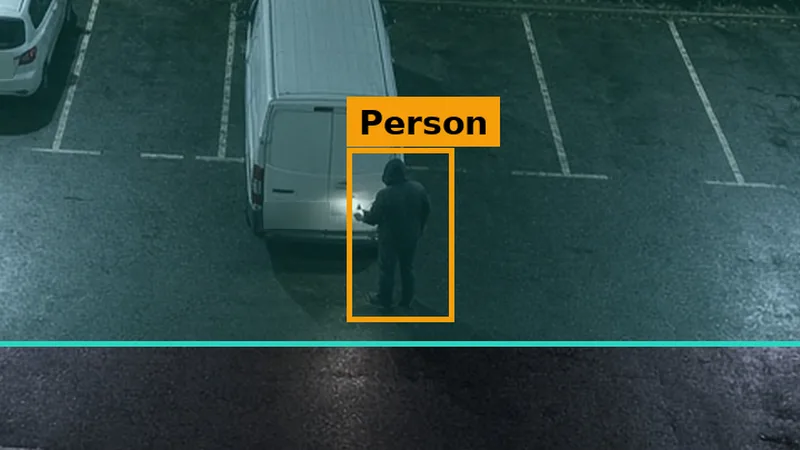
Last updated 1 November 2026. At eleven o’clock at night, a hotel changes shape. The restaurant has closed, the bar is emptying, and the last of the kitchen team are carrying bins out to the yard. By midnight, the people looking after the building may be one night porter at the front desk and a duty manager asleep in a staff room or at home. Upstairs, every bedroom may be full. Outside, the car park holds guests’ cars, a row of tradespeople’s vans loaded with tools, and perhaps a campervan or two. Round the back, the service yard, the bin store, the laundry door and the fire exits are in the dark.
That is what makes hotels different from almost every other business. They never close, so they are never empty, but for seven or eight hours a night they run on the thinnest staffing of the day, with the most people asleep inside. At a hotel, the fire risk is to sleeping guests, and the person who has to notice a problem in the car park is also the person answering the phone at reception. This guide covers the main security and fire risks at UK hotels, inns with rooms and similar accommodation: the figures and recent cases, what hotels can do, the rules, where cameras should watch, and how AI on a hotel’s existing CCTV can help the night team.
What are the main security risks at a hotel?
From a twelve-room inn to a city-centre tower or a country house hotel with a spa, most hotels face the same four kinds of risk, all at their worst at night.
- The car park. Vans broken into for the tools inside, cars and campervans stolen or tampered with, and catalytic converters cut from parked cars. A hotel car park is full every night, with vehicles whose owners are asleep and who will not look at them until the morning. Police in Leicestershire describe hotel car parks as hotspots for theft of tools from vans.
- The back of house. The service yard, the bin store, deliveries, the kitchen door, staff entrances and fire exits. Guests never see them and night staff rarely walk them.
- The grounds. Restaurant and bar terraces, gardens, golf shops, leisure and garden stores, and outbuildings. At a country or resort hotel, they can be hundreds of metres from the front desk.
- Fire. Bins set alight against the walls, kitchens, laundries, plant rooms, basements and car parks, smoking and electrical faults, in a building where people are asleep, may not know the layout, and may need help to get out.
This guide is about hotels and similar accommodation with guest bedrooms. Caravan and lodge parks are covered in our holiday park security guide, pubs in our pub security guide, and stand-alone car parks in our car park security guide.
What do the figures show about hotels?
There is no single official count of crime at hotels, because the police record thefts from vans in hotel car parks as vehicle crime, and break-ins at hotel stores as burglary, alongside everything else. But the official figures show how many hotels there are, how small many of them are, and how often fires happen in buildings like them.
- There are thousands of hotels. The Office for National Statistics’ UK business: activity, size and location 2026 counts 13,415 hotel sites (local units) in the UK in March 2026, belonging to 10,180 businesses (enterprises). That covers hotels and similar accommodation with services such as daily cleaning and bed-making; it does not include holiday lets, hostels or campsites, which are counted separately.
- Many are small. Of the hotel sites the ONS counts by employment size, 3,930 employ fewer than five people and 1,660 employ five to nine. That is 5,590 sites, about four in ten, with fewer than ten people employed across every shift.
- They are everywhere. London has the most hotel sites, 2,330, followed by Scotland with 1,985, the South East with 1,640, the South West with 1,505 and the North West with 1,460.
A city-centre hotel has neighbours and passers-by; a roadside hotel has a car park by a fast road; a country house hotel may be out of sight of anyone. All of them have a car park, a back door and a bin store.
How often do hotels have fires?
Fire statistics are more precise. The Ministry of Housing, Communities and Local Government publishes fire statistics data tables for England, and table FIRE0301 counts primary fires in other buildings by type of building. Hotels are counted together with boarding houses and hostels, and they are counted as other buildings, not as homes.
- 551 primary fires in hotels, boarding houses and hostels in England in the year to March 2026, 447 of them accidental and 104 deliberate. That is roughly ten a week.
- 50 non-fatal casualties in those fires in the same year, 40 in accidental fires and 10 in deliberate ones.
- 4 fatalities, all in accidental fires.
The numbers move from year to year, from 586 in 2023 to 2024 to 506 in 2024 to 2025 and 551 in 2025 to 2026, but about one in five of these fires is recorded as deliberate every year. Many deliberate fires at buildings start outside them, in bins, skips and rubbish left against the walls, which is why fire guidance for hotels talks about bins, and why a camera watching the service yard is a fire safety tool as well as a security one.
What do crime figures show?
The wider crime figures give the background. The Office for National Statistics reports that police recorded vehicle offences in England and Wales fell by 7% to 312,231 in the year ending June 2026, and that police recorded burglary, which includes homes and non-residential premises such as businesses, fell by 6% to 222,304 offences.
Falling numbers are good news, but they are still large, and a hotel car park concentrates vehicles in a way few other places do. Police.uk says that catalytic converter theft most frequently occurs in car parks, and the local policing team in Burbage, Leicestershire told its parish council that hotel car parks around the country tend to be hotspots for theft of tools from vans, because they are generally easy targets.
Who is looking after a hotel at night?
In most hotels, the answer is a night porter, a night manager or a night receptionist, sometimes with a duty manager on call. In a large city hotel there may be a small night team with security staff. In a small hotel, it may be one person, or the owners living on site. Either way, the night team’s first job is the guests: check-ins after a late train, a guest locked out, a noise complaint, a call from a room, the night audit and getting breakfast ready.
Fire guidance recognises this. The GOV.UK guide to fire safety risk assessment in sleeping accommodation, which covers hotels, lists employees who work alone or in isolated areas, including night staff, among the people especially at risk, and says fire safety information should include staff who work outside normal working hours, such as night staff, contract cleaners or maintenance staff. It also lists people asleep, who will be slow to respond and disorientated, and people unfamiliar with the premises, such as guests, among those at risk.
The ONS figures add context. If about four in ten hotel sites employ fewer than ten people in total, then across seven nights a week and three shifts a day, the night shift at many of them is one person. That person cannot be at the desk, on a round and in the car park at once.
When do incidents at hotels happen?
Most of the vehicle crime in this guide happened overnight. The theft of tools from a van in a hotel car park near Burbage happened between 21:00 and 06:30, and two attempted break-ins to vans at another hotel nearby happened between 05:30 and 06:15. The attempted campervan theft near South Milford was at about 23:45, and the car stolen from a York hotel car park was taken some time between 3 and 4 September. Fires are different. The Folkestone hotel fire was reported at about 01:05, while guests were asleep; the Fulham plant room fire at 07:59; the Wembley fire at 12:34; the York bin fire, with crews called at 14:24; and the Hackney fire at 16:52.
The pattern matters for planning. Vehicle crime and break-ins happen when guests are asleep and staff are few, so detection for theft is armed overnight, on the parts of the site guests do not use at night. Fire can start at any hour, in the working day as well as the small hours, and a fire at night is the most dangerous, because guests are asleep and the building is on its night staff. That is why smoke detection on a hotel’s outside cameras is on around the clock, and not only at night.
How are vehicles targeted in hotel car parks?
A hotel car park is full when car parks elsewhere are empty, and the owners are asleep a few metres away, for eight hours.
- Burbage and Hinckley, Leicestershire (2025 to 2026). The local policing team’s updates to Burbage Parish Council record repeated van crime at hotel car parks. In February 2026, tools were stolen from a van on a hotel car park between 21:00 on the 19th and 06:30 on the 20th, with the rear door forced, and a few days later suspects at another hotel cut a hole in a van panel to reach the tools inside. In November 2025 there were two attempted van break-ins at a hotel car park between 05:30 and 06:15.
- Near South Milford, North Yorkshire (February 2026). At about 11.45pm on a Friday, two suspects broke into a grey campervan in a hotel car park off the A63 and tried to steal it, before leaving on foot. Police appealed for anyone with CCTV or dashcam footage.
- York (September 2026). North Yorkshire Police appealed for information after a car was reported stolen from a York hotel car park between 3 and 4 September, and released CCTV images of a person they wanted to speak to.
Three lessons stand out. Vans with tools inside are the main target, and the thieves come back: the Burbage updates record van crime at hotel car parks in November 2025 and twice in February 2026, and the police there say hotel car parks around the country tend to be hotspots for tool theft from vans, as they are generally easy targets. Campervans and cars are taken whole when the chance is there. And in every case the discovery came in the morning, or later, when the owner came out to their vehicle.
Why are vans in hotel car parks such a target?
Hotels near motorways, industrial estates and big construction projects fill up with tradespeople and contractors working away from home. Their vans are their livelihood, and the tools in the back are often worth more than the van. A hotel car park offers thieves rows of vans in one place, parked overnight, with owners who are asleep and who often leave the tools inside because carrying them up to a hotel room is impractical.
Hotels cannot make guests unload their vans, but they can make the car park a harder place to steal from, and they can tell guests what they are doing about it.
- Van bays where the cameras can see. Set aside bays for vans in a lit part of the car park, in view of a camera and, if possible, the building, rather than letting vans fill the far corner.
- Doors against a wall. Suggest that guests reverse up to a wall or a fence, or park side doors against another vehicle, so the doors thieves force cannot be reached.
- Tools in or out. Offer a lockable store for tools overnight if you have the space, and remind guests at check-in not to leave valuables or tools on show.
- Signs. Clear signs that the car park is covered by CCTV, and that the van bays are monitored at night.
What about cars, campervans and catalytic converters?
Cars, campervans and motorhomes are taken whole, broken into or stripped where they stand, as the attempted campervan theft near South Milford shows.
Catalytic converters are the other risk. Police.uk says that catalytic converter theft most frequently occurs in car parks, that a converter can be removed in less than a minute, and that hybrid vehicles are most commonly targeted. Signs it advises people to look out for include a car being jacked up and loud noises from under a vehicle. A hotel car park at 3am, full of guests’ cars, is exactly the kind of car park it describes.
- Lighting. Light the whole car park, including the far corners and the spaces behind high-sided vans, without throwing glare into guest windows or cameras.
- Entrances. Where the layout allows, a barrier or a single entrance that can be seen from the building makes a car park less attractive than one open to a road on several sides.
None of this stops a determined thief, but it makes your car park slower, more visible and more trouble than the one down the road.
How do you secure the service yard and bin store?
Every hotel has a back yard, even if it is only a strip of tarmac behind the kitchen. It is where deliveries arrive in the early morning, where the kitchen and housekeeping put out their rubbish, where linen goes in and out, and often where the staff smoke. It is also where a fire guide for hotels expects trouble to start.
The GOV.UK guide to fire safety risk assessment in sleeping accommodation says fires start deliberately, for example as an arson attack involving setting fire to external rubbish bins placed too close to the building. To reduce the risk of arson, it advises making sure the outside of the premises is well lit and, if practical, securing the perimeter; regularly removing all combustible rubbish; not placing rubbish skips next to the building; and securing waste bins in a compound separated from the building. It also says waste materials and rubbish should not be allowed to build up, particularly at the end of the day.
- York (June and August 2026). Fire crews were called at 2.24pm to a fire in a commercial bin outside a city-centre hotel, and crews asked police to attend to view CCTV of the possible person responsible. A man later pleaded guilty to setting fire to the hotel’s business waste bin.
The same fire at 3am, against the wall of a building full of sleeping guests, is a different matter. That is why the bin store is the first place to look when you plan cameras at a hotel.
- A bin compound. Bins and skips in a locked compound, away from the walls, windows, doors and any overhanging eaves.
- Lids shut and locked. Wheeled bins with closed lids are harder to set alight and less use as a step.
- The yard gate. Locked at night, and opened for deliveries by someone who knows they are expected.
- A smoking area away from the bins. Staff and guests who smoke need a proper place with a proper ash bin, well away from the rubbish.
How should back doors and fire exits be secured?
A hotel has more doors than most buildings: the main entrance, fire exits from every stair and corridor, the kitchen door, staff entrances, the laundry, plant rooms, the spa and the terrace. The main entrance is staffed all night. Most of the others are not, and some are opened every day by staff, contractors and smokers.
Fire exits are the hard part, because they have to do two jobs at once. They must open easily from inside so guests can escape, and they must not let anyone in from outside. The sleeping accommodation guide advises thoroughly securing all entry points, including windows and the roof, but making sure this does not compromise people’s ability to use the escape routes. It also warns about fire doors being wedged open, which lets fire and smoke spread through the building.
- Never wedged. Fire exits and fire doors are shut, every time. A door propped for a smoker or a delivery is a way in for someone else and a way through for smoke.
- Always usable. Escape doors open from inside without a key, and nothing stored outside blocks them. Security must never stop guests getting out.
- Alarmed where they are not used. Exits not used in normal working can have local door alarms, so the night porter knows when one opens.
- Back doors locked. Kitchen, laundry, staff and plant room doors locked when the area closes, and the keys controlled.
Cameras watching the outside of these doors do not change how they work. They tell the night team that someone is outside a door at 2am, when nobody should be, while that person is still outside.
What about terraces, grounds and outbuildings?
Restaurant and bar terraces are busy until late in summer and empty the rest of the time. Country house and resort hotels add gardens, a golf course and shop, a spa or leisure club, equipment stores and staff accommodation. Many of these are a long way from the front desk, and nobody walks them after dark.
- County Durham (October 2026). At a country hotel in Teesdale, the golf shop was broken into overnight between Saturday 24 and Sunday 25 October, and golf equipment and power tools were stolen. Police appealed for anyone offered the items to come forward.
- Terrace doors. Patio and terrace doors into the restaurant and bar locked at close, and the furniture stacked or chained so it cannot be used to climb or to break glass.
- Stores and outbuildings. Golf, leisure, garden and maintenance stores locked with good padlocks and hasps, with the most valuable equipment inside the main building if possible.
- Ladders and tools. Ladders, garden tools and wheelie bins locked away, so they cannot be used to reach windows, balconies or flat roofs.
- The garden edge. Gaps in hedges and fences repaired, and paths that lead from a lane into the grounds lit or gated where practical.
How do you map a hotel’s weak points?
The quickest way to see a hotel’s security is from above. Draw the site: the building, the car park, the service yard, the terrace and the grounds, and every door and gate. Then mark which are watched at 3am and which are not.
Most hotels find the same thing. The front door is watched by the night porter, and the car park nearest the entrance is seen through the glass. Almost everything else, the van bays at the far end, the service yard, the bin store, the kitchen door, the fire exits at the back, the terrace, the stores in the grounds, is out of sight from the desk. Those are the places to fix first, with locks, lighting and routines, and the places where cameras have the most to add.
What should the night routine include?
Most hotels already have a lock-up routine and a night round. Write it down, so it is the same whoever is on.
- At close. Bar and terrace closed, terrace doors locked, furniture in, the kitchen off and the extract hood and filters clean, bins out to the compound with lids shut.
- The laundry. Dryers finished their full cycle, including the cool-down, and towels and linen not left folded and stacked while still hot. The fire service’s advice on this is covered below.
- The handover. The night team told which rooms are occupied, which guests may need help to get out in a fire, which contractors are on site, and which cameras are armed.
- The round. Fire exits shut and clear, back doors locked, the yard gate shut, nothing burning in the smoking area, and the car park looked at.
A night round matters, and the cameras do not replace it. But a round is a snapshot: it tells you the yard was fine at 1am. Between rounds, the cameras are the only thing looking at the van bays, the bins and the back doors.
How do hotel fires start and spread?
Fire is the risk that matters most at a hotel, because people are asleep inside, many do not know the building, and some will need help to get out. The fires in this guide all needed guests to be evacuated, sometimes hundreds of them, sometimes in the middle of the night.
- Folkestone, Kent (September 2026). A fire at a hotel was reported at about 01:05 on a Saturday. At the height of the incident, Kent Fire and Rescue Service sent 26 fire engines and specialist units, and around 280 people were evacuated from the building; nearby residents were also moved out as a precaution because of structural concerns. The fire was believed to have started in the basement, and a guest told the BBC that they were woken by fire alarms and saw smoke billowing from the underground car park. The fire was being treated as suspicious.
- Fulham, London (August 2026). Four fire engines and around 25 firefighters were called at 07:59 to a fire in a first-floor plant room in a 12-floor hotel. Around 450 people were evacuated as crews responded, and three people were treated for smoke inhalation.
- Wembley, London (August 2026). Six fire engines and around 40 firefighters were called at 12:34 to a fire on the second floor of a 13-floor hotel. Around 150 people left the building before the Brigade arrived, and 29 calls were made about the fire.
- Hackney, London (June 2026). Ten fire engines and around 70 firefighters were called at 16:52 to a fire in two rooms on the fifth and sixth floors of a hotel. Around 16 people were evacuated. The fire was believed to be accidental, caused by the unsafe use of incense sticks.

Two of these fires started in plant rooms and basements, the parts of a hotel guests never see. In a building where people are asleep, the minutes before anyone notices matter most.
What makes a hotel fire start?
The GOV.UK sleeping accommodation guide says that, in general, fires start in one of three ways: accidentally, such as when smoking materials are not properly extinguished or when lights are knocked over; by act or omission, such as when electrical equipment is not properly maintained, or when waste is allowed to accumulate near a heat source; and deliberately, such as an arson attack involving setting fire to external rubbish bins placed too close to the building.
- Bins and rubbish. Deliberate fires in bins and skips by the walls, and waste left near heat, both named in the guidance. The York bin fire is an example.
- Smoking. Cigarettes not properly put out, in smoking areas by the bins, on terraces and in rooms. The guide advises a safe smoking policy, with smoking only in designated areas and sufficient ashtrays, cleaned properly.
- Kitchens. Deep fat fryers, grease in extract ducts and equipment left on. The guide’s example floor plan marks a deep fat fryer, a boiler and the laundry’s dryers and washing machines among its fire hazards.
- Plant rooms and electrics. Boilers, electrical equipment that is not properly maintained, and combustible items stored next to them. The Fulham fire started in a plant room.
- Laundry. Bedding, linen and towels are named in the guide as combustible materials, and towels can catch fire on their own after drying, as the next section explains.
- Guests. Candles, incense and portable heaters in rooms. The Hackney fire was believed to have been caused by incense sticks.
Prevention is in the hotel’s own hands, through the fire risk assessment. The fire alarm inside the building is the main defence for guests; a camera with smoke detection on the bin store, the yard and the laundry door adds an outside view, around the clock.
Why are hotel laundries a fire risk?
Many hotels wash their own towels and linen in a laundry at the back of the building, often late in the day.
Dorset and Wiltshire Fire and Rescue Service’s advice on preventing fire risk with laundry explains that cotton and towelling items can catch fire from heat build-up alone, and are even more likely to if they are contaminated with oils, such as cooking oils, or emollients, typically when they are folded after a high-heat drying cycle in a tumble dryer, because the heat has nowhere to escape. It says these incidents happen in commercial and business premises, including hotels and spas, partly because staff are doing laundry in busy, time-pressured conditions; that towels can ignite while still in the dryer, whether it is running or not; and that even after they are taken out, the heat they have absorbed can build up.
- Let the cycle finish. Always allow the full drying cycle, including the cool-down, and never stop a dryer early to get the towels out.
- Spread, do not stack. Open hot items out, shake them and let them cool before folding; do not fold and stack hot towels.
- Know where the oils come from. Towels from a spa, a treatment room or the kitchen may carry oils or emollients that make them more likely to catch fire.
- Clear the lint trap. The fire service warns that a full lint trap stops the dryer releasing heat, so towels stay extremely hot.
A camera that sees the laundry door, the vent or the trolley area, with smoke detection armed around the clock, will not prevent a laundry fire, but it can tell the night team when smoke appears outside a room nobody is in.
What should a hotel do if fire breaks out at night?
Every hotel’s fire plan must work at 3am with the night team alone. The sleeping accommodation guide says the night staff must be given fire safety information, and that the risk assessment must consider people who are asleep and people unfamiliar with the building.
- Raise the alarm and call 999. Give the address and postcode, say it is a hotel with guests asleep, and say where the fire is if you know.
- Get guests out. Follow the evacuation plan for your building, which your fire risk assessment sets out. Know which guests may need help, and how they will get it.
- Count everyone. Use the guest register and the staff rota at the assembly point, and tell the fire service who has not been accounted for and which rooms they were in.
- Meet the crew. Have a simple site plan ready, showing the fire alarm panel, the plant rooms, the laundry, the kitchen, the gas and electrical isolators and any car park below the building.
- Outside smoke. Agree who gets a smoke alert from an outside camera at night, how they check it, and when they call 999 rather than go to look.
Our arson prevention guide covers deliberate fires in more detail, and our guide to video smoke detection on existing CCTV explains how smoke detection on cameras works.
Which rules apply to hotel security and CCTV?
Several sets of rules touch a hotel’s fire safety and its cameras, and none of them is optional.
- Fire safety in England and Wales. Under the Regulatory Reform (Fire Safety) Order 2005, the responsible person, usually the owner, the operator or the manager, must carry out a fire risk assessment of the premises and review it regularly, tell staff about the risks, put in place and maintain fire safety measures, and plan for an emergency. GOV.UK says the order also applies where you have paying guests, such as a bed and breakfast.
- Fire safety guidance for hotels. The GOV.UK guide to fire safety risk assessment in sleeping accommodation applies to hotels, guest houses, hostels and similar premises in England and Wales. It covers fire detection and warning systems, escape routes, staff training, arson prevention and much more.
- Scotland. In Scotland, the Fire (Scotland) Act 2005 and the Scottish Government’s practical fire safety guidance for existing premises with sleeping accommodation apply, and that guidance lists hotels among the premises it covers.
- Data protection. Cameras that see guests, staff and the public are covered by UK GDPR, and the Information Commissioner’s Office has guidance on video surveillance, covered below.
None of these requires AI detection, and AI detection does not replace a fire alarm, a fire risk assessment or anything they require. What the cameras add is information: earlier warning of smoke outside, a clearer picture of who is in the yard, and a record of what happened.
Why are hotels hard to protect with ordinary CCTV?
Almost every hotel already has cameras. Most were fitted to cover the entrance, the reception desk, the car park and the corridors, and they record day and night to a recorder in a back office, with a monitor at the desk showing a grid of small pictures. The trouble is not the cameras; it is that the person at the desk has other jobs, and a grid of sixteen dark pictures does not tell anyone that one of them matters.
- People everywhere, all the time. Guests arrive at midnight, smokers stand outside the back door, taxis pull in at 2am and the breakfast team arrives at 5.30. Motion detection that alerts on every movement in a hotel car park is useless, and is usually switched off.
- One monitor, one person. The night porter can glance at the monitor between guests and the phone, but cannot watch it. The van at the far end of the car park is one small picture among many.
- Large, spread-out sites. Car parks wrap round the building, service yards are round the back, and country hotels have grounds that go on for acres, with trees, hedges and outbuildings in between.
What most hotels need is for the cameras they already have to tell the night team when something matters, and to stay quiet when a guest walks to their car.
Where should cameras watch at a hotel?
Each camera at a hotel should have a clear job. Most hotels need cameras watching five places, and many already have cameras on at least three of them.
- The car park and van bays. Wide enough to see someone at the back of a van or crouching by a car, especially in the far corners, and lit at night.
- The service yard and bin store. The bins, the yard gate, the delivery door and the laundry door, for people and vehicles at night and for smoke at any hour.
- The back doors and fire exits. The outside of the exits, the kitchen door and the staff entrance, so anyone at the building is seen before they are inside.
- The terrace and grounds. Terrace doors, the edge of the garden, and any store, golf shop or outbuilding.
- Entrances, reception and public areas. The main entrance and the lobby, for the record; these are busy all night and are not where theft alerts belong.
How can AI on existing CCTV help a hotel?
Recording-only CCTV shows what happened after the event. AI detection tells someone while it is happening, in time to act. Woodcock AI connects to the IP cameras and recorders already on site, over RTSP or ONVIF, including Hikvision, and runs on an edge server on site or on a cloud server (an edge server needs only a power socket and a network connection).
- Polygon zones. Draw an area of any shape on a camera’s view, around the van bays, the bin store, the outside of a fire exit or a store in the grounds, and detect only inside it. A zone can follow the van bays exactly, and leave out the path guests use to reach their cars.
- Lines. Draw a line along a boundary, a hedge or a gate, and alert when a person or vehicle crosses it, in the direction you choose.
- People and vehicles. Detect people and detect vehicles moving in a zone, ignoring foxes, cats, gulls, rain and passing headlights.
- Smoke and flame. Smoke and flame detection on the cameras that see the bins, the yard, the laundry and the plant, around the clock.
- Schedules. Arm each rule for the hours that make sense: the yard and the van bays from when the bar shuts until the breakfast shift, smoke always.
- Alerts with the clip. Alerts arrive in the app and by email with a short clip and an AI description, so the night porter can see in seconds whether it is a guest walking to their car or someone at the back of a van.
The system is self-learning. It learns each camera, what is normal on that view and what is not, and marking an alert as correct or false feeds into retraining for your site. Woodcock AI has been in development for years and is now running on customer sites across the UK.
Woodcock AI does not read number plates or identify people. It tells you that a person is at a van in the rear car park at 03:12, or that a vehicle has come into the service yard at 03:35, with the clip; what happens next is up to you.
Coming next: Ask your cameras Coming soon, early 2027, which will let you ask the system questions about what your cameras have seen.
What does detection look like in each part of a hotel?
Each part of a hotel needs a different rule. The service yard needs to know about vehicles as well as people; the back doors need a tight zone outside each door; the grounds need a zone round the stores. Choose an area to see an example.
Which part of the hotel are you protecting?
The service yard is where the hotel keeps its rubbish, its deliveries and often its laundry, and where fire guidance warns that bins set alight next to the building are an arson risk. A zone over the yard and the bin store, armed from when the bar shuts until the breakfast shift arrives, flags a person or a vehicle there in the hours nobody should be. Leave the public road and the pavement out of it.
Bins, roll cages, deliveries, the laundry door and the yard gate
Back doors are where people get in, and fire exits are doors nobody watches. A zone over the outside of the exits and the staff and kitchen doors, armed overnight, flags a person at a door before they are inside. It never stops anyone using the exit to get out; it simply tells the night porter that someone is outside it.
Fire exits, the kitchen door, the staff entrance and plant room doors
Country house and resort hotels have grounds that nobody walks after dark: a terrace, gardens, a golf shop or a leisure store. A zone over the stores and the terrace doors, armed from late evening, flags a person there after the last guest has gone in. Draw it round the buildings, not across the paths guests use to reach the car park.
Terraces, gardens, golf and leisure outbuildings and the garden edge
The service yard, the back doors and the grounds each get their own zones, with their own schedule.
These are examples, not a fixed set. The right rules for any hotel depend on its layout, its cameras and its hours, and a site assessment starts from what each existing camera can see.
How does AI detection compare with other measures?
No single measure protects a hotel. The table sets out what each one does well and what it cannot do. Most hotels need several, and AI on existing cameras is one layer among them.
| Measure | What it does | Strengths | Watch out for |
|---|---|---|---|
| Night porter or night manager | A person on duty all night, at the desk and on rounds | Someone awake in the building, who knows the guests and the layout | One person cannot be at the desk, on a round and in the car park at once |
| Locks, doors and access control | Key cards on guest doors, locked back doors, staff codes | Keeps the guest floors and back of house closed | Fire exits must always open from inside; side doors propped by staff or smokers |
| Lighting | Lights the car park, the yard, the paths and the doors | Deters, helps cameras see and helps guests feel safe | Glare into cameras or guest windows; dark corners behind vans and hedges |
| Fire detection and alarm | Detectors and an alarm inside the building, linked to a panel | Required, and covers the rooms where guests sleep | Does not see a bin alight in the yard until the fire reaches the building |
| Intruder alarm | Detects someone in areas closed at night, such as a spa, bar or store | Useful for parts of the hotel nobody uses overnight | Cannot cover areas guests use at night; police response can be withdrawn after repeated false calls |
| Recording-only CCTV | Records what happened | Evidence after the event, which guests and police will ask for | Nobody sees it until the morning; the monitor at the desk is one of many jobs |
| AI on existing CCTV | Recognises people, vehicles, smoke and flame, in zones you draw, on a schedule | Watches the van bays, the yard, the back doors and the grounds at once; the alert includes the clip | Cameras need a clear view, power, a connection and enough light or infrared at night; late guests and animals can still cause some alerts |
How do you keep false alerts down at a hotel?
We do not promise no false alerts. A hotel is never empty, and cameras see the real world, which at a hotel includes guests coming back late, staff on early shifts and gulls at the bins. But most false alerts at a hotel come from a handful of causes, and most of them can be designed out.
- Zones away from guest routes. Draw zones over the places nobody should be at night, the van bays, the bin store, the outside of the exits and the stores, not over the entrance, the taxi drop-off or the path from the car park to the door.
- People and vehicles only. Alert on people and vehicles, not on any movement, so animals, rain and headlights are ignored.
- Schedules that match the hotel. Arm back-of-house rules after the bar and kitchen close, and turn them off before the breakfast shift and the first delivery.
- A smoking area outside the zones. If staff or guests smoke by a back door, give them a proper smoking area somewhere else, or leave that patch out of the zone.
- Feedback. Mark each alert as correct or false; the system learns from it.
Our guide to reducing CCTV false alarms covers this in more depth.
What detection schedule suits a hotel?
A hotel’s schedule follows its back of house, not its front door. Smoke detection runs all the time, because fires start at every hour. Theft rules come on when the bar and kitchen close and the last staff leave the yard, and go off before the breakfast team and the first delivery arrive.
- Grounds and stores: 22:00 to 07:00. After the terrace closes and the last guest leaves the garden.
- Van bays: 23:00 to 06:00. When the vans are parked for the night and their owners are asleep.
- Service yard and bins: 23:00 to 06:00. After the kitchen has put the last bins out, until the first delivery.
- Back doors and exits: 00:00 to 05:00. When no staff should be going in or out of the back.
- Smoke and flame: all day and night. Bins, the laundry and the plant can catch fire at any hour.
Adjust the times to the hotel’s real hours, including late bars, weddings and events, early breakfasts and deliveries, and quiet weeks out of season when parts of the hotel may be shut altogether.
What should happen when an alert comes in?
An alert is only as good as the response to it. Before the cameras go live, agree who gets alerts at what hours, what they should do, and who they call. At most hotels, the night porter gets the alert first, with the duty manager copied.
- Check the clip. Is it a guest, a member of staff, someone who should not be there, or smoke?
- Call 999 if a crime is in progress, or there is a fire. Tell the police or fire service what the clip shows, how many people, which way they went, and that the building is a hotel with guests inside.
- Never confront anyone. The night porter should not leave the desk to tackle intruders alone. The police advice on catalytic converter thieves is not to approach suspects, as they have been known to use violence.
- Review. Mark the alert, save the clip, and fix what it showed.
If the hotel has a monitored intruder alarm, for example on a spa, a bar or a store that closes at night, keep it working and well maintained. Under the National Police Chiefs’ Council requirements for security systems, police response to an alarm system with a unique reference number is withdrawn after three false calls in a rolling 12 months. Fewer false alarms keep the police response. Our out-of-hours site security checklist covers response planning in more detail.
What should a hotel do after a theft or break-in?
If the worst happens, what you do in the first few hours makes a difference to the police investigation and to the guest.
- Report it. Call the police, keep the crime reference, and give them the times and the clips. Help the guest report the theft of their vehicle or tools as well.
- Preserve the clips. Save the footage from every camera before the recorder overwrites it, and do not touch anything the thieves may have handled.
- Share footage properly. Guests and their insurers will ask for footage. Disclose it to the police through the proper route, and follow the ICO’s guidance on sharing footage with others.
- Fix the gaps. Look at where they came in, which camera saw them and which did not, and fix those first.
What about privacy and data protection?
Cameras at a hotel see guests, staff and sometimes the public. Guests expect cameras in the car park and the lobby; they do not expect them anywhere private. Under UK GDPR, the hotel is responsible for the footage. The ICO’s guidance on video surveillance sets out what to do.
- Never in private spaces. No cameras in guest rooms, bathrooms, toilets, changing rooms or spa treatment rooms, or in staff rest areas.
- Focus. Point cameras at the hotel’s own car park, yard, doors and grounds, not at guest windows, neighbours’ homes or the public road beyond what you need.
- Signs. Put up clear signs saying CCTV is in use and who runs it.
- Retention. Keep footage only as long as you need it, and delete it after that.
- Assessment. Carry out a data protection impact assessment where the cameras are likely to be high risk to privacy.
- Audio. Leave audio recording off by default.
Woodcock AI does not use facial recognition, identify who anyone is or read number plates. It detects people, vehicles, smoke and flame in the areas you choose, at the hours you choose. Our guide to AI CCTV and GDPR in the UK covers this in more depth.
How do you get started?
Start with the simplest steps: van bays in view of the building, bins in a compound away from the walls, fire exits shut and checked, terraces and stores locked, a written night round and handover, and the laundry run properly. Then look at what your cameras can already see.
Our site assessment looks at the cameras already at your hotel, what each one can see by day and night, and where zones would go. To see it working first, we can run a live test on your cameras: we connect two or three of them for about a fortnight. We can also arrange an on-site demo.
What are the limits?
AI on existing cameras is useful, and it is not magic. It is worth being clear about what it cannot do.
- It only sees what the cameras see. Vans, trees, hedges and walls block views, and a camera pointed the wrong way will miss things.
- It needs light. At night, cameras need site lighting or infrared to see well.
- It needs power and a network. If the power or the network goes down, so do the cameras and the alerts.
- It detects; it does not stop. An alert does not lock a door or stop a van being opened. Locks, lighting, routines and people do that.
- It does not replace the fire alarm. The fire detection and alarm system inside the building protects sleeping guests. Cameras add an outside view; keep the alarm and keep it maintained.
- Guests and animals. Late guests, staff and animals can still cause alerts, which schedules and zones keep down.
- Someone has to respond. An alert at 3am is only useful if the night porter sees it and acts.
Sources
- Office for National Statistics, UK business: activity, size and location 2026.
- Ministry of Housing, Communities and Local Government, Fire statistics data tables: table FIRE0301.
- Office for National Statistics, Crime in England and Wales: year ending June 2026.
- Police.uk, Catalytic converter theft.
- GOV.UK, Fire safety risk assessment: sleeping accommodation, and Fire safety in the workplace: your responsibilities.
- Scottish Government, Practical fire safety guidance for existing premises with sleeping accommodation.
- Dorset and Wiltshire Fire and Rescue Service, Preventing fire risk with laundry.
- Kent Fire and Rescue Service, Fire at Folkestone hotel (September 2026), and BBC News, Folkestone hotel fire (September 2026).
- London Fire Brigade, Hotel fire, Fulham (August 2026), Hotel fire, Wembley (August 2026), and Fire at hotel, Hackney (June 2026).
- York Press, police appeal after car stolen from York hotel car park (September 2026), bin set on fire outside a York city-centre hotel (June 2026), man admits setting fire to a bin outside a York hotel (2026), and attempted theft of a campervan from a hotel car park near South Milford (February 2026).
- Burbage Parish Council, parish policing updates (2025 to 2026).
- Teesdale Mercury, burglary at a Teesdale country hotel’s golf shop (October 2026).
- National Police Chiefs’ Council, Police Operational Advice and Security Industry Requirements for Response to Security Systems (March 2024).
- Information Commissioner’s Office, Guidance on video surveillance, including CCTV.
We have summarised these sources in our own words. Always read the current versions in full. This page is general guidance, not legal, fire safety, insurance or security advice; the police, your fire and rescue service, your fire risk assessor, your insurer, your monitoring centre and your installer can advise on your own hotel.
Want to know when someone is at a guest’s van in your car park tonight?
Book a site assessment and we will look at the cameras at your hotel and plan zones, lines and schedules for the van bays, the service yard, the back doors and the grounds, kept clear of guest routes, with smoke detection around the clock, or ask for a live test on your cameras.
Related pages
Frequently asked questions
How do you stop vans being broken into in a hotel car park?
Set aside lit van bays in view of a camera and the building, suggest guests park with their doors against a wall or another vehicle, and put up clear CCTV signs. A camera zone over the van bays, armed overnight, flags a person at a van while it is happening rather than when the owner comes out in the morning.
Will guests set off AI camera alerts at a hotel?
We do not promise that a guest, a member of staff or an animal will never cause an alert. Drawing zones over places nobody should be at night, such as the van bays, the bin store and the outside of fire exits, keeping them off the entrance and guest routes, counting only people and vehicles, and arming theft rules only overnight keeps them down.
How do hotel fires start?
GOV.UK guidance on sleeping accommodation says fires start accidentally, such as smoking materials not properly put out; by act or omission, such as poorly maintained electrical equipment or waste left near heat; or deliberately, such as setting fire to rubbish bins placed too close to the building. Laundry is a further risk: fire services warn that towels can catch fire on their own after high-heat drying.
Can CCTV detect a fire at a hotel?
Yes, AI smoke and flame detection on existing cameras can raise an alert from the first visible smoke in areas the cameras see, such as the bin store, the service yard, the laundry door and the car park, around the clock. It adds an outside view; it does not replace the fire detection and alarm system inside the building.
Can hotels have CCTV in guest areas?
Cameras are common in car parks, entrances, lobbies and corridors, but never in guest rooms, bathrooms, toilets, changing rooms or treatment rooms. Under UK GDPR the hotel must use clear signs, keep footage only as long as needed and follow the ICO guidance on video surveillance. Woodcock AI does not use facial recognition or read number plates.
Does Woodcock AI need new cameras at a hotel?
Usually not. It connects to existing IP cameras and recorders over RTSP or ONVIF, including Hikvision, and runs on an edge server on site or on a cloud server. A site assessment shows which cameras already cover the car park, the service yard, the back doors and the grounds, and where a camera cannot do the job.
Last reviewed 1 November 2026